By James W. Watkins, III, J.D., CFP Board Emeritus™, AWMA®
The first quarter of 2024 produced an interesting situation, resulting in an opportunity to demonstrate both the value of the Active Management Value Ratio (AMVR) and its nuances. The Fidelity Contrafund Fund K shares (FCNKX) reduced the fund’s expense ratio, from 47 basis points (0.47) to 32 basis points (0.32). A basis point equals 1/100th of one percent.
The AMVR slide below shows the results of an AMVR analysis between FCNKX and a comparable index fund, the Vanguard Large Cap Growth Index Fund Admiral shares (VIGAX), for the 5-year period ending on December 31, 2023. Shown below the Q4 2023 analysis is a 5-year AMVR analysis of the same funds, for the same five-year period ending on March 31, 2024.
My fiduciary clients immediately called and emailed me asking how to evaluate the AMVR results resulting from FCNKX’s significant reduction in its expense ratio. While such a significant reduction in a fund’s expense ratio is uncommon, the AMVR makes a new cost-efficiency analysis relatively simple.
The 2023 AMVR analysis resulted in FCNKX failing to provide a positive incremental risk-adjusted return, resulting in FCNKX failing to qualify for an AMVR score. Using Contrafund’s risk-adjusted 1Q 2024 returns resulted in FCNKX providing a positive incremental risk-adjusted return (1.48) relative to the benchmark Vanguard fund, resulting in an AMVR score of 0.18. Under the AMVR metric, a low AMVR score indicates a higher cost-efficiency rating.
However, if we recalculate those AMVR scores using Miller’s Active Expense Ratio1 (AER) and factoring in the correlation of returns between the two funds in each scenario, FCNKX would be considered cost-inefficient/imprudent relative to the benchmark Vanguard fund in both analyses.
While some investment professionals ignore the correlation, or r-squared, factor, fiduciaries who do so risk being deemed to have breached their fiduciary duties for not properly carrying out their required independent, thorough, and objective investigation and evaluation. When the returns of funds are highly correlated, an argument can be made that the actively managed fund is a “closet index” or “mirror” fund, charging higher fees based on the claim of providing active management. The higher an actively managed fund’s r-squared number, the higher the implicit expense ratio of such fund, making it less likely that the fund will pass the AMVR’s cost-efficiency standards.
In both of the scenarios provided, the correlation of returns was at or above 90 percent. As a result, the AER estimated that the actively managed fund only provided approximately 25.00 percent of active management. A strong argument can be made that a fund providing only 25.00 percent of active management hardly qualifies as an actively managed fund.
The Case for Risk-Adjusted Returns I am often asked why the AMVR uses a fund’s risk-adjusted returns. The investment industry often objects to risk-adjusted returns, parroting the industry line of “you can’t eat risk-adjusted returns.” My response is that the investment industry has no qualms about using Morningastar’s star system in advertising its products, even though Morningstar clearly states that they use risk-adjusted returns in determining their star system scores.
The Q1 2024 AMVR slide provides a perfect example of why the AMVR uses risk-adjusted returns. Risk and return are inextricably woven together. A key component in the prudence of any investment is whether the investment provides a commensurate return for the level of risk and cost assumed by an investor. In this case, using Contrafund’s risk-adjusted returns resulted in higher returns and a very favorable AMVR rating based on Contrafund’s nominal cost numbers. However, as mentioned earlier, the fund’s AMVR rating became cost-inefficient/imprudent when the fund’s correlation-adjusted costs were used in the calcuations.
Remember, when using the AMVR, the goal is a score between zero and 100. The lower the AMVR score, the higher the cost-efficiency. We also recommend that the user always prepare both a five and ten-year AMVR analysis, if possible, to evaluate possible prudence trends and/or inconsistencies.
Going Forward The two AMVR slides demonstrate the need to properly re-examine each investment in a plan on a regular basis. While the reduction in FCNKX’s expense ratio may increase the likelihood of additional positive AMVR evaluations, one period is not a sufficient period to deem a previously consistently cost-inefficient/imprudent fund under the AMVR metric suddenly a cost-efficient/prudent. The fund should be monitored interms of future performance.
While arguments can be made about the validity of the AER being factored in as part of the AMVR analysis, the key fact is that it creates a legitimate question of fact in terms of prudence and the question of “closet indexing.” As a result, it should prevent a court from dismissing the case and allow the plan participants the opportunity to have discovery to determine what process, if any, the plan sponsor used in conducting their investigation and evaluation. While the issue of “closet indexing” has not received as much attention in the U.S. as it has in other countries, the issue and the potential harm is real, as evidenced by studies such as those conducted in Canada and Australia.
Others have argued that high correlations of return, often referred to as a fund’s r-squared number, could be considered as fraud since the amount of active management an investor receives is significantly less than an investor has a right to expect from a fund holding itself as being actively managed and charging higher fees accordingly. Again, this creates a question of fact that is not proper for adjudication at the motion to dismiss stage.
These questions become even more important given the likelihood that SCOTUS may soon have the opportunity to decide which party has the burden of proof in 401(k) and 403(b) litigation. If SCOTUS decides that plan sponsors have the burden of proving that their actions did not cause the plan participants to suffer financial losses, the issues of cost-inefficiency and closet indexing could make the plan sponsor’s burden that much harder.
Copyright InvestSense, LLC 2024. All rights reserved.
This article is for informational purposes only, and is neither designed nor intended to provide legal, investment, or other professional advice since such advice always requires consideration of individual circumstances. If legal, investment, or other professional assistance is needed, the services of an attorney or other professional advisor should be sought
By James W. Watkins, III, J.D., CFP Board Emeritus™, AWMA®
[A] fiduciary shall discharge that person’s duties with respect to the plan solely in the interests of the participants and beneficiaries; for the exclusive purpose of providing benefits to participants and their beneficiaries and defraying reasonable expenses of administering the plan; and with the care, skill, prudence, and diligence under the circumstances then prevailing that a prudent person acting in a like capacity and familiar with such matters would use in the conduct of an enterprise of a like character and with like aims.1
The Department of Labor recently filed an amicus brief in the pending Home Depot 401(k) litigation. The DOL summed up a fiduciary’s duties vis-à-vis cost-consciousness perfectly, citing several provisions from the Restatement, including the following:
The judgement and diligence required of a fiduciary in deciding to offer any particular investment must include consideration of costs, among other factors, because a trustee ‘must incur only costs that are reasonable in amount and appropriate to the investment responsibilities of the trusteeship.’2
Both references emphasized the importance of reasonable costs. A fiduciary’s duty in terms of controlling costs is a consistent theme throughout the Restatement, specifically Section 90, more commonly known as the “Prudent Investor Rule.” Comments b, f, and h(2) are key sections of in understanding and interpreting Section 90:
At first glance, the issue of reasonable expenses would seem to be fairly straightforward, i.e., cost-efficiency, benefits exceed associated costs However, upon closer examination, cost issues are arguably potentially more complicated, especially in connection with more complicated investments such as annuities, which often lack the transparency of other investments. As a result, plan sponsors may mistakenly believe they understand an investment and its costs, while closer examination often reveals issues they had not initially considered.
In his classic, “Winning the Loser’s Game,”3 investment icon Charles D. Ellis discusses various alternative ways of interpreting fees and other costs. Ellis argues that the proper way to measure or describe fees is not as a percentage of assets since customers bring the assets with them when they invest.
Ellis argues that fees should be based and evaluated on a value-added basis using the returns provided by the investment manager. Ellis provides several examples to demonstrate how using a value-added approach provides a significantly different picture in terms of fiduciary prudence.
Ellis addresses the common “only 1 percent” fee argument. However, if the expected or actual return is 7 percent, Ellis argues that the effective fee would be approximately 14 percent (1/7), not 1 percent.4
I have seen several articles recently about the annuity industry’s planned campaign to increase the use of annuities in pension plans, specifically in the form of in-plan annuities and as components in target date funds. I have consistently advised plan sponsors and other investment fiduciaries to completely avoid offering or using annuities based upon both the fact that neither ERISA and fiduciary law require them to do so, and the fact that annuities present legitimate potential fiduciary liability “traps” for investment fiduciaries.
Ellis’ value-added proposition is equally applicable to annuities. The combination of value-added analysis and “humble arithmetic provide yet another reason for plan sponsors to totally avoid annuities and the potential of unnecessary fiduciary risk liability exposure.
Annuities often impose restrictions such as cap rates and/or participation rates on the amount of annual return that the annuity owner can receive. Annuities often further reduce the annuity owner’s realized return by imposing “spreads” on the owner’s return. Spreads are totally subjective and determined unilaterally by the annuity owner.
The combination of caps rates, participation rates, and spreads often results in significantly lower returns than annuity owners were led to believe they would receive when an annuity were recommended as a means of earning “guaranteed” retirement income. This is one reason that annuities are typically in the top ten of investor complaints to regulators.
A simple example will help explain the potential fiduciary liability issues for plan sponsors who offer annuities in their plans. A common annual cap rate in annuities seems to be 10 percent. This means that whatever return the annuity issuer is able to produce, the annuity owner’s realized return is limited to just 10 percent.
The annuity owner’s realized return is then further reduced by whatever spread amount the annuity issuer decides to apply. Annuity owners are often not aware of the actual amount of spread that is applied, as annuity issuer’s often embed, or “hide,” the actual amount of the spread as part of the annuity’s pricing.
Assume a scenario involving an annuity with an annual cap rate of 10 percent and a spread of 1-2 percent. A spread of 2 percent would further reduce the annuity owner’s realized return to just 8 percent.
The potential liability issue here for a plan spsonsor is that a legitimate argument can be made that inclusion of an annuity which could produce the described scenario could result in litigation alleging a breach of the plan sponsor’s fiduciary duty of prudence. While the annuity issuer may claim that they only applied a spread of 2 percent, “humble arithmetic” paints a different picture.
Since the annuity owner’s realized returns were limited by the 10 percent cap, the argument can be made that using Ellis’ value-added proposition, the effective spread or fee/cost is effectively 20 percent instead of 2 percent.
I believe a plan sponsor would have a hard time proving the prudence of a 20 percent spread/fee/cost in connection with any investment option given the number of more cost-efficient alternatives available in the market. As I have argued in other posts, including here and here, annuities simply do not make sense from a fiduciary risk management perspective, especially when there is no legal obligation to offer them with a pension plan.
Viewed objectively, most annuities ultimately fall victim to Supreme Court Justice Louis D. Brandeis referred to as “the relentless rules of humble arithmetic.”5 Neither ERISA nor basic fiduciary law expressly require a plan spsonsor to offer any specific category of investments, e.g., annuities, actively managed mutual funds, in order to be ERISA-compliant. Prudent plan sponsors do not expose themselves to unnecessary liability risk exposure.
Notes 1. 29 U.S.C.A. Section 404a; 29 C.F.R Section 2550.404a-1(a), (b)(i) and (b)(ii). 2. Amicus Brief of the Department of Labor in Pizarro v. Home Depot, Inc., No. 22-13643 (11th Cir. 2022). (DOL Amicus Brief) 3. Charles D. Ellis, “Winning the Loser’s Game: Timeless Strategies for Successful Investing,” 8th Ed., (2021). 4. Ibid, 172. 5. Louis D. Brandeis, “Other People’s Money and How the Banks Use It,” (1914)
Copyright InvestSense, LLC 2024. All rights reserved.
This article is for informational purposes only, and is neither designed nor intended to provide legal, investment, or other professional advice since such advice always requires consideration of individual circumstances. If legal, investment, or other professional assistance is needed, the services of an attorney or other professional advisor should be sought.
By James W. Watkins, III, J.D., CFP Board Emeritus™, AWMA®
My decision to transition into fiduciary risk management was based largely on my love of the law and psychology. My minor in college was psychology, with a focus on cognitive behavior and decision-making.
The idea of combining behavioral psychology with fiduciary law came about largely as a result of Annie Duke’s excellent book, “Thinking in Bets.”1 While many know Dukes from her days a poker champion, she has a doctorate in behavioral psychology and provides seminars and consulting services on the topic of decision-making.
I am admittedly a psychology “geek.” That said, I could not put Duke’s book down due to the way she effectively combines technical psychology concepts with simple common sense. My immediate thought was that this is something that plan sponsors and other investment fiduciaries should consider to reduce their potential liability exposure and improve their overall effectiveness.
Duke’s basic argument is that far too often society incorrectly evaluates the quality of a decision based on the ultimate results rather than on the quality of the decision-making process that was used in making the decision. This focus on quality of process instead of results is the same standard that is used in ERISA litigation.
Based on my experience from working with investment fiduciaries, this is often the biggest bet, aka mistake, investment fiduciaries make, whether they realize it or not. Far too often product salespeople play “head games,” putting ideas in the heads of fiduciaries as part of a sales spiel, ideas that are often inconsistent with a plan sponsor’s duties and obligations under ERISA, thereby increasing a plan sponsor’s potential liability exposure.
One of the biggest challenges I face with new clients is de-programming them from such marketing spiels and bringing their actions in line with ERISA’s standards. Fortunately, developing an ERISA-compliant decision-making process is relatively simple once the fiduciary understands the importance of “controlling the controllables” as part of a prudent fiduciary process.
As Duke points out, evaluating decisions based purely on results is flawed in that often results are influenced by factors which are beyond anyone’s control. Fiduciaries should be evaluated on their ability to control the controllable.
THE Question I recently read an article on the annuity industry’s plans for marketing annuities and other “guaranteed income” products to 401(k) plans. In a ranking of the most common reasons why plan sponsors said they might consider adding ”guaranteed income” products and strategies, the number one response was that employers felt an obligation to provide employees with a means of generating additional income.
That is why the first question I always ask a potential fiduciary client is “what do you believe your fiduciary responsibilities require you to do?” The answers typically involve ensuring “retirement readiness” and/or ensuring a certain level of return. When I explain the importance of process over return in terms of ERISA compliance and potential liability exposure, my job becomes that much easier.
I go over the actual language of ERISA Section 404(a)2 and 404(c)3 and explain how to effectively address the potential compliance/liability issues under both sections. Nowhere in either section does ERISA require a plan sponsor to include annuities, actively managed mutual funds, or any other specific type of investment product or strategy.
Other than section 404(c)’s requirement that a plan offer a minimum of three broadly diversified investment options, neither section requires a plan to offer a minimum number of investment options. After SCOTUS’s Hughes decision4, a valid argument can be made that less is more, that each additional investment option offered within a plan potentially raises the likelihood of a fiduciary breach due to the inclusion of an imprudent investment option. And yet, we continue to see plans offering 15-20, or more, investment options, many of which are cost-inefficient and, thus, imprudent
As the annuity industry tries to convince more plans to include annuities and other guaranteed income products into their plans, I point out that Section 404(a) includes language requiring a plan to always act in the best interest of both the plan participant and their beneficiaries. (emphasis added)
I am still waiting for someone to truthfully explain to me how a product is in the best interests of a plan participant and their beneficiaries when that product requires the annuity owner to
surrender ownership of the annuity contract and the accumulated value to the annuity issuer in order to receive the contractual alleged, with no guarantee of the investor receiving a commensurate return,
incur excessive, and often counterintuitive, fees, potentially reducing an investor’s end-return by one-third or more, and
forego any estate plans of providing any remainder interests for one’s heirs.
I have previously stated my position with regard to annuities in ERISA plans:
To the extent that an annuity requires the annuity owner to surrender ownership of the annuity contract and conrol of the accumulated value of the annuity to receive the alleged benefit promised by the annuity, with no guarantee of the annuity owner even breaking even/receiving a commensurate return, and the terms of the annuity contract written in such a way as to essentially ensure that the annuity issuer and/or other third parties will reap a windfall at the annuity owners expense, such an annuity is a breach of an investment fiduciary’s duties of loyalty and prudence.
Betting on Actively Managed Mutual Funds Most 401(k) and 403(b) plans are still dominated by actively managed funds. Studies have consistently shown that the overwhelmingl majority of actively managed funds are imprident under fiducairy law since they are cost-inefficient, with some not being able to even cover their costs.
99% of actively managed funds do not beat their index fund alternatives over the long term net of fees.5
Increasing numbers of clients will realize that in toe-to-toe competition versus near–equal competitors, most active managers will not and cannot recover the costs and fees they charge.6
[T]here is strong evidence that the vast majority of active managers are unable to produce excess returns that cover their costs.7
I teach my clients how to use a metric that I created, the Active Management Value RatioTM (AMVR). The AMVR allows investment fiduciaries, attorneys, and investors to quickly calculate the cost-efficiency of an actively managed mutual fund realtive to a comparable index fund. The AMVR is based on the research of investment icons, including Nobel laureate Dr. William F. Sharpe, Charles D. Ellis, and Burton L. Malkiel.
The best way to measure a manager’s performance is to compare his or her return with that of a comparable passive alternative.8
So, the incremental fees for an actively managed mutual fund realtive to its incremental returns should always be compared to the fees for a comparable index fund relative to its returns. When you do this, you’ll quickly see that the incremental fees for active management are really, really high – on average, over 100% of incremental returns.9
Past performance is not helpful in predicting future returns. The two variables that do the best job in predicting future performance [of mutual funds] are expense ratios and turnover.10
A sample AMVR analysis is shown below. The beauty of the AMVR is its simplicity. In interpreting a fund’s AMVR scores, an attorney, fiduciary or investor must only answer two simple questions:
Does the actively managed mutual fund produce a positive incremental return?
If so, does the fund’s incremental return exceed its incremental cost?
If the answer to either of these questions is “no,” then the fund does not qualify as cost-efficient under the Restatement’s guidelines.
The AMVR slide shown above is a cost/benefit analysis comparing the retirement shares of two popular large cap growth mutual funds, one an actively managed fund, the other an index fund.
The AMVR slide shows that the actively managed fund’s incremental costs (42 basis points) exceed the fund’s incremental returns, which are negative. Therefore, an investor in the actively managed fund paid a fee and received absolutely no corresponding benefit. (A basis point equals 1/100th of one percent.} Since costs exceed returns, this results in the actively managed fund being cost-inefficient relative to the index fund for the time period studied. If we analyze the incremental costs of the actively managed fund using Miller’s Active Expense Ratio, which factors in the correlation between two funds. the cost-inefficiency increases over 700 percent (42 basis points to 331 basis points)
It is important that investment fiduciaries remember that both returns and costs compound over time. The Securities and Exchange Commission and the General Accountability Office have both found that each additional 1 percent in costs/fees reduces an investor’s end-return by approximately 17 percent over a twenty year period.11
Using the nominal/publicly stated data, if we treat the incremental underperformance of the actively managed fund as an opportunity cost, and combine that number with the incremental costs, based on the fund’s stated expense ratio, the projected loss in end-return would be approximately 35 percent, 2.06 basis points times 17.
But does the nominal/stated cost version of the AMVR actually reflect the costs incurred by plan participants if the actively managed fund is selected within a plan?
The Active Expense RatioTM There are somepeople, myself included, that feel that an actively managed fund’s stated expense ratio does not accurately reflect the implicit cost of an actively managed costs. Fortunately, Ross Miller introduced a metric, the Active Expense Ratio (AER), which allows fiduciaries and investors to calculate both the amount of acrtive management provided by an actively managed fund and the implicit costs of such active management. Miller explains the importance of the AER as follows:
“Mutual funds appear to provide investment services for relatively low fees because they bundle passive and active funds management together in a way that understates the true cost of active management. In particular, funds engaging in ‘closet’ or ‘shadow’ indexing charge their investors for active management while providing them with little more than an indexed investment. Even the average mutual fund, which ostensibly provides only active management, will have over 90% of the variance in its returns explained by its benchmark indexs.”12
In the AMVR example shown, using nothing more than just the actively managed fund’s r-squared/correlation of returns number and its incremental cost, the AER estimates the actively managed fund’s implicit expense ratio to be 3.36, resulting in incremental correlation-adjusted expense ratio/costs of 3.31. Combined with the actively managed fund’s underperformance, and using the DOL’s and GAO’s findings, that would result in a projected loss in end-return of approximately 84 percent over a twenty year period.
So, combining behavioral psychology and the law of fiduciary prudence, which is the better bet for a plan, the actively managed fund or the comparable index fund?
Betting on Annuities In my first draft of this post, I had prepared a detailed analysis of both the various types of annuities and the inherent potential fiduciary liability issues. A colleague reminded me that I had already done numerous posts addressing such issues on my blogs, such as here, here, and here. My colleague suggested that I keep this post simple by using my standard response to advocates for annuities in pension plans – ERISA does not require that a plan sponsor offer an annuity, in any form, within an ERISA plan.
I often get calls and emails from clients and non-clients telling me that the plan adviser or a sales consultant has shown them articles or sales literature indicating that plan participants want some type of product that guarantees them income, preferably for life. As I recently posted, my response is, and always will be the following:
“A plan sponsor’s fiduciary reality is defined by ERISA and the Restatement of Trusts, not by what plan participants allegedly want or what plan advisersand/or consultants may recommend.
I also share my legal experiences with the annuity industry with regard to their polls and research. When legal actions involve potentially large damage awards, the insurance company usually requests that the court require that the injured plaintiff accept an annuity as a large part of the terms of any settlement The annuity industry based such demand on alleged research that showed that over 90 percent of plaintiffs quickly dissipated settlement funds.
The annuity industry engaged in this type of intentional misrepresentation in legal actions for years. Finally, when pressured about the source of their alleged research, the annuity industry admitted there was no such reseach, that the annuity industry had simply made it up.13 This is why plan sponsors and other investment fiduciaries should always consider the source when the annuity industry, or any other industry, announces self-serving results from alleged studies and polls.
As I tell my fiduciary clients, if annuities is the answer, you are asking the wrong question. Or, as one of my financial planning colleagues says, “annuities are always your fifth best option.”
Once again, plan sponsors have no legal, moral, or any other type of obligation to offer annuities, in any form, within an ERISA plan. Plan participants interested in annuities are free to purchase one outside of the plan, without subjecting the plan sponsor to potential liability.
Going Forward At the beginning of this post, I stated that the biggest bet that plan sponsors and other investment fiduciaries often make is not knowing and understandoing what their fiduciary duties do and do not require them to do. Hopefully, the examples provided herein have convinced plan sponsors of the value of objectively researching all investments being considered by their plan.
The idea of thinking in bets in connection with fiduciary prudence goes beyond just evaluating potential investment option within a plan. I advise my plan sponsor clients to use three simple questions, my proprietary “Why Go There” tool, in connection with any fiduciary decision:
Does ERISA explicitly require a plan sponsor to take or not to take the action?
Would or could the action result in potential liability exposure?
If the action is required by ERISA, is there a more effective option that would/could reduce any potential liability exposure?
I continue to see plan sponsors who agree to advisory contracts that include a fiduciary disclaimer clause. A fiduciary disclaimer clause is a provision that provides that the plan adviser assumes no fiduciary responsibility and/or liability in connection with any and all services and recommendations that the plan adviser provides to the plan. There are ERISA attorneys, myself included, that argue that a plan sponsor who agrees to the inclusion of a fiduciary disclaimer clause in the plan’s advisory contract has breached their fiduciary duties of loyalty and prudence.
My position is that a fiduciary disclaimer clause is essentially an admission that the plan adviser has no confidence in its intended advice and/or product recommendations. Otherwise, why insert such a clause that protects the best interest of the plan adviser at the cost of the plan sponsor and the plan participants? If the plan advisor has no faith in their own products and recommendations, why should the plan sponsor have any faith in the plan advisor. Common sense alone should tell you that plan advisers who insist on fiduciary disclaimer clauses are a bad bet.
As I mentioned ealier, I advise my clients to always require a plan adviser and any consultants to (1) agree, in writing, that they will be serving in a fiduciary capacity, with all relative duties and obligations, and (2) that they will provide written documentation providing a breakeven analysis on all products and/or strategies recommended to the plan, including an AMVR analysis on all actively managed mutual funds, using the AMVR format provided herein, with no alleged “improvements.” Be sure that your contract has language providing any and all such breakeven analyses are automatically incorporated into the original advisory contract or, in the alternative, that the original advisory contract is amended to add such a provision.
Fair warning, my experience has been that most plan advisers and consultants refuse to provide such documentation since they know the true quality of the advice they are providing and the potential liability involved. At the same time, I think TIAA-CREF summed up a plan sponsor’s legal obligations in selecting and monitoring plan advisory personnel perfectly when it stated that a plan sponsor has an obligation to look beyond prices and objectively and accurately determine the value being provided to a plan by such parties.14
NOTES 1. Annie Duke, “Thinking in Bets: Making Smarter Decisions When You Don’t Have All the Facts,” (Penguin Books: 2019) 2. 29 C.F.R. § 2550.404(a); 29 U.S.C. § 1104(a). 3. 29 C.F.R. § 2550.404(c); 29 U.S.C. § 1104(c). 4. Hughes v. Northwestern University., 142 S. Ct. 737, 211 L. Ed. 2d 558 (2022) 5. Laurent Barras, Olivier Scaillet and Russ Wermers, False Discoveries in Mutual Fund Performance: Measuring Luck in Estimated Alphas, 65 J. FINANCE 179, 181 (2010). 6. Charles D. Ellis, The Death of Active Investing, Financial Times,January 20, 2017, available online at https://www.ft.com/content/6b2d5490-d9bb-11e6-944b-eb37a6aa8e. 7. Philip Meyer-Braun, Mutual Fund Performance Through a Five-Factor Lens, Dimensional Fund Advisors, L.P., August 2016. 8. William F. Sharpe, “The Arithmetic of Active Investing,” available online at https://web.stanford.edu/~wfsharpe/art/active/active.htm. 9. Charles D. Ellis, “Letter to the Grandkids: 12 Essential Investing Guidelines,” https://www.forbes.com/sites/investor/2014/03/13/letter-to-the-grandkids-12-essential-investing-guidelines/#cd420613736c 10. Burton G. Malkiel, “A Random Walk Down Wall Street,” 11th Ed., (W.W. Norton & Co., 2016), 460. 11. Pension and Welfare Benefits Administration, “Study of 401(k) Plan Fees and Expenses,” (DOL Study) http://www.DepartmentofLabor.gov/ebsa/pdf; “Private Pensions: Changes needed to Provide 401(k) Plan Participants and the Department of Labor Better Information on Fees,” (GAO Study). 12. Ross Miller, “Evaluating the True Cost of Active Management by Mutual Funds,” Journal of Investment Management, Vol. 5, No. 1, 29-49 (2007) https://papers.ssrn.com/sol3/papers.cfm?abstract_id=746926. 13. Jeremy Babener, “Structured Settlements and Single-Claimant Qualified Settlement Funds: Regfulating in Accordance With Structured Settlement History,” New York University Journal of Legislation and Public Policy, Vol . 13, 1 (March 2010) 14. https://www.tiaa.org/public/pdf/performance/ReasonablenessoffeesWP_Final.pdf.
Copyright InvestSense, LLC 2024. All rights reserved.
This article is for informational purposes only, and is neither designed nor intended to provide legal, investment, or other professional advice since such advice always requires consideration of individual circumstances. If legal, investment, or other professional assistance is needed, the services of an attorney or other professional advisor should be sought
James W. Watkins, III, J.D., CFP EmeritusTM, AWMA®
The courts have consistently recognized the inherent conflict of interest that exists in the investment industry between investment advisers/consult and clients:
“In this conflict of interest, the law wisely interposes. It acts not on the possibility, that, in some cases, the sense of that duty may prevail over the motives of self-interest, but it provides against the probability in many cases, and the danger in all cases, that the dictates of self-interest will exercise a predominant influence, and supersede that of duty.”1
In his new book, “Investing in U.S. Financial History: Understanding the Past to Forecast the Future,” Mark Higgins addresses the issue of investment consultants and conflicts-of-interest. Prior to publication, Higgins was kind enough to allow me to review the chapter that addresses such inherent conflicts of interest, He correctly identifies the basic problem with investment consultants, namely overstating their value propositions, with “[t]he inevitable outcome [being] subpar preformance and higher fees,”, in other words, cost-inefficiency.2
Higgins reportedly spent over four years researching his book, as evidenced by the fifty pages of footnotes. His book is an incredible resource for the financial services industry, investment advisers, attorneys, and investors in general.
The Devil Is In the Details As a fiduciary risk management consultant, part of my services includes educating my clients on the potential fiducairy liability issues resulting from conflicted investment advice and how to detect such tainted advice. Fortunately, the Active Management Value RatioTM (AMVR) metric makes it relatively easy to detect and address such conflicted advice.
The AMVR is based on the investment research and concepts of investment icons such as Charles D. Ellis and Nobel laureate Dr. William F. Sharpe. The AMVR allows investment fiduciaries to follow the Restatement (Third) of Trusts’ standards by evaluating the prudence of an actively managed fund in terms of commensurate return relative to the increased costs and risks commonly associated with actively managed funds.
Dr. Sharpe is on record as saying the best way to evaluate the performance of an actively managed mutual fund is to compare the active fund to a comparable index fund.3 The sample AMVR slide shown here is a good example of conflicte advice, as it compares two Fidelity large cap growth funds, the K shares of the popular Fidelity Contrafund Fund (Contrafund) and the shares of Fidelity’s Large Cap Growth Index Fund (LCG). The slide demonstrates how the AMVR provides several methods of detecting potentially conflicted advice.
1. A basic cost/benefit analysis shows that the Contrafund underperformed the LCG fund and resulted in excess costs of approximately 43 basis points. (A basis point is equal to 1/100th of 1 percent.)
2. Actively managed mutual funds typically combine the fees for active and passive management, making it difficult for investment fiduciaries and investors to determine the cost-efficiency of the active management component of the fund.
Ross Miller’s Active Expense Ratio4 provides a means for investment fiduciaries to separate the two fees and to determine the implicit cost of the active management component. In this case, the AMVR indicates that the implicit cost of the fund’s active management component is 3.48, over 7 times greater than the fund’s stated expense ratio.
3. Using InvestSense’s proprietary Fiduciary Prudence RatioTM (FPR) , Contrafund’s FPR score would be zero since the FPR’s numerator is the positive incremental return provided by an the actively managed fund. Contrafund underperformed the benchmark LCG fund, resulting in Contrafund’s FPR score of zero relative to the benchmark.
It should be noted that Fidelity reportedly does not make the LCG index fund available to pension plans. My guess is that they fear that the LCG fund would essentially cannibalize the Contrafund given the LCG fund’s superior performance and lower fees.
The fiduciary risk maangement point here is that Fidelity has no obligation to make the LCG fund available to pension plans. However, plan advisers and other investment consultants providing services and/or advice to pensions plans in a fiduciary capacity do have an obligation to pension plans to properly investigate their recommendations and only recommend those funds that are cost-efficient and otherwise legally prudent under all applicable laws and regulations.
The fact that the LCG index fund is not made available in no way justifies a breach of one’s fiduciary duties of loyalty and prudence by recommending a legally questionable second choice. Despite what the investment industry may want you to believe, a cost-inefficient mutual fund is never a legally acceptable “choice.”
Annuities, Conflicted Advice, and Breakeven Analysis Conflicted investment advice is normally thought of in terms of advice which promotes the investment adviser’s best interests ahead of those of the investor. Since plan sponsors and other investment fiduciaries must satisfy their fiduciary duties of loyalty and prudence,
Breakeven analysis is especially effective in exposing conflicted annuity advice. Annuity advocates constantly use the marketing line of “guaranteed income for life.” Before even considering any type of an annuity, an investment fiduciary’s response to such marketing should always be “at what cost?” Breakeven analysis is an effective method of answering that question and exposing conflicted advice.
Shown below is an example of the sort of breakeven analysis plaintiff attorneys often use in cases involving catastrophic injuries and significant damages. The insurers and their defense attorneys often propose the use of annuities in such cases to prevent the insurer from having to payout a very large sum at one time.
When I first posted this analysis, I included similar analyses using interest rates of 4 and 6 percent. A mistake that insurance advocates make when presenting such breakeven analyses is to forget to discount the value of the annuity in terms of both present value and mortality risk. Mortality risk addresses the odds that the annuity owner will even be alive to receive the annuity’s annual payment. As the chart shows, factoring in mortality risk has a significant impact of when, or if, an annuity owner will even break even.
However, the conflict of interest issues and the insurer’s intentional fraudulent conduct was finally exposed when they were challenged by the plaintiff and the court as to the source of their statistics. The insurer admitted that they had lied, that there was not, and never had been, any studies substantiating their rapid dissipation claim.5
Similarly, current advocates for annuities based on the “guaranteed income for life” mantra try to avoid discussing the potential liability risk management topics that investment fiduciaries should focus on – breakeven analysis and commensurate return. More often than not, a breakeven analysis reveals that the odds are against an investor in such products breaking even and receiving a commensurate return, due primarily to the underlying design of and excessive fees commonly associated with such products.
The chart shown above is a “pure insurance” analysis. When I first published the chart online, some annuity advocates immediately pointed this fact out, claiming that current securities-related annuities provide a better and fairer return. But do they?
Conflicts of Interest, Framing, and Bayesian Theory “Framing” refers to the manner in which a question or product is presented, often with the goal of ensuring a certain response For instance, “would you like to receive guaranteed income for life?” Who wouldn’t?
Investment fiduciaries must always factor in fiduciary duties and potential fiduciary liability exposure. As a result, I suggest more appropriate, realistic and liability-driven ways of framing the “guaranteed income for life” question. For example, I often frame the value of a variable annuity as follows:
A variable annuity can provide a stream of income for life. However, in order to receive such benefit you will be required to annuitize your variable annuity, to surrender ownership and control of the annuity contract, as well as the accumulated value of the annuity itself, with no guarantee that you will ever receive a commensurate return on your investment.
While a variable annuity usually provides a death benefit in the event that, at the time of your death, you have not anuitized your variable annuity and the value of the annuity is less than your your actual investment in the annuity. The death benefit is not free. You will be charged an annual fee, a so-called mortality fee, to supposedly cover the annuity issuer’s cost of covering their potential liability under the death benefit. However, many annuity issuer’s base their annual mortaility fee calculations on the current accumulated value of the variable annuity rather than their actual legal/contractual death benefit liability, which, again, is typically limited to the owner’s actual contributions to the annuity, a figure which is typically significantly less that the variable annuity accumulated value as a result of the returns earned via the variable annuity’s subaccounts.
This practice of basing the annual mortality fee on the annuity’s accumulated value, commonly known as inverse pricing, often produces a signnificant windfall for the annuity issuer at the annuity owner’s expense. If an investment fiduciary is involved in the ecommendation and/or sale of a variable annuiy that uses inverse pricing, many consider this a clear violation of the fiduciary duties of loyalty and prudence.
One additional thing that variable annuity advocates often fail to mention with reagrd to variable annuities is that the investment subaccounts offered within a variable annuity are often actively managed mutual funds, perhaps even proprietary mutual funds of the annuity issuer and/or an affiliated subsidiary. Research has consistently shown that actively manged mutual funds are overwhelingly cost-inefficient, meaning they consistently underperform and charge higher fees than comparable index funds.
Still want to provide variable annuities within your defined contribution plan?
The framing example I just provided is an example of what is known as the Bayesian Theory. Bayesian theory suggests that the odds of making a correct decision increase with each relevant and accurate piece of information provided to the decision-maker. The framing example definitely provides more meaningful information for an investment fiduciary to process in the investment decision process.
Bayesian theory is consistent with ERISA’s concern with sufficient and meaningful disclosure to allow plan particicipants to make informed decisions. Bayesian theory essentially argues that the more meaningful information provided, the better the chnacesof making an accurate decision. One can also argue that greater transparency called for by the Bayesian Theory is the antithesis of the financial service and annuity industries positions on disclosure.
Simply touting “guaranteed income for life” hardly discloses a complete and accurate list of factors that plan spsonors and other investment fiduciaries must consider in choosing prudent investment options. As a result, plan spsonsors and other investment fiduciaries are often exposed to unnecessary fiduciary liability
Going Forward So why have I taken the time to discuss Bayesian Theory, probabilty, breakeven analyses, cost-efficiency, and commensurate return First, as a fiduciary risk mangement consultant, I consider these topics to be an intergral part of my services and responsibilities to my clients, my value-added proposition.
Second, I believe that we are going to see a signficant change in the areas of ERISA and basic fiduciary litigation. Hopefully, that change will begin with SCOTUS having an opportunity to review the Home Depot 401(k) decision and render a decision that will result in greater uniformity in the interpretation and enforcement of ERISA’s protections and guarantees. If this does come true, I anticipate seeing a significant and immediate increase in ERISA-related litigation, both in terms of plan participant/plan sponsor litigation and plan sponsor/plan adviser litigation.
As part of a plan sponsor’s fiduciary duties of loyalty and prudence, ERISA requires plan sponsors to perform an independent and objective investigation and evaluation of each investment option chosen for a pension plan. Basic fiduciary law requires the same standards for investment fiduciaries in general.
I advise all of my fiduciary risk management clients to insist that a plan consultant/plan adviser justify all recommendations with either a written AMVR analysis, strictly following the model that InvestSense created, with no so-called “improvements,” or, in the case of annuities, a written breakeven analysis of any recommended annuity, including all assumptions and data upon which the breakeven analysis was based.
In the case of variable annuities, fixed indexed annuities and any other annuity whose returns are tied to the stock market and/or market indices, I advise my clients to insist on a comparison to the performance of the underlying index over specific time periods, e.g., 5 and 10 years, specific information as to the amount of any spreads that will assessed by the annuity issuer, and a simple, plain English explanation of the interest crediting methodolgy that the annuity issuer will use. This information will hopefully allow plan sponsors to provide the “sufficient information” required under ERISA 404(c), and thereby qualify for the “safe harbor” protections offered by Section 404(c).
Notes 1. Hughes v. Securities and Exchange Commission, 174 F.2d 969, 975 (D.C. Cir. 1949) 2. Higgins, Mark J., Investing in U.S. Financial History: Understanding the Past to Forecast the Future. Greenleaf Book Group Press: Austin, TX, 2024, 420-421. 3. William F. Sharpe, “The Arithmetic of Active Investing,” https://web.stanford.edu/~wfsharpe/art/active/active.htm. 4. Ross Miller, “Evaluating the True Cost of Active Management by Mutual Funds,” Journal of Investment Management, Vol. 5, No. 1, 29-49 (2007) https://papers.ssrn.com/sol3/papers.cfm?abstract_id=746926. 5. Jeremy Babener, “Structured Settlements and Single-Claimant Qualified Settlement Funds: Regfulating in Accordance With Structured Settlement History,” New York University Journal of Legislation and Public Policy, Vol . 13, 1 (March 2010)
Copyright InvestSense, LLC 2024. All rights reserved.
This article is for informational purposes only, and is neither designed nor intended to provide legal, investment, or other professional advice since such advice always requires consideration of individual circumstances. If legal, investment, or other professional assistance is needed, the services of an attorney or other professional advisor should be sought.
James W. Watkins, III, J.D., CFP EmeritusTM, AWMA®
Simplicity is the new sophistication.– Steve Jobs
Complexity is job security. – Rick Ferri
I recently conducted a fiduciary prudence audit for a 401(k) plan. During the review of my audit findings, I focused on two significant issues: 1. The inclusion of a variable annuity in the plan, and 2. The inclusion of duplicate mutual funds in the plan, resulting in the inclusion of numerous cost-inefficient funds.
The duplicity of funds is easy to resolve. When it comes to 401(k)/403(b) compliance and risk management, less is usually more as long as a prudent selection process is used.
Variable Annuities in Plans In my opinion, nothing raises a 401(k) compliance red flag more than the inclusion of an in-plan annuity. I have written several posts on the issues of the inclusion of annuities in plans. Chris Tobe, one of my co-founders of the web site, “The CommonSense 401(k) Project,” has posted several articles on the site with regard to the inherent fiduciary issues with annuities. Chris previously worked at a well-known annuity distributor designing annuities.
Rather than repeating all the issues discussed in our previous posts, I will just provide a few of the key risk management issues that plan sponsors should consider before including an in-plan annuity within their plan:
1. Duplicative Tax Benefits – A 401(k)/403(b) plan already provides plan participants with the benefit of deferred taxation. So, an in-plan annuity does not provide a benefit in that regard. 2. Lack of an ERISA Requirement – Neither ERISA nor any other law requires that a plan offer an in-plan annuity within their plan. I have heard stories about annuity advocates falsely representing that the SECURE Act and SECURE 2.0 require a plan to offer annuities and/or guaranteed retirement income products within a plan. Simply not true.
ERISA Sections 404(a)1nd 404(c)2 do not require that any specific category of investments be offered within a plan. Both sections simply require that each investment offered within a plan be legally prudent. The most common standards for determining legal prudence are the fiduciary prudence standards established by the Restatement of Trusts (Restatement). 3. Impact on Participant Fees – In reviewing potential investment options for a plan, a plan sponsor should focus on the cost-efficiency of the investment. Plan sponsors often only focus on nominal, or reported, returns. However, the Restatement emphasizes the importance of cost-consciousness/cost-efficiency.3
The Department of Labor recently filed an amicus brief in the pending Home Depot 401(k) litigation.# They summed up a fiduciary’s duties vis-à-vis perfectly, citing several provisions from the Restatement.
The judgement and diligence required of a fiduciary in deciding to offer any particular investment must include consideration of costs, among other factors, because a trustee ‘must incur only costs that are reasonable in amount and appropriate to the investment responsibilities of the trusteeship.4
Variable annuities are especially insidious in assessing inappropriate and inequitable fees. For example, many annuity issues assess annual fees to supposedly cover the cost of the variable annuity’s death benefit. However, the annuity issuers often base the annual death benefit fee on the accumulated value of the annuity, even though annuity issuers often limit their liability under the death benefit to the amount of the variable annuity owner’s actual contributions to the annuity.
As a result of this deceptive practice, known as “inverse pricing,” the annual death benefit fee is neither reasonable nor appropriate, thereby resulting in a violation of a plan sponsor’s fiduciary duties. The fact that this also results in a windfall for the annuity issuer at the annuity owner’s expense is an additional violation of a plan sponsor’s fiduciary duties of prudence and loyalty.
When I asked the plan sponsor what factored in the plan’s decision to include the variable annuity in the company’s, he responded that he simply wanted to help his employees and, based on what the plan adviser had told him, the annuity would help his employees.
This is consistent with a recent LIMRA article, “Are In-Plan Annuities at a Tipping Point?”6 The article evaluated common reasons that employers offered for offering in-plan annuities. The top three reasons were
Feel obligation to help employees generate income in retirement – 43%
Recommendation of plan consultant/advisor – 39%
Feel best place to generate retirement income is from the plan – 37%
As for the first and third reasons, as previously discussed, there is simply no such obligation legally. Nice thought, but poor judgment in terms of fiduciary risk management given the excessive fees and often cost-inefficient investment subaccounts offered within the annuity,
The fact that the plan participant will typically be required to annuitize the annuity contract to receive the guaranteed stream of income, surrendering both control of the annuity and ownership of the value within the annuity to the annuity issuer, with no guarantee of receiving a commensurate return, raises obvious question with regard to the plan sponsor’s fiduciary duties of prudence and loyalty.
The second reason raises a number of interesting questions. Mark Higgins of Index Fund Advisers has recently written an article on the issue of quality of advice provided by plan advisers. In “The Unspoken Conflict of Interest at the Heart of Investment Consulting,”7 Higgins specifically addresses plan advisers’ conflicts-of-interest and the need for plan sponsors to be aware of and address such issues to avoid unnecessary fiduciary liability exposure.
Higgins recommends that trustees and other investment fiduciaries recognize that the advice they receive from investment consultants is often tainted by conflicts of interest which calls into question the basic value of such advice. Once fiduciaries recognize the conflict-of-interest issue, Higgins suggests that fiduciaries search for less complex and less costly strateg[ies’]
Higgins has also recently written a book, “Investing in U.S. Financial History: Understanding the Past to Forecast the Future “, which is scheduled for release on February 27. One of the chapters in his book addresses the issue of the complexity often associated with advice from investment consultants, which would include plan advisers.
Higgins was kind enough to let me read the chapter from his book which addresses the unnecessary complexities that advisors and consultants build into their advice. Rick Ferri’s quote at the beginning of this post suggests that the inclusion of such complexities is deliberately self-serving, and further proof of the conflict-of-interest plan sponsors, trustees, and other investment fiduciaries must deal with. The late Charlie Munger had a similar quote – “Show me the incentives and I’ll show you the outcome.”
Higgins and I are both fans of investment icon Charley Ellis. Higgins perfectly sums up Chapter 25, “Manufacturing Portfolio Complexity,” and the never-ending challenges investment fiduciaries and investors fact with this quote from Ellis:
Consultants’ agency interests…are economically focused in keeping the largest number of accounts for many years as possible. These agency interests are not well aligned with the long-term principal interests of the client institution.
Going Forward
As a general rule, the more complexity that exists in a Wall Street creation, the faster and further investors should run. – David Swensen8
Simplicity is the hallmark of truth – we should know better, but complexity continues to have a morbid attraction….The sore truth is that complexity sells better.” – Morgan Housel9
Swensen’s and Housel’s quotes are equally applicable for plan sponsors and other investment fiduciaries. Prudent fiduciaries do not expose themselves to unnecessary complexity or fiduciary risk. One of Warren Buffett’s basic tenets is that an investor should not invest in anything they do not understand.
Higgins has written a valuable contribution to the ongoing battle for investor protection and the development of fiduciary law. Higgins basically argues that investors and investment fiduciaries should avoid the unnecessary complexity, and the conflicts-of-interest, that are often built into modern investments.
For my part, I have developed two simple, yet powerful, metrics, the Active Management Value Ratio™ and the Fiduciary Prudence Ratio™, to provide investment fiduciaries, investors, and attorneys with a means of quickly assessing whether actively managed mutual funds are truly in the best interest of their clients and themselves.
The byline on my sister site, “CommonSense InvestSense, is “the power of the Informed Investor.” As my discussion about the inclusion of an in-plan annuity suggests, far too often investment fiduciaries may find themselves facing unwanted fiduciary liability due to the failure of a plan advisor to provide material information to the plan sponsor and/or the plan sponsors’ failure to ask necessary questions due to the plan sponsor’s lack of experience with and/or understanding of important investment principles.
Transparency and disclosure are the financial services industry’s kryptonite. Such lack of transparency and disclosure is often deliberate to hide the conflicts-of-interest and unnecessary complexity that Higgins discusses in his book.
Plan sponsors need to remember this in dealing with stockbrokers and insurance agents. The courts have consistently warned plan sponsors that they cannot blindly rely on third parties.
I always advise my fiduciary risk management clients to insist that their plan advisor document all advice provided, and the reasoning behind same, in writing. Many advisors refuse to do so, knowing the true quality of their advice. Refusal to provide such documentation should be an immediate red flag to a plan sponsor.
P.S. Whenever I give a presentation about the perils of offering in-plan annuities within a plan, I typically get follow-up emails or calls asking for help in addressing the problem. As a former securities compliance director, I am all too familiar with the problem with annuities, as our brokers often obtained new customers that had been convinced to purchase an unsuitable annuity.
There are possible solutions to addressing the in-plan annuity conundrum. However, plan sponsors should not attempt to resolve such problems without the aid of an experienced securities attorney, a knowledgeable ERISA attorney, and possibly a good tax attorney.
Copyright InvestSense, LLC 2024. All rights reserved.
This article is for informational purposes only, and is neither designed nor intended to provide legal, investment, or other professional advice since such advice always requires consideration of individual circumstances. If legal, investment, or other professional assistance is needed, the services of an attorney or other professional advisor should be sought.
James W. Watkins, III, J.D., CFP EmeritusTM, AWMA®
Most pension plans use mutual funds as the primary investment options within their plan. The Restatement of Trusts (Restatement) states that fiduciaries should carefully compare the costs and risks associated with a fund, especially when considering funds with similar objectives and performance.1 The Restatement advises plan fiduciaries that in deciding between funds that are similar except for their costs and risks, the fiduciary should only choose the fund with the higher costs if the fund “can reasonably be expected” to provide a commensurate return for such additional costs and/or fees.2
Given the historical underperformance of many actively managed mutual funds, factoring in commensurate returns can be a significant hurdle that pension plan fiduciaries too often fail to properly consider. A fund with higher costs that fails to provide a commensurate return to a plan participant, namely a higher positive incremental return than the fund’s incremetnal costs, has no inherent value to an investor and is clearly imprudent.
A common argument by the financial services industry, and even some courts, is that a fiduciary is not legally bound to select the least expensive investment option. However, that argument, focusing only on costs, can be misleading, as other factors must be considered. TIAA-CREF properly summed up a plan sponsor’s fiduciary obligations with regard to factoring in an investment’s costs, stating that
[p]lan sponsors are required to look beyond fees and determine whether the plan is receiving value for the fees paid. This should include an evaluation of vital plan outcomes, such as retirement readiness, based on their organization’s values and priorities.3
So, how does one determine whether a plan is “receiving value,” an actual benefit from a plan adviser’s advice? Businesses often use a cost/benefit analysis to determine whether to pursue a project based on the cost-efficiency of the project. When a cost/benefit analysis indicates that the projected costs exceed the projected benefits, the project is usually deemed cost-inefficient and is not worth pursuing.
A simple cost/benefit analysis would seem to be a part of a prudent process for plan sponsors to use evaluating the fiduciary prudence of investment products in defined contribution plans (DCPs). However, based on the evidence, very few plans seem to use cost/benefit analyses as part of their fiduciary prudence process. Furthermore, even when plans do use cost/benefit analysis, there are often legitimate questions as to whether such analyses were properly conducted.
An obvious question would be why some plans not use cost/benefit analyses in conducting their legally required independent and objective investigation and evaluation of investment options for their plan. Costs that exceed benefits would seem to be a simple enough standard.
Perhaps the answer lies in the fact that actively managed mutual funds continue to compose the majority of investment option within plans. Studies havev consistently shown that the overwhelming majority of actively managed mutual funds are cost-inefficient, as they fail to even cover their costs.
99% of actively managed funds do not beat their index fund alternatives over the long term net of fees.4
Increasing numbers of clients will realize that in toe-to-toe competition versus near–equal competitors, most active managers will not and cannot recover the costs and fees they charge.5
[T]here is strong evidence that the vast majority of active managers are unable to produce excess returns that cover their costs.6
[T]he investment costs of expense ratios, transaction costs and load fees all have a direct, negative impact on performance….[The study’s findings] suggest that mutual funds, on average, do not recoup their investment costs through higher returns.7
The Active Management Value RatioTM Research has consistently shown that most people are more visually oriented when it comes to understanding and retaining information. Therefore, as a plaintiff’s attorney, I created a simply metric, the Active Management Value Ratio™ (AMVR) to provide a visual representation of the academic studies’ findings with regard to the performance of actively managed mutual funds, most notably the research of investment icons, including Nobel laureate Dr. William F. Sharpe, Charles D. Ellis, and Burton L. Malkiel.
[T]he best way to measure a manager’s performance is to compare his or her return with that of a comparable passive alternative.8
So, the incremental fees for an actively managed mutual fund relative to its incremental returns should always be compared to the fees for a comparable index fund relative to its returns. When you do this, you’ll quickly see that that the incremental fees for active management are really, really high—on average, over 100% of incremental returns.9
Past performance is not helpful in predicting future returns. The two variables that do the best job in predicting future performance [of mutual funds] are expense ratios and turnover.10
The beauty of the AMVR is its simplicity. In interpreting a fund’s AMVR scores, an attorney, fiduciary or investor only must answer two simple questions:
1. Does the actively managed mutual fund produce a positive incremental return? 2. If so, does the fund’s incremental return exceed its incremental costs?
If the answer to either of these questions is “no,” then the fund does not qualify as cost-efficient under the Restatement’s guidelines.
The AMVR slide shown above is a cost/benefit analysis comparing the retirement shares of two popular large cap growth mutual funds, one an actively managed fund, the other an index fund.
A simple analysis shows that the actively managed fund’s incremental costs exceed the fund’s incremental negative returns. Since costs exceed returns, this would result in the actively managed fund being cost-inefficient relative to the index fund for the time period studied.
The Securities and Exchange Commission and the General Accountability Office have both found that each additional 1 percent in costs/fees reduces an investor’s end-return by approximately 17 percent over a twenty year period.11 If we treat the incremental underperformance of the actively managed fund as an opportunity cost, and combine that number with the incremental costs, based on the fund’s stated expense ratio, the projected loss in end-return would be approximately 35 percent.
But does the nominal/stated cost version of the AMVR actually reflect the costs incurred by plan participants if the actively managed fund is selected within a plan?
The Active Expense RatioTM In a 2007 speech, then SEC General Counsel, Brian G. Cartwright, asked his audience to think of an investment in an actively managed mutual fund as a combination of two investments: a position in an “virtual” index fund designed to track the S&P 500 at a very low cost, and a position in a “virtual” hedge fund, taking long and short positions in various stocks. Added, together, the two virtual funds would yield the mutual fund’s combined costs.
The presence of the virtual hedge fund is, of course, why you chose active management. If there were zero holdings in the virtual hedge fund-no overweightings or underweightings-then you would have only an index fund. Indications from the academic literature suggest in many cases the virtual hedge fund is far smaller than the virtual index fund. Which means…investors in some of these … are paying the costs of active management but getting instead something that looks a lot like an overpriced index fund. So don’t we need to be asking how to provide investors who choose active management with the information they need, in a form they can use, to determine whether or not they’re getting the desired bang for their buck?12
Fortunately, Ross Miller introduced a metric, the Active Expense Ratio (AER), which allows fiduciaries and investors to perform the type of analysis Cartwright suggested. Miller explains the importance of the AER as follows:
Mutual funds appear to provide investment services for relatively low fees because they bundle passive and active funds management together in a way that understates the true cost of active management. In particular, funds engaging in ‘closet’ or ‘shadow’ indexing charge their investors for active management while providing them with little more than an indexed investment. Even the average mutual fund, which ostensibly provides only active management, will have over 90% of the variance in its returns explained by its benchmark index.13
In the AMVR example shown, using nothing more than just the actively managed fund’s r-squared number and its incremental cost, the AER estimates the actively managed fund’s implicit expense ratio to be 3.36, resulting in incremental correlation-adjusted expense ratio/costs of 3.31. Combined with the actively managed fund’s underperformance, and using the DOL’s and GAO’s findings, that would result in a projected loss of approximately 84 percent over a twenty year period.
The Fiduciary Prudence Ratio™ The AMVR provides all of the information needed to perform several types of cost/benefit analysis. The AMVR equation, incremental correlation-adjusted costs divided by incremental risk-adjusted return, provides an analysis of the premium paid by anyone investing in the actively managed mutual fund, relative to an investment in the benchmark index fund.
While the AMVR is simple enough, some have suggested that a more traditional metric focusing on return relative to costs would be more helpful and easier to uderstand. For some, the issue with the AMVR format seems to be that funds that do not produce a positive incremental return do not earn an AMVR rating.
The AMVR metric makes it easy to produce a more return-focused cost/benefit analysis by flipping the original equation so that the incremental risk-adjusted return becomes the numerator and the incremental risk-adjusted costs becomes the denominator. This new metric is known as the Fiduciary Prudence Ratio™ (FPR).
In using the FPR, the goal would be a ratio above 1.00, which would indicate that the actively managed fund’s incremental risk-adjusted return was greater than the fund’s incremental costs. The higher the fund’s FPR, the greater the value provided.
In the AMVR example shown above, the actively managed fund’s FPR would be zero due to the fund’s failure to provide a positive incremental risk-adjusted return. The zero score would indicate that the fund would be imprudent under the Restatement (Third) of Trust’s fiduciary prudence standards.
Some people have indicated an aversion to working with decimal points. In that case, simply multiply the FPR discussed above by 100 to get the more common 1-100 format. Anyone deciding to use the 1-100 format must keep in mind that the FPR score produced is a relative score, not an absolute score. In interpreting the FPR using the 1-100 format, a score above 100 would be needed to establish that the actively managed fund provided value, provided incremental risk-adjusted returns that were greater than the fund’s incremental costs.
While other benchmarks could obviously be tested, using either form of incremental costs as the numerator, the cost-consciousness/cost-efficiency requirements of the Restatement would also have to be considered.
Going Forward
[A plan sponsor’s fiduciary duties are] “the highest known to the law.”14
In reviewing some recent court decisions in DCP fiduciary breach actions, some courts have seemingly lost sight of ERISA’s stated goal, that being to protect workers and to help them prepare for retirement. Some courts rarely address the issue of whether the DCP’s investment options produce value for plan participants. As mentioned earlier, a prudent DCP investment option is one that is cost efficient, one whose benefits are at least commensurate with the fund’s extra cost and risks.
The problem for many DCP plan sponsors and other DCP fiduciaries is the history of consistent underperformance by many actively managed mutual funds relative to passively managed index funds. The FPR could reduce the time and costs of performing the legally required independent investigation and evaluation of each investment option chosen for a plan.
The simplicity of both the AMVR and the FPR should improve the quality of investments chosen for a DCP plan, thereby reducing the risk of litigation and unwanted fiduciary liability exposure. The combination of the AMVR and the FPR could easily expose situations where the plan adviser is not providing value for the plan or its participants, in which case a prudent plan sponsor should consider replacing the plan provider in order to reduce any potential future fiduciary liability exposure.
By combining the AMVR and the FPR, DCP plan sponsors should be able to use “humble arithmetic” to easily create and maintain win-win DCP plans that provides value for both the plan sponsor, the plan participants, and their beneficiaries.
Notes 1. Restatement (Third ) Trusts §90 cmt m. Copyright American Law Institute. All rights reserved. 2. Restatement (Third) Trusts §90 cmt h(2). Copyright American Law Institute. All rights reserved. 3. TIAA-CREF, “Assessing the Reasonableness of 403(b) Fees,” https://www.tiaa.org/public/pdf/performance/ReasonablenessoffeesWP_Final.pdf. 4. Laurent Barras, Olivier Scaillet and Russ Wermers, False Discoveries in Mutual Fund Performance: Measuring Luck in Estimated Alphas, 65 J. FINANCE 179, 181 (2010). 5. Charles D. Ellis, The Death of Active Investing, Financial Times,January 20, 2017, available online at https://www.ft.com/content/6b2d5490-d9bb-11e6-944b-eb37a6aa8e. 6. Philip Meyer-Braun, Mutual Fund Performance Through a Five-Factor Lens, Dimensional Fund Advisors, L.P., August 2016. 7. Mark Carhart, On Persistence in Mutual Fund Performance, 52 J. FINANCE, 52, 57-8 (1997). 8. William F. Sharpe, “The Arithmetic of Active Investing,” available online at https://web.stanford.edu/~wfsharpe/art/active/active.htm. 9. Charles D. Ellis, “Letter to the Grandkids: 12 Essential Investing Guidelines,” https://www.forbes.com/sites/investor/2014/03/13/letter-to-the-grandkids-12-essential-investing-guidelines/#cd420613736c 10. Burton G. Malkiel, “A Random Walk Down Wall Street,” 11th Ed., (W.W. Norton & Co., 2016), 460. 11. Pension and Welfare Benefits Administration, “Study of 401(k) Plan Fees and Expenses,” (DOL Study) http://www.DepartmentofLabor.gov/ebsa/pdf; “Private Pensions: Changes needed to Provide 401(k) Plan Participants and the Department of Labor Better Information on Fees,” (GAO Study). 12. SEC Speech: The Future of Securities Regulation: Philadelphia, Pennsylvania: October 24, 2007 (Brian G. Cartwright). http://www.sec.gov/news/speech/2007/spch102407bgc.htm 13. Ross Miller, “Evaluating the True Cost of Active Management by Mutual Funds,” Journal of Investment Management, Vol. 5, No. 1, 29-49 (2007) https://papers.ssrn.com/sol3/papers.cfm?abstract_id=746926. 14. Restatement of Trusts 2d § 2, comment b (1959). ” Donovan v. Bierwirth, 680 F.2d 263, 272 n.8 (2d Cir. 1982)
Copyright InvestSense, LLC 2024. All rights reserved.
This article is for informational purposes only, and is neither designed nor intended to provide legal, investment, or other professional advice since such advice always requires consideration of individual circumstances. If legal, investment, or other professional assistance is needed, the services of an attorney or other professional advisor should be sought.
James W. Watkins, III, J.D., CFP EmeritusTM, AWMA®
I was at a professional reception over the holidays when someone introduced themselves and asked the “what do you do for a living” question. The rest of the conversation went something like this:
“I am a fiduciary risk management counsel.”
“What does a fiduciary risk management counsel do?
“I mainly reverse engineer 401(k) and 403(b) pension plans.”
I explained that I basically evaluate pension plans in terms of fiduciary prudence/cost-efficiency using the Active Management Value Ratio (AMVR) metric. He eventually asked me what I thought was the most common mistake plan sponsors make. That’s easy – they expose themselves to unnecessary fiduciary liability exposure because they do not truly understand what is legally required of them.
From there, I basically made my typical marketing pitch. When I asked him what he thought a plan sponsor’s legal duties were, he told me (1) to help plan participants achieve “retirement readiness,” and (2) to offer plan participants as many investment options as possible, to provide them with a “meaningful” choice of investments. And yes, he said “meaningful.”
We ended up talking for a little over thirty minutes and I actually enjoyed it. I always enjoy seeing a plan sponsor actually understand their true legal duties, which allows them to effectively manage their fiduciary risk.
A plan sponsor’s fiduciary duties do not include helping plan participants achieve “retirement readiness,” “financial wellness,” or any of the other marketing buzzwords that plan advisors often use. Why? Simply because, just like a stockbroker or financial adviser, a plan adviser cannot guarantee the performance of any mutual fund or the stock market in advance.
Any liability exposure that stockbrokers, financial advisers, and plan advisers face is due to the quality of their advice at the time that such advice is provided. It’s just that simple. In terms of 401(k) and 403(b) plans, plan sponsors should absolutely be familiar with Sections 404(a) and 404(c) of ERISA, as well as the relevant regulations, The regulations are often overlooked, but they are important as they provide practical advice and information beyond ERISA’s generic framework.
ERISA Section 404(a) states as follows:
(a) Prudent man standard of care
(1)[A] fiduciary shall discharge his duties…
with the care, skill, prudence, and diligence under the circumstances then prevailing that a prudent man acting in a like capacity and familiar with such matters would use in the conduct of an enterprise of a like character and with like aims;…1
Section 404(a) sets out the two themes that run throughout ERISA, the importance of cost-consciousness/cost-efficiency, and diversification, as a means of reducing the inherent risks in the stock market. Notice that Section 404(a) does not require that any specific type of investments be offered as an investment option within a plan. No requirement to offer annuities, target-date funds, or actively managed funds within a plan, even if plan participants request that such investments be offered by a plan.
Many plan sponsors like to qualify for the reduced liability exposure offered by ERISA Section 404(c). However, in order to qualify for such “safe harbor” protection, a plan must satisfy approximately 20 requirements. Experience has shown that very few plans actually satify all of the requirements. As a result, many plan sponsors mistakenly believe they are in compliance with 404(c), when they actually are not.
ERISA Section 404(c) states as follows:
An “ERISA section 404(c) Plan” is an individual account plan described in section 3(34) of the Act that:
(i) Provides an opportunity for a participant or beneficiary to exercise control over assets in his individual account (see paragraph (b)(2) of this section); and
(ii) Provides a participant or beneficiary an opportunity to choose, from a broad range of investment alternatives, the manner in which some or all of the assets in his account are invested (see paragraph (b)(3) of this section).
(2)Opportunity to exercise control.
(i) a plan provides a participant or beneficiary an opportunity to exercise control over assets in his account only if:
(B) The participant or beneficiary is provided or has the opportunity to obtain sufficient information to make informed investment decisions with regard to investment alternatives available under the plan, and incidents of ownership appurtenant to such investments. For purposes of this paragraph, a participant or beneficiary will be considered to have sufficient information if the participant or beneficiary is provided by an identified plan fiduciary (or a person or persons designated by the plan fiduciary to act on his behalf)….2
The InvestSense Fiduciary Risk Management Model Psychological studies have consistently determined that three points is the maximum number of informational points that most people can retain long-term. I give my fiduciary risk management clients three broad points to remember in managing their practices
Keep It Simple and Smart, a revised version of the familiar KISS acronym.
Do not do or offer to do anything beyond what is absolutely legal required.
Take the time to actually read Sections 401(a) and 401(c) of ERISA, as well as the relevant regulations. Also read Section 90 of the Restatement (Third) of Trusts, which is the most current version of the Restatement. The other alternative is to buy a copy of my book, “The 401(k)/403(b) Investment Manual: What Plan Participants REALLY Need to Know,” which discusses these issues.
Plan advisers, as well as the annuity and actively managed funds advocates, often tell me how bad point #2 is, how plan sponsors should do more, offer more for plan participants to help them achieve “retirement readiness” anad generate “guaranteed retirment income.” I remind them that as a fiduciary risk management counsel, my job is to show my clients how to protect their interest while being ERISA compliant.
Readers of my posts know the approach I teach my clients in evaluating investment products – if ERISA does not specifically require that a specific product be offered within an ERISA plan, then “don’t go there.” Do not waste time arguing with the plan adviser or product salesperson…move on.
Remember, there is often an inherent conflict of interest with a plan adviser’s advice, as they often get compensated, at least in part, on the commissions they can generate from sales to the plans. As one court clearly warned plan spsonsors,
Blind reliance on a broker whose livelihood was derived from the commissions he was able to garner is the antithesis [of a fiduciary’s duty to conduct an] independent investigation”3
“The failure to make an independent investigation and evaluation of a potential plan investment is a breach of fiduciary duty.”4
Point #2 does not tell plan sponsors not to fulfill their legally required fiducairy duties. The suggestion is based on a simple, common sense approach to risk management. Far too many times I have seen a plan sponsor decide to be “nice,” only to see it backfire on them, as plan participants will expect it in the future as well.
Trust me, if the worst case scenario does develop, the plan adviser will probably not be there to support you. That is why so many of the major plan advisers seemingly always include a fiduciary disclaimer clause in their advisory contracts with plans.
In court, I often refer to the inclusion of such clauses in advisory contracts as the plan adviser’s “okey-doke” clause. The urban dictionary defines an “okey-doke” as “some sort of trick, game, scam, attempt to fool, shortchange, deceive or mislead.”5 That is exactly what fiduciary disclaimer clauses do, as they essentially say, “I will provide the plan with all kinds of recommendations, but I am not liable if the advice is legally imprudent at the time I provide it to you.”
Always keep in mind that plan participants always have the right to open a personal investment account outside the plan, with no added liability risk for a plan sponsor. Nothing in ERISA, nor the law in general, requires a plan sponsor to volutarily exposure themselves to unnecessary fiduciary risk exposure.
As for point #3, I emphasize the importance of three Comments to Section 90: Comments b, f, and h(2). While a plan sponsor needs to actually read the Comments in Section 90, the “cheat sheet” shown below indicates just how important cost-efficiency is in determining fiduciary prudence.
In my opinion, Comment h(2) is the Achilles’ heel of most 401(k) and 403(b) plans. Not only do most plan sponsors fail to evaluate their plan’s investment options in terms of commensurate return, most do not even include the commensurate return test as part of their independent investigation and evaluation of the funds included in their plan. An AMVR forensic analysis easily exposes an investment’s failure to provide a commensurate return.
In the sample AMVR analysis shown above, the combination of underperformance and the actively managed fund’s incremental cost would result in an investor suffering an estimated 14 percent reduction in end-return over a twenty year period.6 Perform the same AMVR forensic analysis for each investment option within a plan and the specter of fiduciary liability usually increases. Keep It Simple and Smart.
Fiduciary Duty Short Cuts Every plan sponsor will swear that they properly performed the required independent investigation and evaluation of each investment option offered within a plan. They will deny that they just relied on whatever the plan adviser or another third-party told them. That’s when a good plaintiff’s attorney will have the plan sponsor methodically go through the process they allegedly used in conducting their investigation and evaluation…only to expose the truth.
A word to the wise. If any ERISA violations are uncovered, do not argue that they were purely unintentional and that no one intended to hurt the plan participants. As courts like to point out in ERISA cases, a pure heart and an empty head are not defense in cases where a breach of one’s fiduciary duties is alleged.7
Going Forward As I tell my clients, take the time to set the plan up right the first time. A plan sponsor still has to conduct the required review and monitoring on a plan; but if you adopt the InvestSense Fiduciary Prudence Model, a plan sponsor should to be able save a lot of time and money in managing the plan.
The same holds true for existing plans. A full fiduciary prudence audit often helps expose unwanted fiduciary liability issues. Once a plan sponsor properly addresses any compliance and/or liability concerns identified by the audit, the plan sponsor should enjoy the same saving in both cost and time as previously mentioned.
I always remember the CEO at a conference bemoaning the cost incurred in settling a 401(k) action against his firm’s plan. I quickly looked up his firm’s latest Form 5500 and ran an AMVR analysis on the most popular fund in his plan, a well-known actively managed fund. I showed him the results. I conducted a full forensic fiduciary prudence audit the next week and helped his company design a new cost-efficient and ERISA compliant plan.
I love libraries and bookstores. Over the holidays I went into Barnes & Noble to check out Morgan Housel’s excellent new bookm “Same as Ever: A Guide To What Never Changes.” Scanning the “Table of Contents, two chapters in particular immediately drew my atttention – “Trying Too Hard”: There Are No Awarded For Difficulty,” and “Incentives: The Most Powerful Force In The World.”
In the “Incentives” chapter, Housel makes the argument that
when the incentives are crazy, behavior is crazy. People can be led to justify and defend nearly anything.
In the “Trying Too Hard” chapter, Housel revisits the idea that life is actually simple, we just make it difficult. Housel sums the issue up perfectly with a quote from computer scientist Edsger Dijkstra
Simplicity is the hallmark of truth – we should know better, but complexity continues to have a morbid attraction….The sore truth is that complexity sells better.”8
“Simplicity is the hallmark of truth.” Plan sponsors would be wise to consider Rick Ferri’s observation that for plan advisers and other-third parties involved in the pension arena, “complexity is job security.”
Bottom line – Prudent plan sponsors keep it simple. They comply with ERISA without exposing themsleves to unnecessary risks or potential fiduciary liability exposure. And when plan advisers and product salesmen cite self-serving reports of what plan participants supposedly want from their 401(k) and 403(b) plans, the informed and confident plan sponsor can simply respond by pointing out that it does not matter what plan participants think they want or do not want.
The only thing that really matters from a risk management and legal liabilitystandpoint, and that is truly in the plan participants best interest, is that the plan sponsor provide them with prudent investment options that are both cost-efficient, and that allow them to properly diversify their plan investments to hopefully reduce the risk of large investment losses.
It’s just that simple.
Notes 1. 29 U.S.C.A. Section 404a; 29 C.F.R Section 2550.404a-1(a), (b)(i) and (b)(ii). 2. 29 C.F.R. § 2550.404(c); 29 U.S.C. § 1104(c). 3. Liss v. Smith, 991 F. Supp. 278, 299 (S.D.N.Y. 1998). 4. Fink v. National Savs. & Trust Co., 772 F.2d 951, 957, 962 (Scalia dissent) (D.C. Cir. 1985); In re Enron Corp. Securities, Derivatives, and ERISA Litigation, 284 F. Supp. 2d 511, 546 (N.D. Tex 2003): Donovan v.Cunningham, 716 F.2d 1455, 1467 (5th Cir. 1983). (Cunningham) 5. https://urbandictionary.com. 6. Pension and Welfare Benefits Administration, “Study of 401(k) Plan Fees and Expenses,” (DOL Study) http://www.DepartmentofLabor.gov/ebsa/pdf; “Private Pensions: Changes needed to Provide 401(k) Plan Participants and the Department of Labor Better Information on Fees,” (GAO Study). 7. Cunningham, 1467. 8. Morgan Housel, Same as Ever: A Guide To What Never Changes (USA: Penguin, 2023).
Copyright InvestSense, LLC 2024. All rights reserved.
This article is for informational purposes only, and is neither designed nor intended to provide legal, investment, or other professional advice since such advice always requires consideration of individual circumstances. If legal, investment, or other professional assistance is needed, the services of an attorney or other professional advisor should be sought.
James W. Watkins, III, J.D., CFP EmeritusTM, AWMA®
Men occasionally stumble over the truth, but most of them pick themselves up and hurry off as if nothing has happened. Winston Churchill
Some courts continue to attempt to justify premature dismissals of 401(k) and 403(b) actions (collectively, “401(k) cases”) based on a court’s refusal to recognize index funds as “meaningful benchmarks” in determining whether a plan sponsor breached their fiduciary duties.1 Other courts have readily recognized comparable index funds as acceptable benchmarks in 401(k) cases, in most cases citing SCOTUS’ recognition of the Restatement of Trusts (Restatement) as a legitimate authority in resolving fiduciary issues.2
In the Tibble decision3, SCOTUS recognized the value of the Restatement in resolving fiduciary questions. SCOTUS noted that the Restatement essentially restates the common law of trusts, a standard often used by the courts. The two dominant themes running throughout the Restatement are the dual fiduciary duties of cost-consciousness and diversification within investment portfolios, the latter to reduce investment risk.
In my fiduciary risk management consulting practice, I rely heavily on five core principles from Section 90 of the Restatement to reduce fiduciary risk. Three of the five principles are cost-consciousness/cost-efficiency principles:
Comment h(2)’s commensurate return standard is a standard that I feel very few fiduciaries do, or can, meet if they include actively managed mutual funds in their plan. Actively managed funds start from behind in comparison to comparable passive/index funds due to the extra and higher expenses they incur from management fees and trading fees.
Advocates of active management often claim that active management provides an opportunity to overcome such cost issues. However, the evidence overwhelmingly indicates that very few do so, with most actively managed funds being unable to even cover their extra costs.
99% of actively managed funds do not beat their index fund alternatives over the long term net of fees.4
Increasing numbers of clients will realize that in toe-to-toe competition versus near–equal competitors, most active managers will not and cannot recover the costs and fees they charge.5
[T]here is strong evidence that the vast majority of active managers are unable to produce excess returns that cover their costs.6
The First Circuit Court of Appeals has even suggested that plan sponsors wishing to avoid potential fiduciary liability for their selection of a plan’s investment options should consider comparable index funds as plan investment options.7
So, why are some courts continuing to ignore SCOTUS, the Restatement, and other federal circuit courts by refusing to accept comparable index funds as “meaningful benchmarks.” Why are some courts refusing to analyze 401(k) cases in terms of a more meaningful cost-efficiency approach instead of meritless arguments such as differing “strategies and goals” and/or the outdated active/passive debate, complete with the “apples-to-apples” argument?
Adopting a cost-efficiency approach, using a simple cost-benefit equation, will quickly and clearly indicate which available investment options are truly prudent, i.e., in the plan participants best interest. In adopting Reg BI, the SEC emphasized the inportance of recommending cost-efficient investment products and stratgies.8 Could it be that some courts, as well as the financial services industry, realize that the industries’ investment products are cost-inefficient and, in their present form, could never pass scrutiny under a cost-benefit analysis, much less a true fiduciary prudence standard?
How a legal action is framed is often a significant factor in the eventual outcome of the litigation. My argument in these cases has been that the primary focus in any ERISA action should always be consistency with the stated purposes of ERISA, namely protecting the rights guaranteed to employees under ERISA.
As mentioned earlier, the two dominant themes that run throughout ERISA are cost-consciousness/cost-efficiency and diversification.9 The legal system’s reliance on possible differences in strategies and goals is arguably nothing more than a “red herring” intended to avoid addressing the cost-efficiency issue.
Actively managed funds and index funds clearly employ different approaches in managing their funds. However, if the courts focus on the bottom line, namely which funds best serve a plan’s participants best interests in terms of cost-efficiency, the “apples-to-apples” argument has no merit. One benefit of adopting a basic cost/benefit analysis is that is can be use to compare various types of investments based on their relative costs and returns.
In the case of the active/passive debate, each category has the same opportunity to prove its managements strategies are superior to the other fund’s strategies. The fact that actively managed funds typically charge higher fees and incur higher transaction costs obviously favors the odds of the index fund posting better cost/benefit performance numbers. However, actively managed funds could easily revise their management style and/or fees to become more competitive. Which leads to an obvious question – just how much active management do “actively” managed funds actually provide, and how much benefit do plan participants actually derive from such active management?
Sunlight Is the Best Disinfectant In a 2007 speech, then SEC General Counsel Brian G. Cartwright posed that very question. Cartwright asked his audience to think of an investment in an actively managed mutual fund as a combination of two investments: a position in an “virtual” index fund designed to track the S&P 500 at a very low cost, and a position in a “virtual” hedge fund, taking long and short positions in various stocks. Added, together, the two virtual funds would yield the mutual fund’s real holdings.
The presence of the virtual hedge fund is, of course, why you chose active management. If there were zero holdings in the virtual hedge fund — no overweightings or underweightings — then you would have only an index fund. Indications from the academic literature suggest in many cases the virtual hedge fund is far smaller than the virtual index fund. Which means…investors in some of these … are paying the costs of active management but getting instead something that looks a lot like an overpriced index fund. So don’t we need to be asking how to provide investors who choose active management with the information they need, in a form they can use, to determine whether or not they’re getting the desired bang for their buck?10
A simple metric that I created, The Actively Management Value Ratio (AMVR), allows investors, plan sponsors, trustees and other investment fiduciaries to do just that. The AMVR allows anyone to quickly compare the relative cost-efficienccy of two mutual funds.
The AMVR is most often used to compare an actively managed mutual fund to a comparable index funds. The AMVR is based on the research of three investment experts. The initial version of the AMVR was based on the postions of two investment icons, Nobel laureate Dr, William F, Sharpe and Charles D, Ellis.
T]he best way to measure a manager’s performance is to compare his or her return with that of a comparable passive alternative.11
So, the incremental fees for an actively managed mutual fund relative to its incremental returns should always be compared to the fees for a comparable index fund relative to its returns. When you do this, you’ll quickly see that that the incremental fees for active management are really, really high—on average, over 100% of incremental returns.12
In version 3.0 of the AMVR, I added the concept of the Active Expense Ratio (AER). Professor Ross Miller essentially reiterated Cartwright’s concept of viewing actively managed mutual funds as consisting of two “virtual” funds. Miller explained the importance of the AER as follows:
Mutual funds appear to provide investment services for relatively low fees because they bundle passive and active funds management together in a way that understates the true cost of active management. In particular, funds engaging in ‘closet’ or ‘shadow’ indexing charge their investors for active management while providing them with little more than an indexed investment. Even the average mutual fund, which ostensibly provides only active management, will have over 90% of the variance in its returns explained by its benchmark index.13
I have written numerous posts examining the basic elements of the AMVR. You can easily find these posts by using the seach box provided on the right side of the web site.
In this post, I want to address the possible impact of combining the AMVR and the AER in 401(k) litigation going forward. I believe that SCOTUS may soon have an opportunity to decide whether the plan or the plan participants have the burden of proof on the issue of causation in such actions.
There is currently a split within the federal courts on that very issue. Those arguing that the plan participants bear the burden of proof point to the general rule that a plaintiff has to prove all elements of their case.14 Those arguing that the burden belongs to the plan sponsors point to the fact that the general rule has exceptions, one being in cases involving fiduciary relationships and the higher duties imposed on fiduciaries under the law.15
SCOTUS had an opportunity to decide this issue back in 2018 in connection with the Brotherston decision. The First Circuit Court of Appeals had ruled that a plan sponsor bears the burden of proof on causation, the burden of showing that any damages sustained by plan participants were not caused by the plan.16
SCOTUS invited the Solicitor General to file an amicus brief with the Court addressing the issue. The Solicitor General’s amicus brief stated that the burden of proof on causation in 401(k) litigation belongs to the plan sponsors.17 The Solicitor General based his opinion on (1) the fiduciary relationship between a plan sponsor and the plan participants, and (2) the fact that only the plan sponsor knows why they made the decisions they did and the processes they used. However, the Solicitor General ultimately recommended that the Court not grant certiorari to review the case since the action was still ongoing.
Combining the AMVR and the AER – Getting Down to the Nitty-Gritty The AMVR is essentially the same cost-benefit technique taught in introductory economics classes. The simple question is whether the projected costs of the project exceed the project’s projected benefits. Most 401(k) cases are decided solely by a judge, the argument being that the cases are too complicated for the genral public to understand. In many cases, I beleive that argument is yet another “red herring” to avoid jury awards. Based on my experience with the AMVR, John and Jane Q. Public understand the simplicity of the AMVR, that investments whose projected costs exceed their projected benefits/return are not a prudent investment choice, and thus a breach of anmy fiduciary duties
Using the two “virtual” funds concept suggested by both Cartwright and Miller, the AMVR calculations show that I could receive a more cost-efficient risk-adjusted return of 11.42 percent from the index fund alone. In this case, the actively managed fund was a total waste of money, as it provided absolutely no benefit whatsoever. As the Uniform Prudent Investor Act states, wasting plan participants’ money is never prudent.18
The AER calculates both the implicit percent of active management provided by an actively managed fund, as well as the implicit cost of same using the r-squared score of the actively managed fund The first step in Miller’s metric is to calculates the Active Weight (AW) of the actively manged fund, the percentage of active management provided by the actively managed fund.
The r-squared of the actively managed fund shown in our example is 97. Miller uses the following equation to calculate an actively managed fund’s AW:
AW = SQRT(1 – r-squared)/[SQRT(1 – r-squared) + (SQRT (R-squared)]
Here, AW would equal .1487, or 14.87% (1.723/11.580)
To calculate an actively managed fund’s AER, you divide the incremental cost number from the AMVR calculations by the actively managed fund’s AW. In our example, the actively managed fund’s AER, its implicit expense ratio, would be calcuated by dividing the fund’s incremental cost (0.42) by its AW (0.1487), resulting in an implicit expense ratio of 2.82, as opposed to the fund’s stated expense ratio, .
Since we are using the two “virtual” funds approach in analyzing the actively managed fund, we need to add back the index fund’s stated expense ratio (.05), resulting in an AER of 2.87. approximately 5 times higher than the fund’s stated expense ratio. Remember, wasting plan participants’ money is never prudent.
There are various methods of interpreting the AMVR results. The AMVR slide shown above shows how the prudence/imprudence of an actively managed fund can quickly be determined by simply answering two questions.
(1) Does the actively managed mutual fund provide a positive incremental risk-adjusted return relative to the benchmark index fund being used? (2) If so, does the actively managed fund’s positive incremental risk-adjusted return exceed the fund’s incremental r-squared-adjusted costs relative to the benchmark index fund?
If the answer to either of these questions is “no,” the actively managed fund is cost-inefficient and, thus, imprudent according to the Restatement’s prudence standards. The actively managed fund shown above should be quickly rejected.
Since the AMVR is essentially a cost/benefit analysis, the goal for an actively managed fund is an AMVR number greater than “0” (indicating that the fund did provide a positive incremental adjusted return), but equal or less than “1” (indicating that the fund’s incremental adjusted costs did not exceed the fund’s incremental adjusted return).
As more plan sponsors, trustees, and other investment fiduciaries have adopted the AMVR metric as their fiduciary prudence standard, the one question that I have consistently received is why I added the AER at all. My response is always the same – trust me, there is definitely a method in the madness.
[A] large number of funds that purport to offer active management and charge fees accordingly, in fact persistently hold portfolios that substantially overlap with market indices….Investors in a closet index fund are harmed by paying fees for active management that they do not receive or receive only partially….19
“Closet indexing” is a documented problem world-wide, Closet indexing raises important legal issues. Such funds are not just poor investments; they promise investors a service that they fail to provide. As such, some closet index funds may also run afoul of federal securities laws.20
While there is no universally agreed upon parameters for determing what constitutes closet indexing, the higher the level of correlation of returns, the stronger the argument for designation as a closet index fund. I personally believe that a correlation of 90 or above qualifies an actively managed fund as a closet index fund, especially when any incremental costs are considered. My postion is simply consistent with my position on the importance of cost-efficiency. Other groups use lower levels of correlation, even as low as 70.
Since research has shown that the overwhelming majority of actively managed mutual funds are cost-inefficient, unable to even cover their costs, the AER helps to expose possible closet index funds and avoid unnecessary fiduciary liability. For what it’s worth, ERISA plaintiff attorneys are increasingly incorporating the AER in their damages calculation in ERISA litigation.
Going Forward 2024 could prove to be a watershed year for both the 401(k)/403(b) industries and 401(k)/403(b) litigation. I believe that the odds are good that SCOTUS, if given the opportunity, will grant certiorari to review the Matney and/or the Home Depot 401(k) cases. My prediction is based primarily on the current split in the federal courts on the burden of proof in ERISA fiduciary cases, a split that is effectively denying employees in some sections of the country their rights and protections guaranteed under ERISA. Given the Court’s prior rulings in the Tibble21 and Northwestern22 cases, I believe that the Court would agree with the opinions of the Solicitor General, the DOL, several federal circuits, and the Restatement of Trusts and rule that the burden of proof as to causation in ERISA litigation properly belongs to the plan sponsor.
I believe that would result in increased 401(k)/403(b) litigation, not only between plan participants and plans, but also between plans and plan advisors. Plan sponsors often ask me what they can do to limit such liability and litigation exposure.
Unfortunately, I often have to advise them that due to the six-years statute of limitations that typically applies in 401(k) and 403(b) litigation, they can, and should, conduct a fiduciary prudence audit and immediately make any needed changes uncovered during the audit. While a prudence audit cannot retroactively limit any existing fiduciary liability exposure, it can proactively protect against such issues going forward.
What I am looking forward to seeing is how the financial service industry, both the securities and annuity sectors, address these issues. To date, the financial services industry has used a “preservation of choices” mantra. However, a cost-inefficient investment is not now, nor has ever been, a legitimate “choice.”
Yet another “red herring.” The AMVR can be used to provide the evidence to support such position. The AMVR can also provide a simple way to establish the monetary damages resulting from any breach of one’s fiduciary duties as a result of the inclusion of cost-inefficient actively managed funds within the plan.
As for the courts, hopefully the ERISA plaintiffs’ bar will address the continued unjustified and inequitable use of the “meaningful benchmarks” arguments to prematurely and inequitably dismiss meritorious 401(k) and 403(b) cases. While ERISA23 and other cases, most notably the First Circuit’s Brotherston decision, and various amicus briefs filed by the DOL24 and the Solicitor General25 have clearly established the validity of comparable index funds as legitimate comparators in ERISA litigation, the courts continue to ignore such arguments and authority.
Various reasons have been suggested for the refusal of some courts to recognize the fiduciary standards established by the Restatement and common law. Whatever those reasons may be, they do not justify either the denial of employees’ ERISA rights and the resulting, and possibly irreversible, harm being caused by the ongoing willful blindness of such courts.
One of my favorite sayings is from Aesop – “The tyrant will always find a pretext for his tyranny.” I have made several references to what I believe are pretexts that some courts are using to deny all employees a fair and equitable interpretation and protection of their rights under ERISA. ERISA is too important in helping employees work toward “retirement readiness” and their financial security to allow the current trend of dismissals of meritorious ERISA actions based on such pretexts.
The DOL’s recent amicus brief in the Home Depot 401(k) case made an interesting observation regarding some courts continuing reliance on the burden of proof on the causation issue to dismiss 401(k) and 403(b) actions. Citing the Second Circuit’s decision in the Sacerdote26 case, the DOL stated that
If a plaintiff succeeds in showing that “no prudent fiduciary” would have taken the challenged action, they have conclusively established loss causation, and there is no burden left to “shift” to the fiduciary defendant.27
It is just that simple. Can anyone truthfully argue that a prudent fiduciary would select cost-inefficient mutual funds when more cost-efficient investment options are available? Hopefully, 2024 will be the year that SCOTUS finally has an opportunity to address that question and, in so doing, make ERISA meaningful for all employees.
Notes 1. See, e.g., Meiners v. Wells Fargo & Co., 898 F.3d 820, 823 (8th Cir. 2018) Matney v, Barrick Gold of North America, No. 22-4045, September 6, 2023 (10th Circuit Court of Appeals. (Matney) 2. See, e.g., Brotherston v. Putnam Investments, LLC, 907 F.3d 17 (2018). (Brotherston) 3. Tibble v. Edison International, 135 S. Ct 1823 (2015). (Tibble) 4. Laurent Barras, Olivier Scaillet and Russ Wermers, False Discoveries in Mutual Fund Performance: Measuring Luck in Estimated Alphas, 65 J. FINANCE 179, 181 (2010). 5. Charles D. Ellis, The Death of Active Investing, Financial Times,January 20, 2017, available online at https://www.ft.com/content/6b2d5490-d9bb-11e6-944b-eb37a6aa8e. 6. Philip Meyer-Braun, Mutual Fund Performance Through a Five-Factor Lens, Dimensional Fund Advisors, L.P., August 2016. 7. Brotherston, Ibid. 8. Regulation Best Interest, Exchange Act Release 34-86031, 378, 380, 383-84 (2019). 9. 29 U.S.C.A. Section 404a; 29 C.F.R Section 2550.404a-1(a), (b)(i) and (b)(ii). 10. Martijn Cremers and Quinn Curtis, Do Mutual Fund Investors Get What They Pay For?:The Legal Consequences of Closet Index Funds.” https://papers.ssrn.com/sol/papers.cfm?abstract_id=2695133 (Cremers), 5, 42. 11. William F. Sharpe, “The Arithmetic of Active Investing.” https://web.stanford.edu/~wfsharpe/art/active/active.htm. 12. Charles D. Ellis, “Letter to the Grandkids: 12 Essential Investing Guidelines.” https://www.forbes.com/sites/investor/2014/03/13/letter-to-the-grandkids-12-essential-investing-guidelines/#cd420613736c 13. Ross Miller, “Evaluating the True Cost of Active Management by Mutual Funds,” Journal of Investment Management, Vol. 5, No. 1, 29-49 (2007). https://papers.ssrn.com/sol3/papers.cfm?abstract_id=746926. 14. Matney, Ibid. 15. Brotherston, Ibid. 16. Brotherston, Ibid. 17. Amicus Brief of Solicitor General Noel Francisco in Brotherston v. Putnam Investments, LLC .(hereinafter “Brotherston Amicus Brief”), available at https://bit.ly/2Yp00xt 18. Uniform Prudent Investor Act, https://www.uniformlaws.org/viewdocument/final-act-108?CommunityKey=58f87d0a-3617-4635-a2af-9a4d02d119c9 (UPIA) 19. Cremers, Ibid. 20. Cremers, Ibid. 21. Tibble, Ibid. 22. Hughes v. Northwestern University, 595 U.S. 170 (2022). 23. RESTATEMENT (THIRD) TRUSTS, Section 100, comment b(1). American Law Institute. All rights reserved. 24. Amicus Brief of the Department of Labor in Pizarro v. Home Depot, Inc., No. 22-13643 (11th Cir. 2022). (DOL Amicus Brief) http://www.dol.gov/sites/dolgov/files/SOL/briefs/2023/HomeDepot_2023-02-10.pdf 25. Brotherston Amicus Brief, Ibid. 26. Sacerdote v. New York University, 9 F.4th 95 (2d Cir. 2021) 27. DOL Amicus Brief, 26.
Copyright InvestSense, LLC 2023. All rights reserved.
This article is for informational purposes only, and is neither designed nor intended to provide legal, investment, or other professional advice since such advice always requires consideration of individual circumstances. If legal, investment, or other professional assistance is needed, the services of an attorney or other professional advisor should be sought.
James W. Watkins, III, J.D., CFP EmeritusTM, AWMA®
I often hear or read plan sponsors and other investment fiduciaries describing how hard their jobs are, how difficult it is to select and monitor their plan’s investment options and avoid fiduciary liability risk. After I perform a forensic fiduciary prudence audit, the company’s CEO or other corporate executives will often ask me what they did wrong and how to avoid unnecessary fiduciary liability exposure.
My ususal response is “you listened to the wrong people.” Now before all the plan advisers go ballistic, hear me out. There are experienced and knowledgable plan advisers who can genuinely help plan sponsors. The problem is that plan sponsors often do not know how to evaluate who those quality plan advisers are or how to “separate the wheat from the chaff.”
The other issue that plan sponsors must address is how to determine the quality of the advice that their plan adviser provides. Remember, plan sponsors can seek advice from third parties. However, plan sponsors cannot simply blindly rely on such advice.1 They must conduct their own independent investigation and evaluation of any third party advice.2 Failure to do so, or to do so incorrectly, is a violation of the fiduciary duties required under ERISA.3
In my experience, very few plan advisers provide any sort of fiduciary training to plan sponsors. My experience has generally been that any training provided often creates more questions than answers. I believe there are various reasons for this situation. The bottom line is that plan sponsors are often left with no ideas and no tools on to to conduct their legally required independent investigation and evaluation of potential plan investment options.
When I conduct a forensic fiduciary prudence audit, I conduct a simple fiduciary training sesssion to explain to the plan sponsor how I conduct my audit, explaining how they can use the same techniques in administering their plan. Since psychology shows that most people have both limited attention spans and retention skills, my training sessions typically consist of three common situations that plan sponsors typically encounter.
1. Which of the two mutual funds shown in the Active Management Value Ratio (AMVR) slide below is more cost-efficient and, thus, the more prudent investment choice for a fiduciary?
2.Which of the two mutual funds shown in the Active Management Value Ratio slide below is more cost-efficient and, thus, the more prudent investment choice for fiduciaries?
3. At what point would an investor breakeven/receive a commensurate return, i.e., would recover their initial investment, on a $100,000 annuity paying 4 percent annually? Note: This example assumes a “pure insurance” annuity investment.
Answers 1.
Nobel laureate Dr, William F. Sharpe of Stanford University has stated that the best way to evaluate actively managed funds is to compare the actively managed fund to a comparable index fund.4 While seconding Dr. Sharpe’s position, investment icon Charles D. Ellis has gone further, suggesting that the funds should be compared in terms of cost-efficiency by comparing the incremental costs and returns of the actrively managed fund relative to the index fund.5
Fund A, the Fidelity Contrafund Fund, K shares, is one of the most commonly offered mutual funds in U.S. defined contribution plans. The legal question is whether Contrafund’s K shares potentially expose a plan to unnecessary fiduciary liability exposure,
In this esample, Fund B, the Admiral shares of the Vanguard Large Cap Growth Index Fund, outperforms Contrafund’s K shares by 164 basis points (a basis point equals 1/100th of 1 percent, .01). Combined with Contrafund’s higher expense ratio (46 basis points), the cumulative 200 basis points would be projected to reduce a Contrafund’s end-return by 34 percent over a twenty year period.
Some courts take the position that you cannot compare actively managed mutual funds with comparable index funds. Not only is this position contrary to Section 100 of the Restatement (Third) of Trusts, but it is inconsistent with the stated purpose and goal of ERISA, to protect employees and promote cost-conscious saving towards retirement.
People often ask me what the “AER” column represents. “AER” stands for Ross Miller’s metric, the Active Management Value Ratio. Miller explains the value of the metric as follows:
Mutual funds appear to provide investment services for relatively low fees because they bundle passive and active funds management together in a way that understates the true cost of active management. In particular, funds engaging in ‘closet’ or ‘shadow’ indexing charge their investors for active management while providing them with little more than an indexed investment. Even the average mutual fund, which ostensibly provides only active management, will have over 90% of the variance in its returns explained by its benchmark index.6
The AER calculates the implicit cost of any incremental, or additional, costs of an actively managed mutual fund to evaluate the active fund’s relative cost-efficiency, i.e., prudence. In this case, the Contrafund investor would pay an additional 42 basis points without receciving any corresponding benefit. As Section 7 of the Uniform Prudent Investor Act states, wasting beneficiaries’ money is never prudent.7
2.
This slide is included in my fiduciary prudence training session for two reasons. First, to remind plan sponsors of the need to compare all investment recommendations of a fund family with other similar funds within the fund family. In this case, Fidelity has a much more prudent investment option in the same large cap growth category.
Fidelity actually created this LCG fund to compete with Vanguard’s LCG fund. The expense ratio of the Fidelity LCG fund was designed to undercut Vanguard’s low expense ratio. The fund’s performance has also been competitive, in some cases slightly better, than Vanguard’s comparable fund.
Second, the slide illustrates the need for plan sponsors to effectively negotiate for more prudent options within a fund family. When I see Fidelity Contrafund K shares in a plan, I point out the existence of the Fidelity LCG fund. Plan sponsors often note that Fidelity does not offer the LCG fund to 401(k) and 403(b) plans.
However, the key point is that plan sponsors cannot simply settle for a less prudent option when a more prudent option exists within a fund family. Fidelity may be concerned that offering the obviously more prudent LCG fund would result in the cannibalization of the Contrafund K shares. That’s their right and a legitimate concern.
However, in such situations, I believe that a plan sponsor’s fiduciary duties require the plan sponsor to seek alternative investments that comply with their fiduciary duties, whether those alternatives be within the same fund family or another fund family. Bottom line – plan sponsors, and investment fiduciaries in general, cannot “settle” for legally imprudent investments.
In this case, the combined costs, Contrafund’s relative underperformance/opportunity costs (267 basis points), combined with the incremental expense ratio costs (approximately 43 basis points), would project to a 46 percent reduction in an investor’s end-return over a 20-year period (271 basis point times 17).
The simplicity of the AMVR metric has proven to be very well received by both judges and juries. Plan sponsors and other investment fiduciaries who are willing to invest the small amount of time needed to learn the AMVR calculation process will be justly rewarded.
3. In this illustration, the an 65-year-old annuity owner would have to live past age 100 in order to simply break even if the owner chose a single life payout option.
Annuity advocates may object to this “pure insurance” forensic acturial analysis based on the factors of present value and mortality risk. However, the target audience of both this post and this blog is plann sponsors and other investment fiduciaries . The purpose of this particular illustration is to alert plan sponsors of the need to demand information that will alert them to possible issues that they need to consider in performing their legally required independent investigation and evaluation, should they consider offering annuities within their plan in any form, individually or as part of target date funds.
Given the potentially large accounts within 401(k) and 403(b) plans, the annuity industry has consistently tried to gain access to plan participants in order to convince them to invest in various forms of annuities. However, several annuity experts, including annuity industry executives, have noted the inherent inequities in many annuities.8
As a fiduciary risk management counsel, I have adopted a very simple fiduciary prudence process for evaluating investment products, including annuities:
1. Does ERISA expressly require that a plan sponsor offer the specific product be offered within a plan? ERISA Section 404(a) states as follows:
(a) Prudent man standard of care
(1)[A] fiduciary shall discharge his duties…
with the care, skill, prudence, and diligence under the circumstances then prevailing that a prudent man acting in a like capacity and familiar with such matters would use in the conduct of an enterprise of a like character and with like aims;9
Note the absence of any specific mention of annuities, or any other specific type of investment.
2. Would/Could inclusion of the specific product being considered potentially expose the plan and plan sponsor to the risk of unnecessary fiduciary liability?
Prudent plan sponsors do not expose themselves to the risk of unnecessary fiduciary risk. Since ERISA does not expressly require that annuities be offered within a pension plan and annuities present genuine and unnecessary fiduciary risk, I advise my fiduciary risk management clients to avoid annuities altogether. Plan participants who wish to purchase an annuity are obviously free to do so outside the plan.
Based upon my 40+ years of experience, I firmly believe that most plan sponsors, and investment fiduciries in general, needlessly expose themselves to fiduciary breach actions simply because they do not take the time to review valuable resources, such as the Restatement (Third) of Trusts and relevant academic studies which discuss the numerous inherent fiduciary risks associated with annuities. I have written several posts on the inherent fiduciary prudence and fiduciary liability concerns with reagrd to annuities, including my most recent posts here and here.
Legal precedent and current legal decisions are taking on increased importance in designing and maintaining ERISA compliant pension plans. Two current 401(k) fiduciary breach actions, the Matney and Home Depot cases, could dramatically change the current 401(k) and 403(b) fiduciary liability industry. Many ERISA plans are recognizing the value of retaining experienced and knowledgable ERISA counsel to provide fiduciary oversight services as a form of fiduciary liability insurance.
Fixed indeed annuities (FIAs) are the subject of a recent Department of Labor proposal. As mentioned earlier, the annuity indusry has consistently attempted to gain access to pension accounts. The latest strategy is to market indexed annuities as an opportunity to earn higher returns than traditional fixed annuity returns by investing in market indices such as the S&P 500. These higher returns can be converted into “guaranteed income for life.”
As a plaintiff’s attorney for most of my legal career, as well as a former compliance director, I am always interested in “reading between the lines” of contracts and business opportunities to see what’s not being said, looking for potential misrepresentations and other questionable marketing practices.
As a securities complaince director, I could, and still can, see “complaint” written all over indexed annuities due to their complexity and the resulting confusion given the technicalities involved with indexed annuities, including how earned interest is credited to such annuities; the cumulative impact of provisions such as spreads, cap rates and participation rates; and the fact that fixed annuity issuers often reserve the right to change such key terms annually.
Will Rogers’ famous line was that he was not so much worried about the return on his investment as he was on the return of his investment. Will Rogers no doubt would have disliked annuities. Annuity advocates like to repeat the “guaranteed income for life” mantra. As a plaintiff’s attorney, I notice that the annuity issuer does not guarantee a commensurate return, a return of the annuity owner’s principal to breakeven, but rather simply a guarantee of some income for life. This raises several potential issues for plan sponsors and other investment fiduciaries.
This is why I always advise my fiduciary clients, and investors in general, to always require that the agent/broker provide them with a written breakeven analysis. More often than not, a properly prepared breakeven analysis will show that the odds are against an annuity owner even breaking even on their investment. This is due to actuarial concepts such as factoring in both the concept of the present value of money and an owner’s mortality risk, the risk that they will even be alive to receive an annual annuity payment.
The illustration shown is a “pure insurance” breakeven analysis on a $100,000 annuity paying 4 percent interest annually. FIA advocates often object to such breakeven analyses, saying that they do not factor in investment returns.
They have a point. I would argue that their point proves my point in terms of the fiduciary imprudence of annuities in general. At the same time, most plan sponsors will need some supporting doumentation that they can use to (1) meet their personal fiducairy duties to independently investigate and evaluate a plan’s investment options, and (2) fulfill their legal obligation to provide plan participants with “sufficient information to make an informed decision” in order to qualify for the extra liability protection available under ERISA Section 404(c).
In cases where an agent/broker refuses to provide a written breakeven analysis, plan sponsors should always require that they be provided with a written comaprative analysis of the annuity’s relative performance against a comparable market index over sample time periods, e.g., 10 years 20 years, similar to the same performance disclosures currently required for actively managed mutual funds.
Interestingly enough, MassMutual conducted a study shortly after the indexed annuities concept was introduced. They compared a hypothetical indexed annuity with the performance of the S&P 500 index, both with and without dividends, over a thirty year time period. They found that the hypothetical indexed annuity underperformed both versions of the S&P 500 during the time period, with the annuity underperforming the S&P 500 without dividends by approximately 32 percent, and underpeforming the S&P 500 with dividends by approximately 52 percent. They also discovered that over the same time period, even a simple investment in Treasury bond would have outperformed the hypothetical annuity.10
I have argued that empirical evidence similar to the MassMutual study is admissable in cases involving fixed indexed annuities given the fact that indexed annuity issuers often reserve the right to unilaterally change key terms of the annuity annually, terms that directly impact an annuity owner’s end-return. As a result of this right to annually change the key terms of the annuity, I maintain that indexed annuities are analogous to an actively managed mutual fund.
Based on this analogy, I beleive the fiduciary prudence standards established under the Restatement (Third) of Trusts should be equally applicable in determining the fiduciary prudence of a FIA. Section 90, comment h(2) of the Restatement states that in connection with actively managed investments, it is imprudent to use active management strategies and/or actively managed funds unless it can be ojectively predicted that the active management strategy/fund will provide a commensurate return for the extra costs and risk assumed by an investor.
The odds are against an indexed annuity being able to carry that burden of proof. As Dr. William Reichstein of Baylor University has pointed out, the design of indexed annuities guarantees that an indexed annuity will underperform a comparable benchmark composed of high-grade bonds and options by an amount equal to the combined cost of the annuity’s spread and transaction costs.11
Going Forward My role as a fiduciary risk management counsel is to alert plan sponsors and other investment fiduciaries as to actual and potential fiduciary liability “traps” and available methods of proactively exposing and avoiding such “traps.” As mentioned earlier, two pending 401(k) actions, the Matney and HomeDepot cases, could result in greater fiduciary risk for plan sponsors going forward.
When I speak with plan sponsors about the AMVR metric, as well as the value of forensic fiduciary prudence audits and fiduciary oversight services, the responses are typically along the lines of shrugging the issues off or, even worst, indicating an intent to claim ignorance of the applicable laws and requirements. To plan sponsors planning to use the latter, just remember that judges and regulators like to remind plan spsonsors and other investment fiduciaries that when it comes to alleged breaches of one’s fiducairy duties, “a pure heart and an empty head” are no defense to such claims.
Notes 1. Liss v. Smith, 991 F. Supp. 278, 299. 2. Fink v. National Savs. & Trust Co., 772 F.2d 951, 957, 962 (Scalia dissent) (D.C. Cir. 1985). (Fink) 3. The failure to make any independent investigation and evaluation of a potential plan investment is a breach of fiduciary obligations. Fink, (Fink), In re Enron Corp. Securities, Derivative “ERISA“, 284 F.Supp.2d 511, 549-550, Donovan v.Cunningham, 716 F.2d at 1467.52 4. William F. Sharpe, “The Arithmetic of Active Investing,” available online at https://web.stanford.edu/~wfsharpe/art/active/active.htm. 5. Charles D. Ellis, “Letter to the Grandkids: 12 Essential Investing Guidelines,” available online athttps://www.forbes.com/sites/investor/2014/03/13/letter-to-the-grandkids-12-essential-investing-guidelines/#cd420613736c 6. Ross Miller, “Evaluating the True Cost of Active Management by Mutual Funds,” Journal of Investment Management, Vol. 5, No. 1, 29-49. 7.Uniform Prudent Investor Act, https://www.uniformlaws.org/viewdocument/final-act-108?CommunityKey=58f87d0a-3617-4635-a2af-9a4d02d119c9 (UPIA) 8. Milevsky, M. & Posner, S., “The Titanic Option: Valuation of the Guaranteed Minimum Death Benefit in Variable Annuities and Mutual Funds,” Journal of Risk and Insurance, Vol. 68, No. 1 (2009), 91-126, 92.; Johns, J. D., “The Case for Change,” Financial Planning, 158-168, 158 Johns, J. D. (September 2004); Reichenstein, W., “Financial analysis of equity indexed annuities.” Financial Services Review, 18, 291-311, 291 (2009); Reichenstein, W., “Can annuities offer competitive returns?” Journal of Financial Planning, 24, 36 (August 2011) (Reichenstein) 9. 29 C.F.R. § 2550.404(a)-1; 29 U.S.C. § 1104(a). 10. Jonathan Clements, “Why Big Issuers Are Staying Away From This Year’s Hottest Investment Products,” Wall Street Journal, December 14, 2005, D1. 11. Reichenstein.
Copyright InvestSense, LLC 2023. All rights reserved.
This article is for informational purposes only, and is neither designed nor intended to provide legal, investment, or other professional advice since such advice always requires consideration of individual circumstances. If legal, investment, or other professional assistance is needed, the services of an attorney or other professional advisor should be sought.
James W. Watkins, III, J.D., CFP EmeritusTM, AWMA®
In Part 1 of “Knew or Should Have Known”: Annuities, Plan Sponsors, and Fiduciary Law,” I examined the basic structure of fiduciary law and some of the potential fiduciary liability issues posed by the inclusion of annuities within 401(k) and 403(b) plans. In this post, I want to address some of the key issues that plans sponsors and other investment fiduciaries should consider during the course of their required fiduciary investigations and evaluations.
Annuities are complex investments. During both my compliance and legal careers, I have been fortunate enough to have had three annuity experts that I knew that I could trust implicitly – Peter Katt, John Olsen, and most recently, Chris Tobe. Chris is one of the co-founders of the CommonSense 401(k) Fiduciary Project (commonsense401kproject.com). I highly recommend that anyone interested in potential fiduciary liability issues posed by annuities visit the Project’s web site and read Chris’ posts.
Sadly, Katt passed away in 2015. Fortunately, his informative articles are still available online.
John and I actually exchanged emails this past weekend as I was preparing to write this post. John is an incredible resource on annuities and is available for consulting work via LinkedIn (JohnOlsen CLU, ChFC, AEP) or through his company, Olsen Annuity Education.
I contacted John to let him know that I intended to reference his excellent article on indexed annuities, “Index Annuities: Looking Under the Hood.”1 John has always had an incredible ability to simplify the complexity of annuities. I highly recommend that any investment fiduciary considering including annuities in ERISA plans, or continuing to offer annuities within their plan, contact John.
Annuities, Fundamental Fairness, and Fiduciary Liability I want to discuss a couple of John’s more significant points in terms of understanding annuities, especially with regard to potential fiduciary liability issues for plan sponsors and other investment fiduciaries.
As a compliance director, one of my concerns was with regard to the marketing strategies used by the index annuity issuers, specifically the potentially misleading reference to market returns. Typically, the return on such market indexed annuities is based on the performance of an underlying market index, such as the S&P 500 Index.
However, as John points out, indexed annuities typically contain various “moving parts” which limit the actual return received by indexed annuity owners.
It is not simply a matter of if the index increases by 10 percent, the annuity owner gets 10 percent interest. Rather, that interest is based on the index growth, modified by one or more contract features that are often called moving parts.2
If an index has declined, zero current interest is credited with respect to that index for the crediting period. If an index value has risen, the amount of that gain is noted, and one or more moving parts are applied to determine the portion of that gain that will be declared as current interest to be credited in accordance with the contract language.3
The spread is the percentage of index gain that will not be credited as interest, the first few percent off the top, so to speak. For example, if the spread (i.e., margin or fee) is 3 percent, then only gain in the index in excess of that percentage will be credited. Given the spread of 3 percent, a 10 percent index gain would produce 7 percent interest credited to the annuity (assuming a 100 percent participation rate).4
Cap rates and participation rates are two commonly used means by which annuity issuers can further resrict the actual gain realized by an annuity owner. As John points out, there are actually two types of cap rates – one that limits the amount of the index gain that will be recognized in calculating the interest to be credited to the annuity owner; the other cap being a limitation on the amount of the indexed-linked interest that will be crediteed to the annuity owner
Using the example above, if the annuity imposed an annual cap rate of 6 percent, the annuity owner would only be credited with 6 percent of the original 10 percent gain. If the annuity issuer also imposed a participation rate of 70 percent, the annuity owner’s realized return would be further reduced to just 4.2 percent.
Only 4.8 percent on the original 10 percent gain. Remember, fiduciary law focuses primarily on fundamental fairness.
John also addresses a common mantra used by annuity advocates, that investors cannot lose money in an indexed annuity. Lack of liquidity is one of the often cited drawbacks of annuities. If an annuity owner needs to withdraw money from an annuity, such withdrawal will typically result in a surrender charge. John notes that such surrender charges may actually result in a loss of an annuity investor’s premium:
While some contracts have a genuine guarantee of principal (surrender charges may wipe out interest earned but not the money contributed in premiums) that preserves premium even in the early contract years, most do not.5
This possible lost of premiums paid is clearly inconsistent with the annuity industry’s mantra that you can never lose money in an annuity. However, to be fair, negative performance of the base index in one year does not reduce the accumulated credit in the annuity.
One final point addressed by John has to do with the fact that annuity issuers often reserve the right to change the value of the annuity’s cap rate and/or participation rate. During my compliance director days, this was the subject of some intense discussions in the compliance department, as some annuity issuers will offer “teaser” rates to entice investors to purchase an annuity, with the annuity issuer knowing that they intend to significantly reduce the actual interest rate almost immediately. “Annuities are sold, not bought,” is a well-known saying in the financial services industry…and for good reason.
The fact that annuity issuers typically reserve the right to change cap and/or participation rates has potentially serious fiduciary liability implications for plan sponsors and other investment fiduciaries. As I have successfully argued, this is clearly a material fact that a plan sponsor knows or should know as a result of the plan sponsor’s required investigation and evaluation. The law defines “material fact” as
[A] fact that a reasonable person would recognize as relevant to a decision to be made, as distinguished from an insignificant, trivial, or unimportant detail. In other words, it is a fact, the suppression of which would reasonably result in a different decision.6
The annuity owner’s right to unilaterally change the rules for their benefit and significantly reduce the annuity owner’s realized return is clearly inconsistent with the “fundamental fairness” principles of fiduciary law. While the annuity industry tries to justify this right as necessary for the annuity industry, the practice and its impact on plan participants should automatically preclude any consideration of such an annuity in any ERISA plan.
John’s article addresses an additional concern that fiduciaries should consider in deciding on whether to include annuities which reserve the right to unilaterally change the terms of the annuity to protect its interests over those of an annuity owner – the potential ability of the annuity owner to manipulate an annuity’s cap rates and/or participation rates to increase the annuity issuer’s return at the expense of the plan participants who purchase such annuities.
It is possible, of course, that an insurer will set participation and cap rates on its contracts lower than necessary, in order to retain more of the index gain itself, but an insurance company that does that will quickly find its products uncompetitive.7
Annuity advocates become annoyed when I respond to their arguments by simply pointing out that ERISA does not require a plan to offer annuities within a plan. Therefore, given the risk of exposur to unnecessary fiducairy liability, why go there? As I tell my fiduciary clients, a prudent investment fiduciary does not voluntarily expose themselves to the risk of unnecessary fiduciary liability. Plan participants desiring to purchase an annuity are obviously free to do so outside of their plan, without exposing the plan sponsor to concerns about fiduciary liability exposure.
Annuities and Fundamental Fairness/Commensurate Return Insurance companies typically condition settlement of a civil case with significant damages on the plaintiff’s willingness to agree to the use an annuity in paying damages. The young and/or inexperienced plaintiff’s attorney may then communicate to their client that the insurance company has offered to settle the case for a million dollars.
The client agrees to accept the offer of a million dollars, only to learn later that the present value of the annuity offered is much less than a million dollars, perhaps 70-80 percent less. The difference in present value of the annuity is due to the time value of money factor. In short, a dollar due in 10-20 years is worth much less that a dollar received today.
The Restatement of Trusts (Restatement) is a valuable resource for investment fiduciaries. Even the Supreme Court has acknowledged the value of the Restatement in resolving issues involving fiduciary law.8
As a plaintiff’s attorney, I had to learn how to apply actuarial methods to evaluate offers involving annuities, as defense attorneys and insurance companies are typically defiant when questioned about the present value of a proposed annuity in a settlement. Most courts no longer tolerate such tactics and value the settlement offer based upon the actual cost that the insurance company will incur in purchasing the subject annuity. Judges have little patience with attorneys who prevent the court from controlling the court’s case load.
In a recent post, I posted the results of a hypothetical forensic breakeven analysis of an annuity using common actuarial tables and calculations. The results exposed a common issue that plan sponsors and other investment fiduciaries must consider – the fact that in many, if not most, cases, annuity contracts are drafted in such a way to ensure that the odds favor the annuity issuer’s interests over the interests of the annuity owner, resulting in a windfall in favor of the annuity issuer.
“Equity abhors a windfall” is a basic tenet of both equity and fiduclary law. With regard to 401(k) and 403(b) plans, fiduciary law demands that the best interests of the plan participants and their beneficiaries are always paramount. One of my favor fiduciary mantras is that “there are no mulligans in fiduciary law.” For non-golfers, that equates to “there are no do-ovewrs in fiduciary law.”
After I posted my actuarial hypothetical, people accused me of “cherry-picking” my facts to support my position. The again, a retired actuary told me that my analysis was sound.
However, I decided to run some additional scenarios with different assumed interest rates for future presentations. I ran the forensic actuarial analysis using interest rates of 5 percent and 6 percent, again based on both present value alone and present value plus mortality factors. The chart below shows the results of my forensic actuarial analyses based on a 65 year-old client purchasing a $250,000 annuity at the indicated interest rate.
Interest Rate
PV @ Age 100
PV+M @ Age 100
4%
$189,465
$137,756
5%
$236,832
$172,196
6%
$284,198
$206,635
If we assume that fiduciary prudence requires that an annuity provide an annuity owner with a realistic opportunity to receive a commensurate return, an opportunity to at least breakeven, the chart shows that using the annuity’s present value alone only provides a commensurate at a 6 percent interest rate. The approximate breakeven point in such case would be $250,520 at age 94
If we analyze the same annuity using both present value and discount for a mortality factor, each annuity fails to provide a commensurate return at all three interest rates. Courts typically require that annuities be analyzed in terms of both present value and a mortality factor.
This type of actuarial analysis is essential in analyzing potential liability issues and is applicable to any type of annnuity involving a series of future payments. My concern is that most plan sponsors are unaware of the importance of such analyses with regard to fiduciary prudence and loyalty, much less being able to perform and/or interpret such analyses. As a result, a plan sponsor could be unnecessarily exposing themselves to unwanted and indefensible fiduciary liability.
Annuities are essentially bets, the annuity issuer betting that the annuity owner will not live long enough to break even, which would result in the annuity owner receiving a windfall equal to the remaining balance in the annuity at the annuity owner’s death. As discussed earlier, the annuity issuer could then place such funds in a so-called “mortality pool,” an account that an annuity owner can use to help cover their legal obligations to other annuity owners.
Remember – “Equity abhors a windfall.”
Going Forward In these two posts, I have focused on what I have taught my fiduciary risk management clients and attorneys on what I believe the major opportunities will in litigating fiduciary breach actions involving annuities. Each of the identified issues can be simplified in terms of (1) breaches of fundamental fairness, and (2) plan sponsors involving themselves in actions/choices which they are not required to be involved in under either ERISA or basic fiduciary law, my “why go there” mantra.
The various fiduciary prudence and loyalty issues discussed herein are all issues that a plan sponsor should consider in deciding whether to offer annuities with their plan. Should a plan sponsor decide to offer annuities within their plan, the plan sponsor should be prepared to defend their decision in court by showing that factoring all the issues discussed herein, a prudent would have made the same decision.
Most plan sponsors desire to receive the extra liability protections provided by ERISA Section 404(c). Plan sponsors seeking such extra protection will have to address and resolve is how to coimply with Section 404(c)’s requirement that a plan sponsor has to provide “sufficient information to allow a plan participant to make an informed decision.”
While we discussed several fiduciary issues that would arguably constitute material facts which would need ro be provided to plan participants, we did not discuss arguably the most complicated and confusing aspect of indexed annuities, that being the various methods used by annuity issuers in calculating the interest to be credited to an annuity issuer.
John does a good job in discussing the various calculation methods used. I will leave it at that and wish the readers good luck in trying to understand the various calculation methods used.
Tomorrow, October 31, 2023, the DOL is scheduled to release its new Retirement Security regulation. The 10th Circuit Court of Appeals recently handed down a decision in the Matney case9, a decision that I believe will be vacated if reviewed by SCOTUS due to the Court’s erroneous interpretation of the application of revenue sharing. A decision in the Home Depot 401(k) action10 is currently pending in the 11th Circuit Court of Appeals, the key issue being the same as was presented in the Matney case, namely which party has the burden of proof on the issue of causation in 401(k)/403(b) fiduciary breach actions.
I am often asked whether I could envision any situation where an annuity might be a prudent investment option under fiduciary law. My response is always the same:
Unless and until the annuity industry recognizes the legitimacy of the fiduciary liability issues involved with annuities and guarantees a plan participant a commensurate return for the extra risks and costs associated with annuities, annuities will continue to be a fiduciary liability trap. When it comes to providing a commensurate return, it is not a question of the annuity issuer’s ability to do so, but rather the profitability of doing so.
I suggest that plan sponsors and other investment fiduciaries seriously consider the message in that last sentence as it pertains to potential fiduciary liability situations. Going forward, plan sponsors can anticipate increasing litigation involving the issue of breaches of the fiduciary duties of prudence and loyalty.
The issue is not, and never has been, about the value of retirement income. The issue is about the fundamental fairness of the investment vehickle offering the additional retirment income. For fiduciaries, the question is, and always has to be about commensurate return for any extra costs and risks associated with viable investment alternatives, about cost-consciousness and the relative cost-efficiency of each investment alternative under consideration.12
Plan sponsors ultimately deciding to offer annuities within their plan should be prepared to justify their decision in terms of each of the issues discussed herein and other “fundamental fairness” issues, especially when compared to other viable and more transparent alternatives such as certificates of deposit, and various types of bonds, e.g., investment-grade corporate bonds, U.S. government bonds, municipal bonds. “Humble Arithmetic,” common sense, and current fiduciary law suggests that that will be a significant hurdle to clear, especially with new regulations and legal decisions on the horizon.
Remember this truism – Prudent plan sponsors do not voluntarily expose themselves to the risk of unnecessary fiduciary liability.
Notes 1. John Olsen, “Index Annuities: Looking Under the Hood,” Journal of Financial Service Professionals, 65-73 (November 2017). (Olsen) 2. Olsen, 66. 3. Olsen, 66. 4. Olsen, 66. 5. Olsen, 72. 6. https://en.wikipedia.org/wiki/Material_fact 7. Olsen, 72-73. 8. Tibble v. Edison International, 135 S. Ct. 1823 (2015). 9. Matney v, Barrick Gold of North America, No. 22-4045, September 6, 2023 (10th Cir. 2023. 11. Pizarro v. Home Depot, Inc., No. 22-13643 (11th Cir. 2022). 12. See Restatement (Third) Trusts, Section 90 (The Prudent Investor Rule), comments b, f, and h(2).
Copyright InvestSense, LLC 2023. All rights reserved.
This article is for informational purposes only, and is neither designed nor intended to provide legal, investment, or other professional advice since such advice always requires consideration of individual circumstances. If legal, investment, or other professional assistance is needed, the services of an attorney or other professional advisor should be sought.

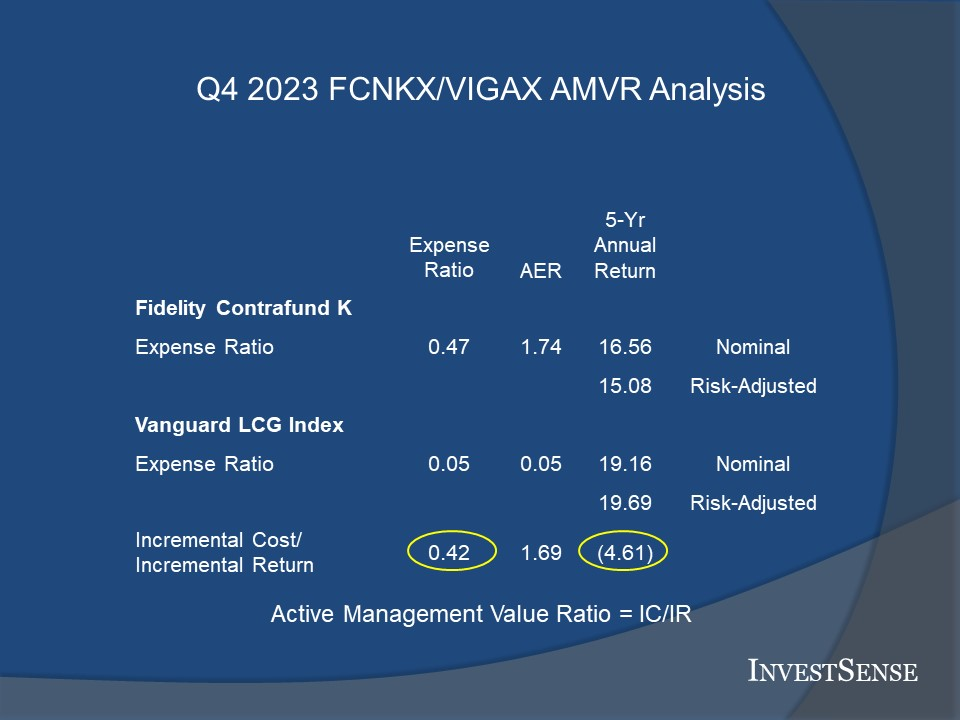
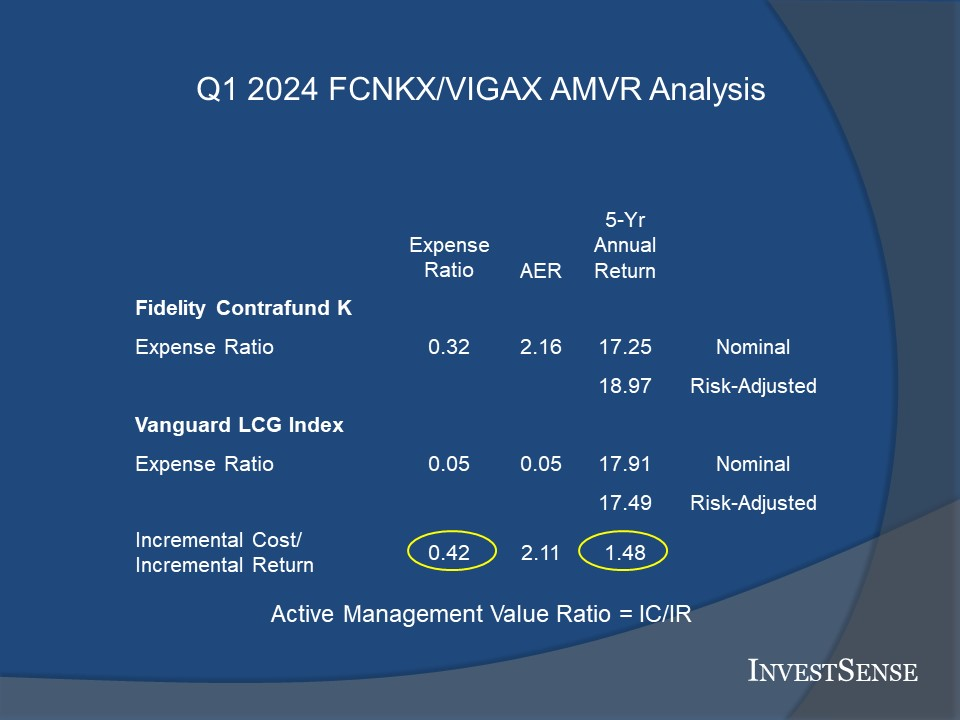
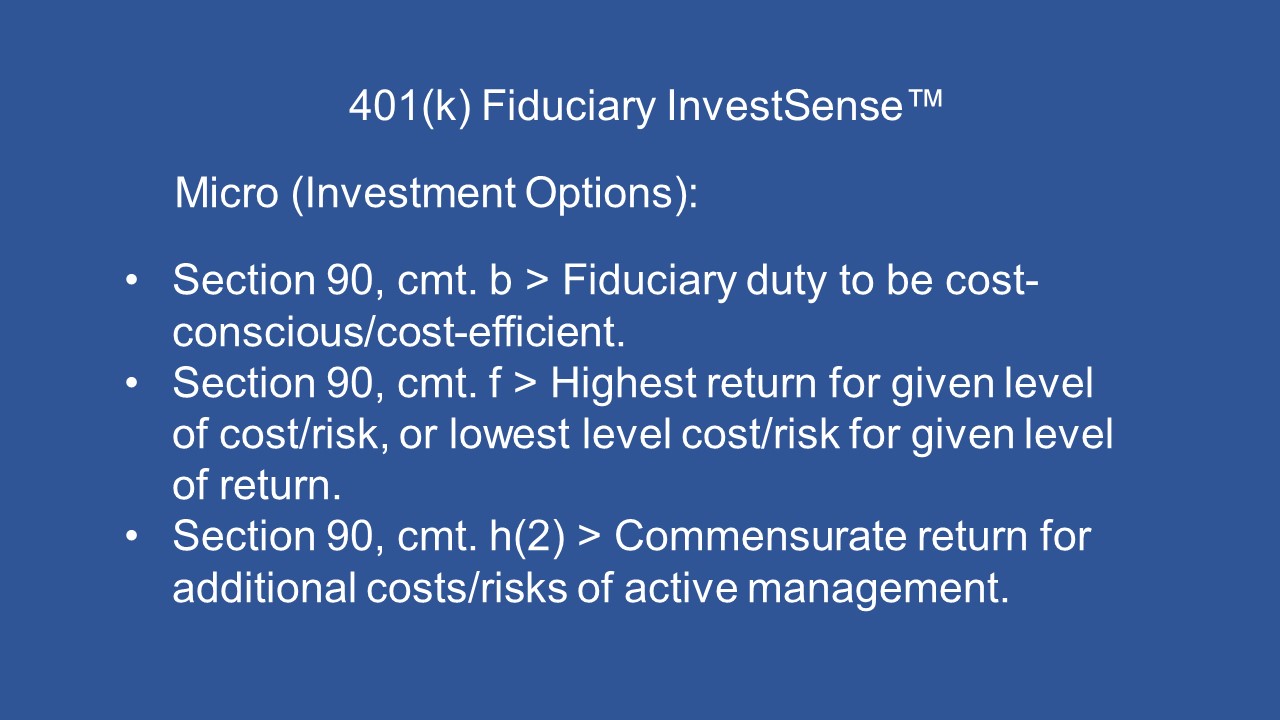


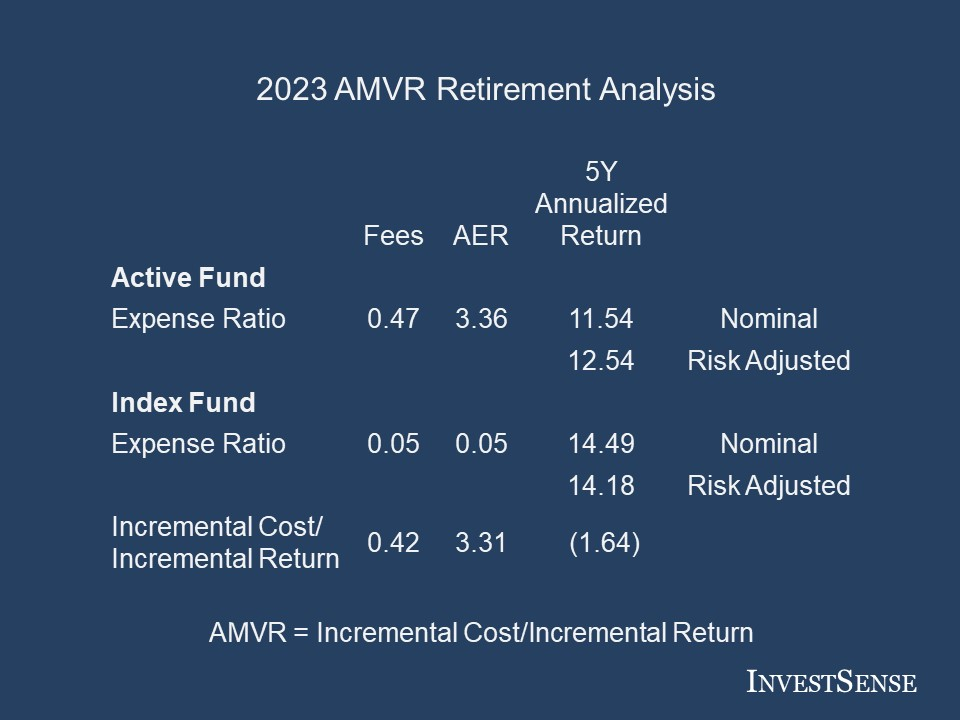


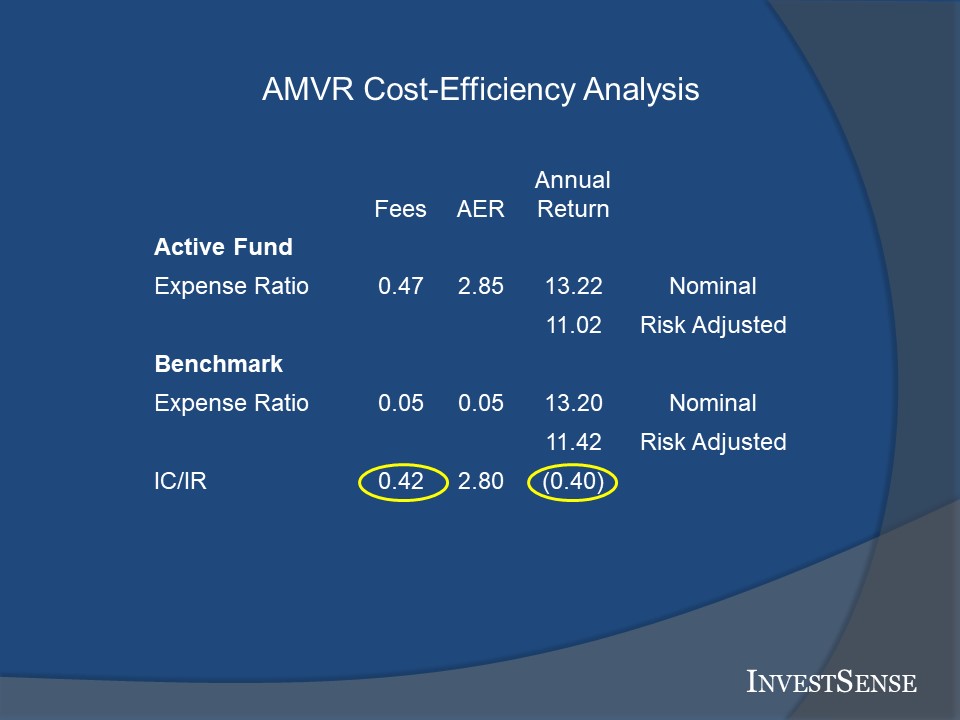
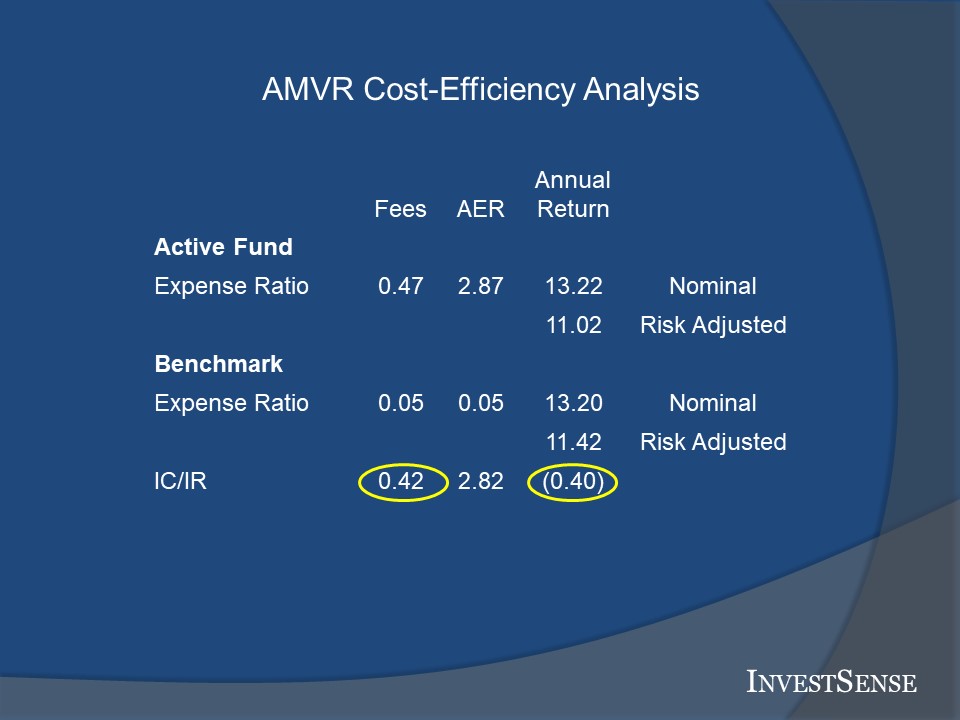
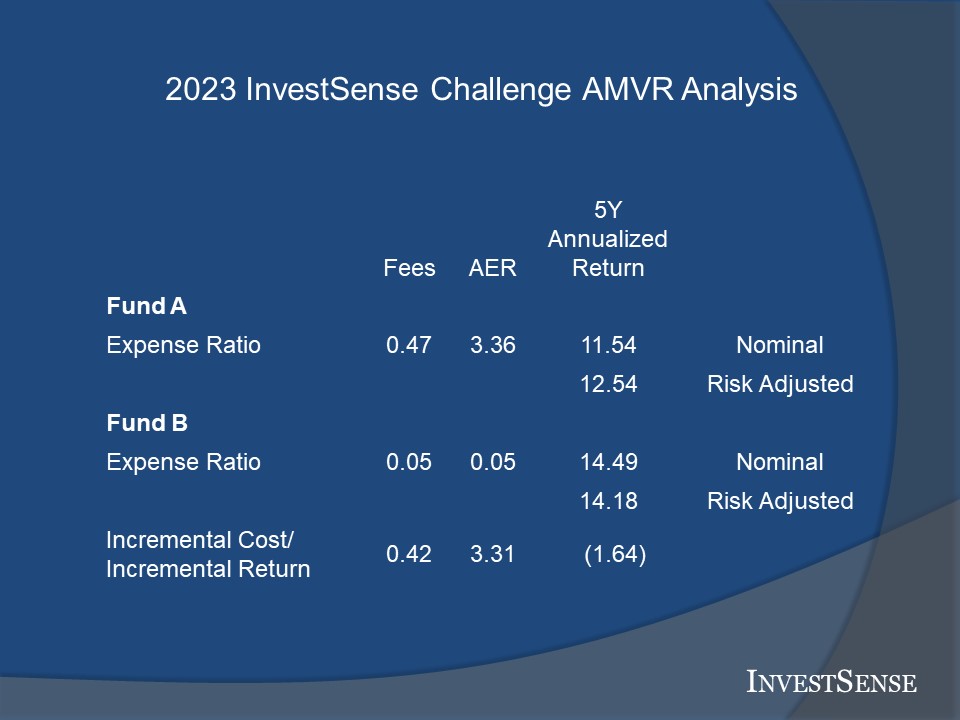
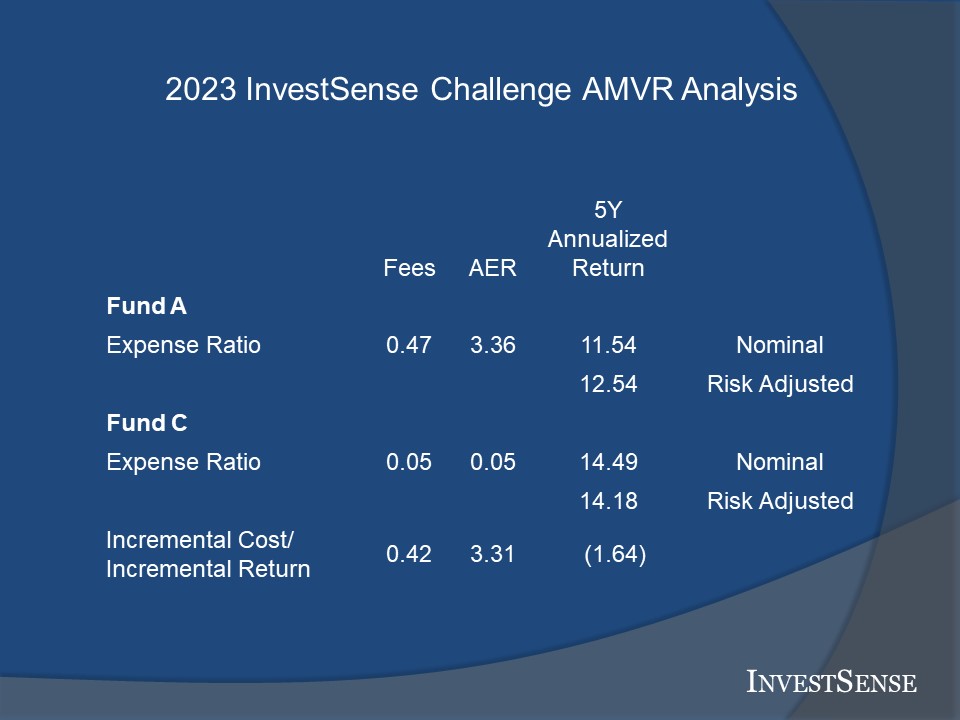
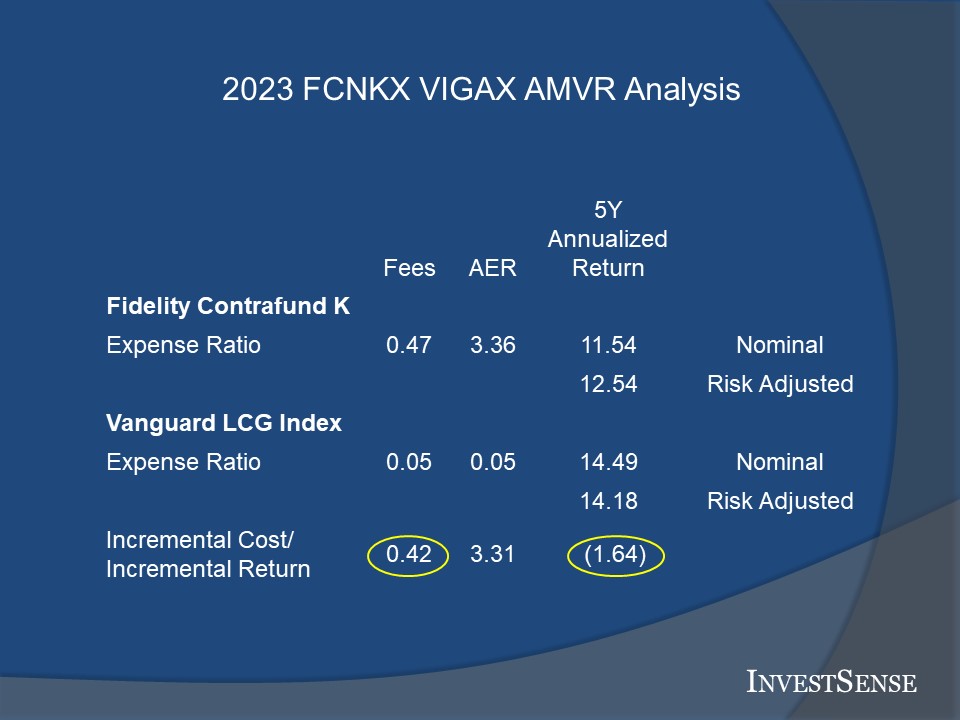


 The Prudent Investment Fiduciary Rules
You must be logged in to post a comment.