James W. Watkins, III, J.D., CFP EmeritusTM, AWMA®
InvestSense, LLC
Mathematics is the light that reveals the nature of things.”- Justice Louis Brandeis
Executive overview
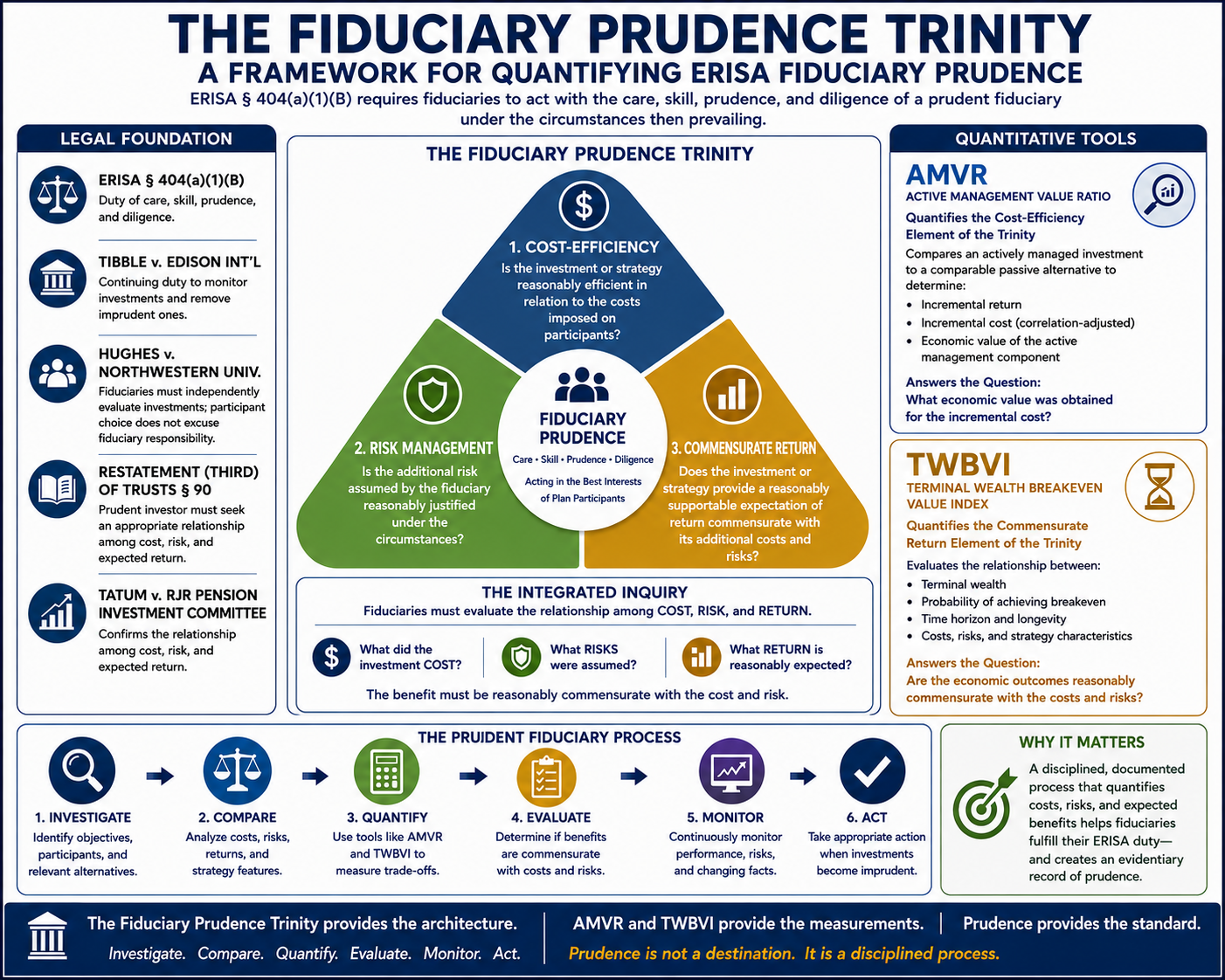
The modern concept of fiduciary prudence under the Employee Retirement Income Security Act of 1974 (ERISA) is best understood as a combination of procedural rigor, substantive investment judgment, ongoing monitoring, and accountability for the decision-making process.
ERISA § 404(a)(1)(B) requires fiduciaries to act with the care, skill, prudence, and diligence that a prudent person acting in a like capacity and familiar with such matters would use under the circumstances then prevailing. This is a context-sensitive standard, not simply a requirement to select investments that subsequently perform well.
Five decisions are particularly useful for understanding how the standard developed and continues to influence ERISA litigation.
1. Donovan v. Cunningham (1983)1
Established the importance of investigating an investment before committing plan assets and distinguished fiduciary prudence from hindsight.
2. Donovan v. Bierwirth (1983)2
Emphasized fiduciary loyalty, independent judgment, and the heightened scrutiny required when conflicts of interest arise.
3. Tibble v. Edison International (2015)3
Confirmed a continuing duty to monitor investments and remove imprudent ones, separate from the initial selection decision.
4. Fifth Third Bancorp v. Dudenhoeffer (2014)4
Clarified that employer-stock fiduciaries are not entitled to a special presumption of prudence and must be assessed under ordinary fiduciary principles.
5. Hughes v. Northwestern University (2022)5
Reinforced the duty to independently evaluate plan investment options, including costs and alternatives, notwithstanding the availability of other prudent choices.
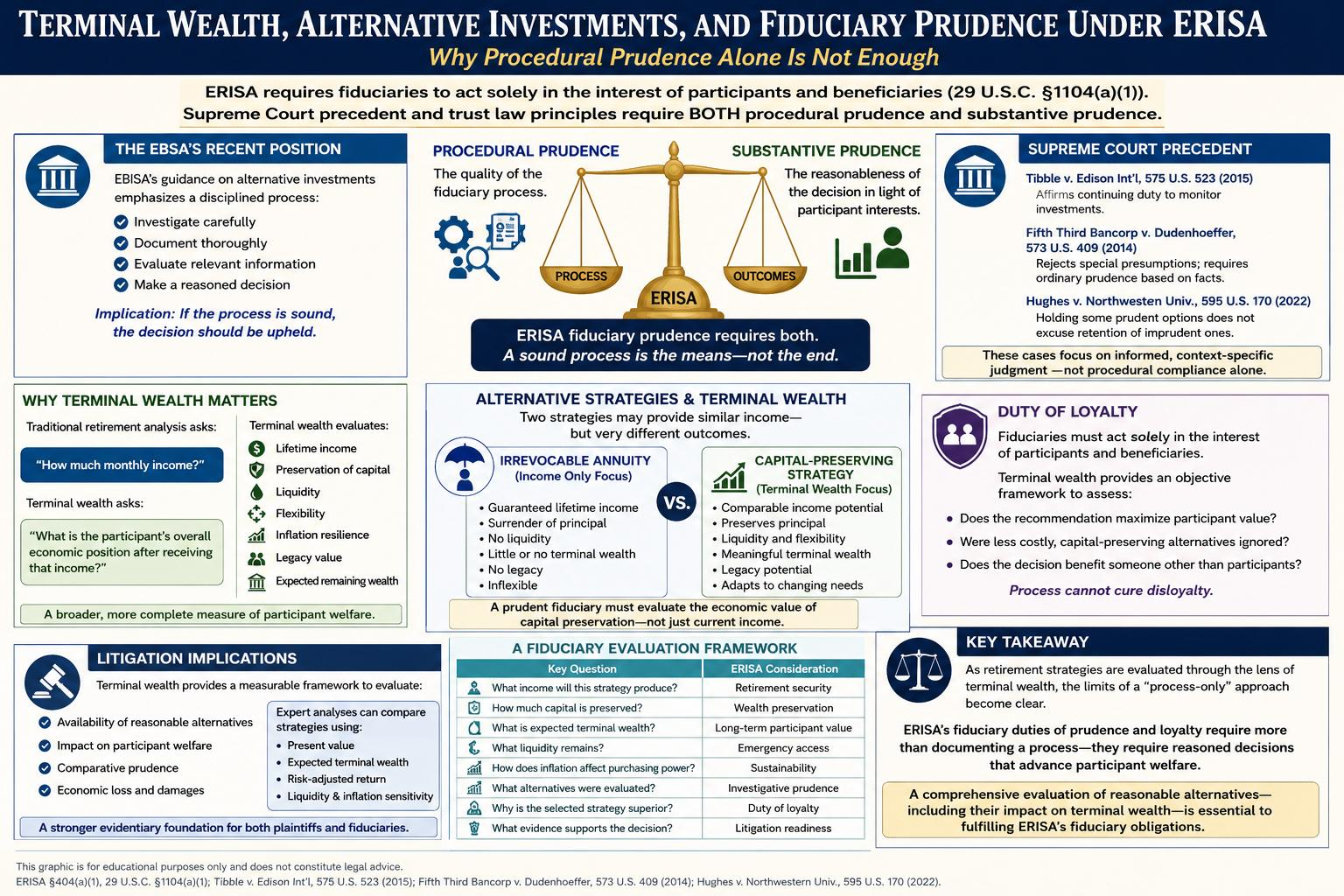
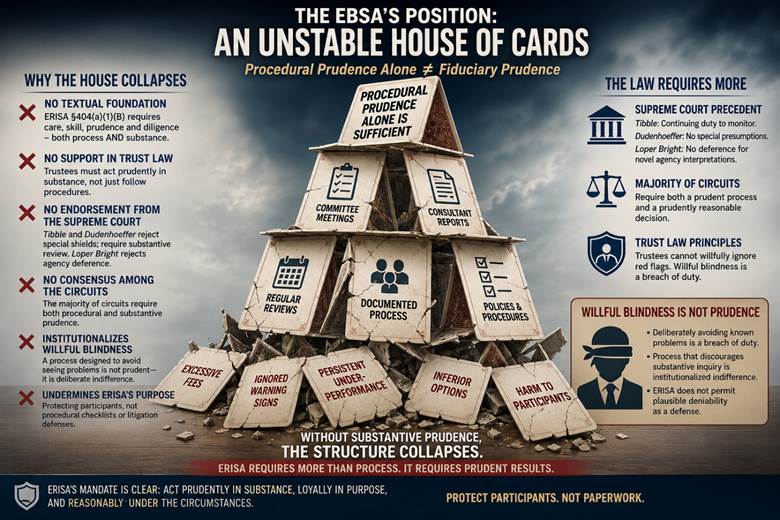
Together, these five decisions support a central proposition: a fiduciary’s process matters, but process is not a substitute for a substantively prudent decision. A documented investigation is important evidence of prudence; it does not automatically validate an investment that fails the governing standard.

1. Donovan v. Cunningham, 716 F.2d 1455 (5th Cir. 1983)
Core principle: Prudence is evaluated by the decision-making process, not merely by the investment’s eventual outcome.
Background. The case involved investments associated with an employee stock ownership plan (ESOP), including questions about the fiduciaries’ investigation and the valuation of the investment.
Legal significance. The Fifth Circuit explained that the prudent-person standard is a standard of conduct rather than a guarantee of investment success. The adequacy of the fiduciary’s investigation must be evaluated in light of the particular plan’s character and objectives.
The distinction is fundamental:
- An investment that loses money is not necessarily imprudent.
- An investment that earns money is not necessarily prudent.
- The relevant question is whether the fiduciary acted prudently under the circumstances existing when the decision was made.
Implications for plan sponsors:
The decision supports examining whether fiduciaries obtained adequate information, evaluated the relevant risks, and reached a reasoned decision before committing plan assets. It also cautions against using subsequent market performance as the sole measure of prudence.
For complex investments, including alternative investments, the practical issue is whether the investigation was sufficiently rigorous given the investment’s complexity, valuation uncertainty, liquidity restrictions, and potential effect on participants.
Important qualification: Cunningham does not establish a universal checklist of mandatory investigative steps. The adequacy of the process depends on the circumstances and the nature of the investment.
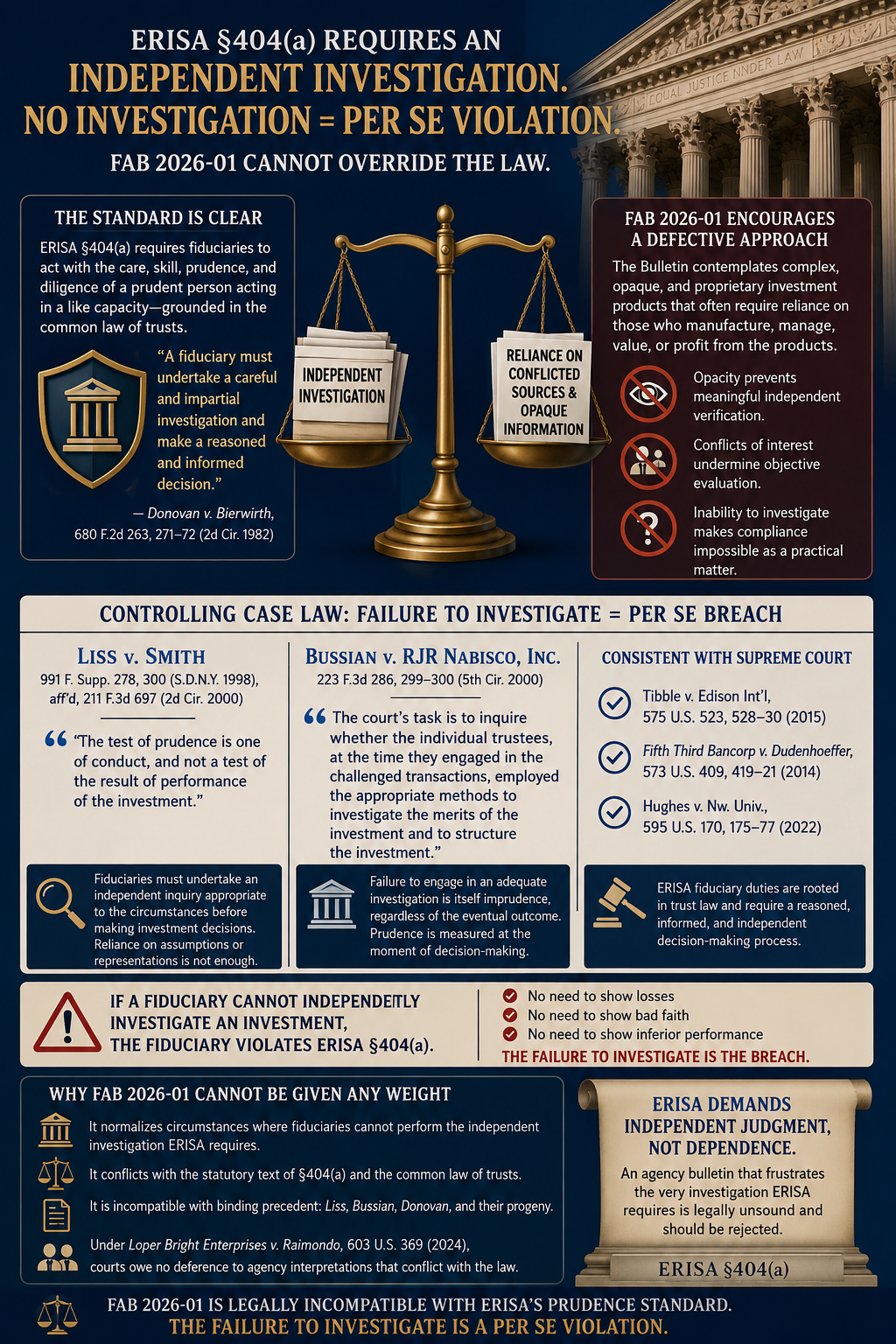
2. Donovan v. Bierwirth, 680 F.2d 263 (2d Cir. 1982)
Core principle: Fiduciaries must exercise independent judgment and act solely in the interests of participants and beneficiaries.
Background. The Grumman Corporation pension plan held substantial amounts of Grumman stock during a takeover contest. Trustees who also had corporate management responsibilities confronted decisions involving potentially conflicting interests.
Legal significance. The Second Circuit emphasized that fiduciaries cannot allow their corporate responsibilities or personal interests to displace their obligations to plan participants. The court scrutinized the trustees’ failure to undertake a sufficiently independent investigation and their reliance on advice that was not adequately independent of the conflict.
The case illustrates the relationship between two ERISA duties:
- Loyalty: Decisions must be made for the exclusive benefit of participants and beneficiaries, subject to ERISA’s statutory terms.
- Prudence: Decisions must reflect the care, diligence, and independent judgment required of a prudent fiduciary.
The duties overlap but are not interchangeable. A fiduciary can undertake a technically competent investment analysis and still violate the duty of loyalty by allowing a conflicting interest to determine the decision.
Implications for plan sponsors:
A sponsor cannot discharge its responsibilities simply by accepting the recommendation of an investment adviser, recordkeeper, consultant, or product provider.
Independent advice may be necessary, particularly when the adviser has financial incentives tied to the product being evaluated. But Bierwirth also makes clear that hiring independent counsel or another adviser is not an automatic defense. The fiduciary must exercise its own judgment.
This is particularly important when evaluating proprietary investment products, revenue-sharing arrangements, affiliated investment managers, and investments whose providers control material information.
3. Tibble v. Edison International, 575 U.S. 523 (2015)
Core principle: Prudence is a continuing obligation, not a one-time investment-selection exercise.
Background. Participants alleged that fiduciaries offered higher-priced retail-class mutual funds when materially identical, lower-priced institutional-class shares were available.
Legal significance. The Supreme Court unanimously held that trust law imposes a continuing duty to monitor investments and remove imprudent ones, separate from the duty to exercise prudence when initially selecting them. The Court remanded the case for consideration of the alleged monitoring breach under ERISA’s limitations period.
Tibble therefore extends the prudence inquiry across the investment’s lifecycle.
A fiduciary’s responsibilities include:
- Initial selection: Investigate the investment and determine whether it is prudent.
- Periodic monitoring: Reassess its continued suitability and the availability of reasonable alternatives.
- Corrective action: Remove or replace an investment when continued retention is imprudent, allowing a reasonable period for action where appropriate.
The Supreme Court expressly did not prescribe the precise scope or frequency of the required review. Those questions remain context-dependent.
Implications for plan sponsors.
A committee cannot assume that an investment remains prudent simply because it was properly selected years earlier.
For example, changes in institutional share-class availability, fees, liquidity, risk characteristics, investment management, or product terms may require renewed investigation.
For alternative investments, monitoring may be especially consequential because valuations can be infrequent, redemption restrictions may change, and the information necessary to assess ongoing prudence may be controlled by the investment manager.
Litigation significance: A claim need not depend exclusively on proving that the original selection was imprudent. A failure to monitor and correct an investment can constitute a distinct breach.
4. Fifth Third Bancorp v. Dudenhoeffer, 573 U.S. 409 (2014)
Core principle: ERISA’s prudence standard applies to ESOP fiduciaries without a special presumption of prudence.
Background. Participants alleged that fiduciaries of an employee stock ownership plan imprudently continued to invest in employer stock despite information suggesting that the stock was overvalued.
Legal significance. The Supreme Court unanimously rejected the special presumption of prudence that several courts had applied to ESOP fiduciaries. Except for the statutory exemption from diversification requirements and the associated qualification to prudence, ESOP fiduciaries are subject to ERISA’s ordinary prudence standard.
The decision has two important dimensions:
First, fiduciary status does not excuse inadequate investment judgment. A plan’s authorization or purpose of holding employer stock does not automatically establish that every decision to buy or retain that stock is prudent.
Second, the Court addressed the difficulty of pleading employer-stock claims. It established particular considerations for evaluating claims based on publicly available information and inside information, including whether an alleged alternative action was legally permissible and whether a prudent fiduciary could have concluded that the action would do more harm than good to the fund.
Dudenhoeffer is therefore not a blanket endorsement of plaintiffs’ claims. It eliminates a special presumption while imposing important constraints on particular types of allegations.
Implications for plan sponsors.
The broader lesson is that statutory authorization to offer an investment does not necessarily establish the prudence of a particular decision to select, purchase, or retain it.
This principle is relevant beyond ESOPs. Fiduciaries should distinguish between a plan’s authority to offer an investment category and the independent obligation to determine whether a particular investment is prudent under the circumstances.
For alternative investments, for example, authorization to offer private equity or real estate does not by itself answer questions about valuation, fees, liquidity, leverage, diversification, or expected return.
5. Hughes v. Northwestern University, 595 U.S. 170 (2022)
Core principle: Fiduciaries must evaluate each investment option in context; prudent alternatives elsewhere in the menu do not automatically excuse an imprudent option.
Background. Participants alleged that Northwestern University offered unnecessarily expensive investment options, paid excessive recordkeeping fees, and failed to provide lower-cost alternatives.
The Seventh Circuit had relied in part on the availability of lower-cost options within the plans to reject the participants’ claims.
Legal significance. The Supreme Court unanimously vacated the judgment and remanded. It held that a categorical rule treating the availability of some low-cost options as sufficient to defeat claims concerning other options was inconsistent with ERISA’s context-specific prudence inquiry and the continuing duty to monitor investments.
The Court’s reasoning reinforces several propositions:
- Fiduciaries must evaluate the prudence of individual investment options.
- The availability of prudent choices does not automatically cure the presence of imprudent ones.
- Costs and reasonable alternatives remain relevant to the fiduciary inquiry.
- Participant control over asset allocation does not automatically absolve plan fiduciaries of responsibility for the investment menu they construct and maintain.
Hughes did not establish that every expensive investment is imprudent, nor did it require every plan to offer the lowest-cost investment in every category. Cost must be evaluated in context, including the services, characteristics, and benefits obtained.
Implications for plan sponsors.
A committee should be able to explain why each material investment option belongs in the plan, not merely why the menu as a whole contains some prudent choices.
For example, offering a low-cost index fund does not necessarily justify retaining a materially more expensive actively managed fund. The fiduciary should be able to articulate and document the relevant differences, the investment’s expected benefits, the costs of obtaining them, and the basis for concluding that the option remains prudent.
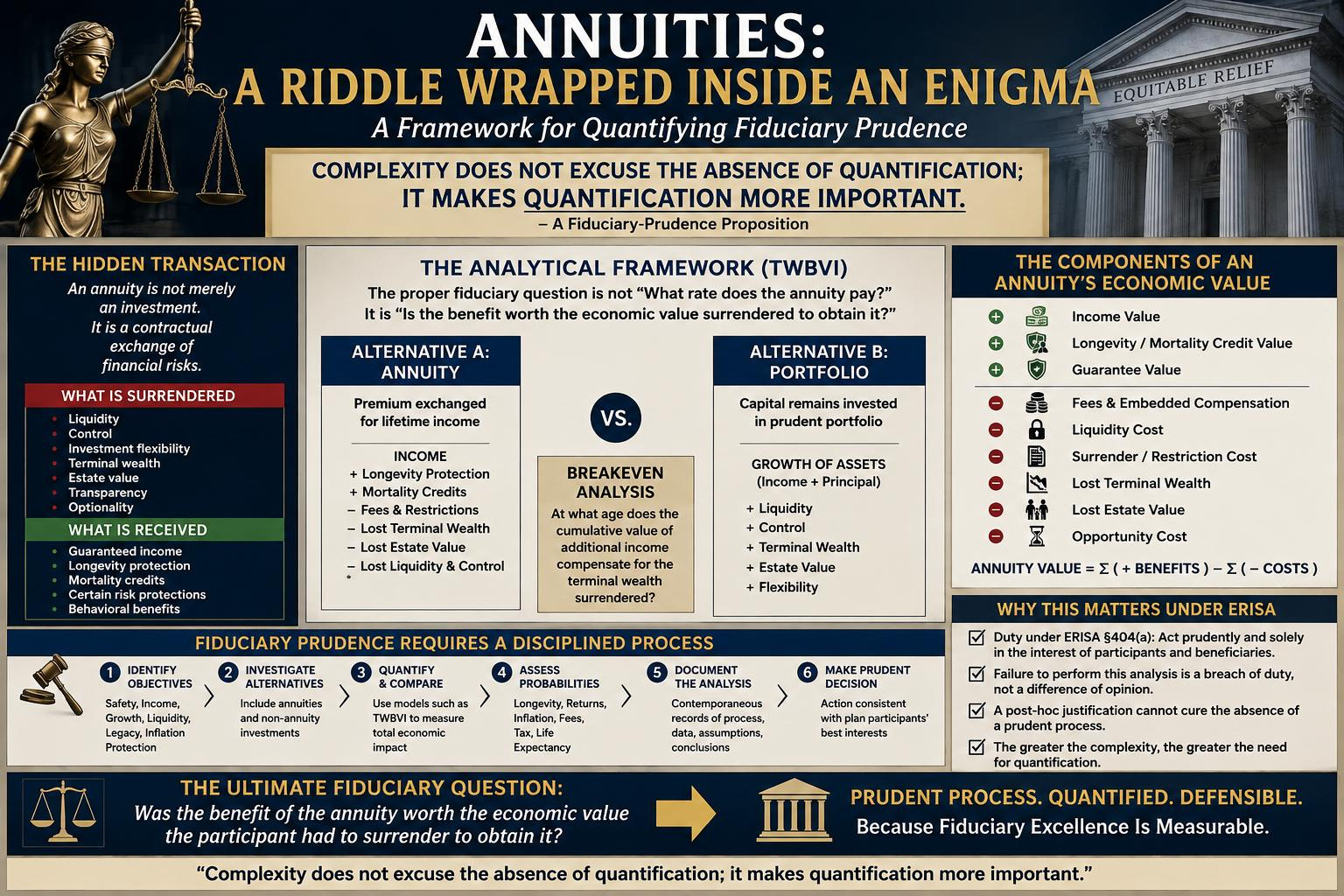
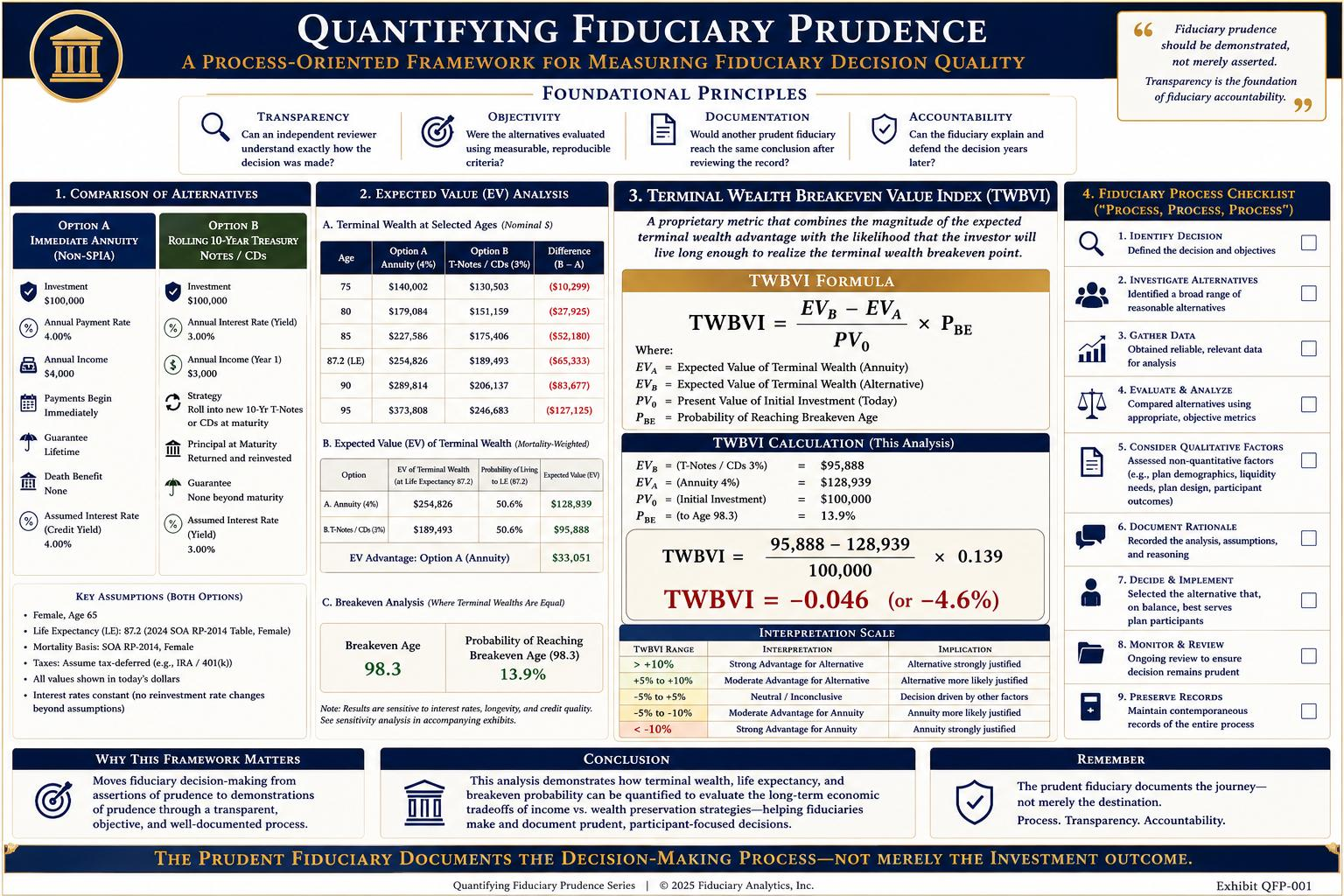
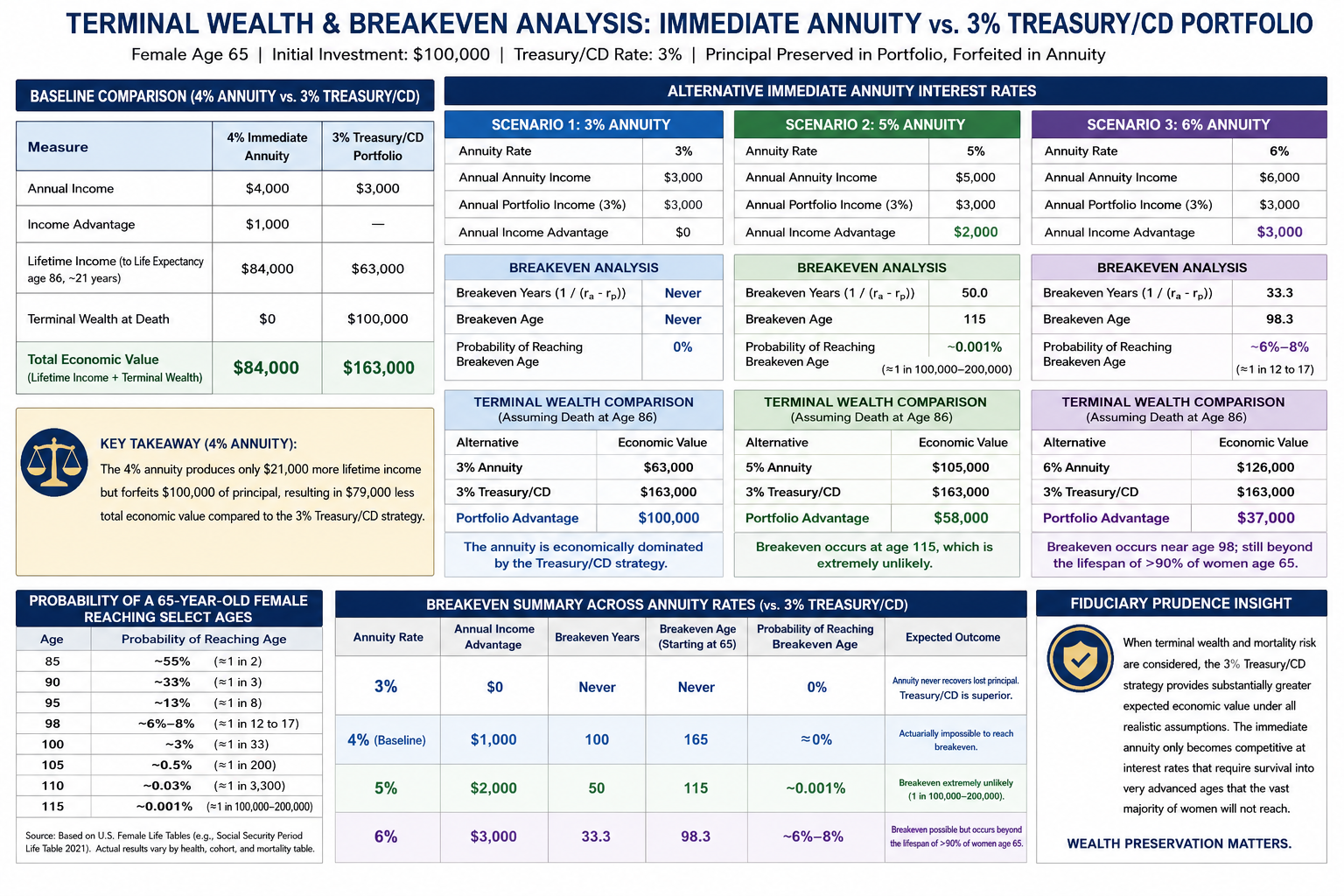
The same reasoning supports scrutiny of proprietary target-date funds, managed accounts, annuity products, and alternative investments.
Comparative analysis: What the five decisions collectively establish
| Decision | Principal contribution | Fiduciary implication |
| Donovan v. Cunningham | Conduct rather than outcome | Investigate before investing; do not rely on hindsight. |
| Donovan v. Bierwirth | Independent judgment and loyalty | Identify conflicts and prevent them from controlling the decision. |
| Tibble | Continuing monitoring duty | Reassess and remove imprudent investments when necessary. |
| Dudenhoeffer | No special ESOP presumption | Statutory authorization does not automatically establish prudence. |
| Hughes | Context-specific evaluation of individual options | Prudent alternatives elsewhere in the menu do not automatically cure an imprudent option. |
The deeper legal issue: Is ERISA prudence procedural or substantive?
The five decisions support a more nuanced conclusion than either extreme.
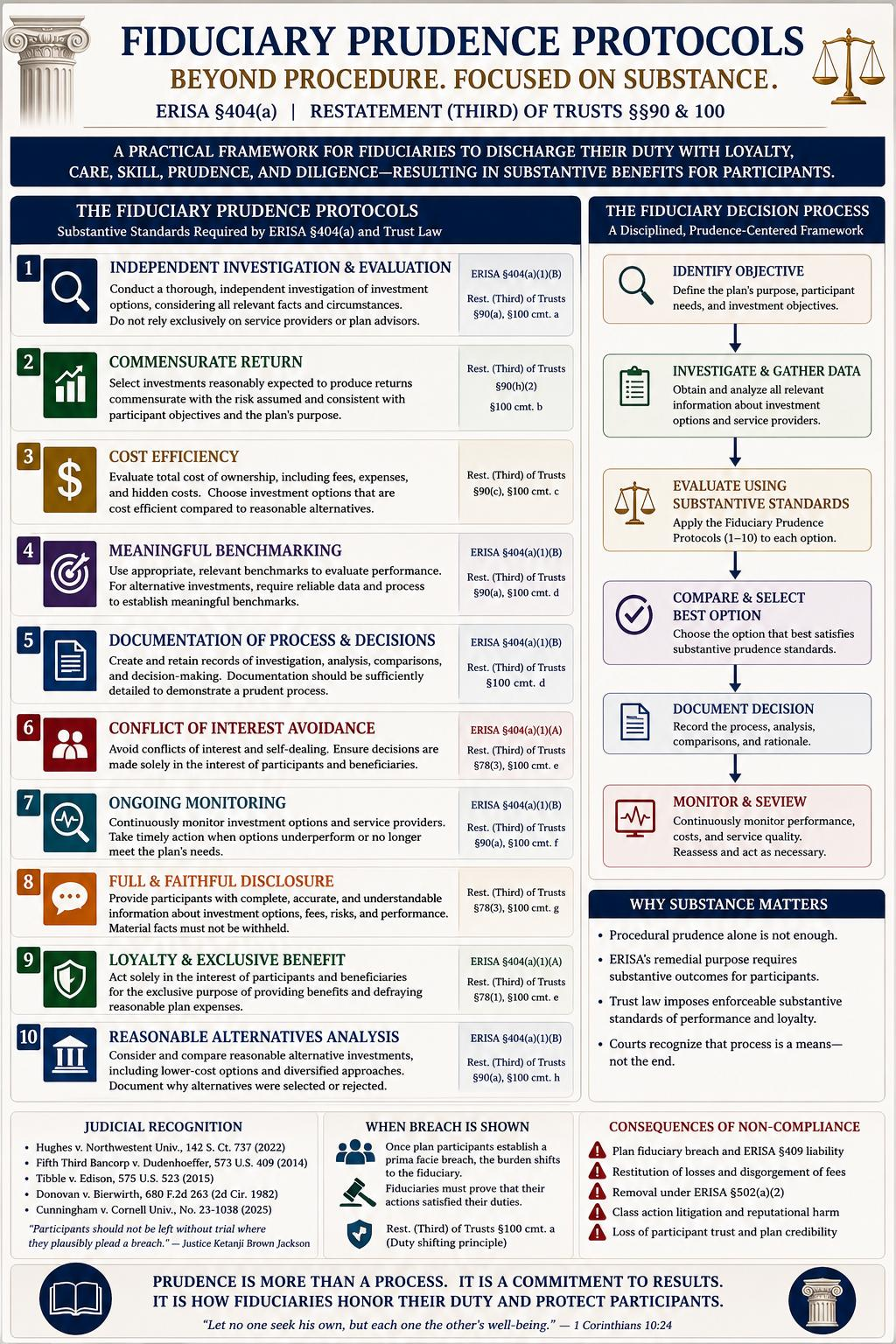
Procedural prudence is necessary, but it is not the entirety of the fiduciary obligation.
A fiduciary must undertake an investigation appropriate to the circumstances, evaluate the investment’s relevant characteristics, and exercise independent judgment. But the inquiry does not necessarily end upon proof that meetings occurred, consultants were hired, reports were reviewed, or minutes were prepared.
A well-documented process can still produce an imprudent decision. Conversely, an investment loss does not itself establish that the decision was imprudent.
The distinction can be expressed as follows:
1. Procedural inquiry
Did the fiduciary obtain and critically evaluate the information a prudent fiduciary would consider under the circumstances?
2. Substantive investment judgment
Was the decision, based on the information and circumstances then prevailing, consistent with ERISA’s prudence standard?
3. Continuing accountability
Did the fiduciary monitor the investment, reassess material changes, and take corrective action when warranted?
These are analytical stages, not three independent statutory tests or a formula adopted verbatim by the Supreme Court. They help organize the inquiry required by § 404(a)(1)(B), read in light of the relevant decisions.
Why this matters for alternative investments
Alternative investments can make it difficult to determine whether a committee’s process was adequate because material information may be unavailable, opaque, infrequently reported, or supplied exclusively by the investment manager.
The cases above support several practical questions:
- What independent investigation did the fiduciary conduct?
- What information was unavailable, and how did the fiduciary account for that limitation?
- Were fees, liquidity, valuation practices, leverage, and material risks examined?
- Were reasonable alternatives evaluated?
- What evidence supports the conclusion that the investment’s expected benefits justify its costs and risks?
- What monitoring procedures will identify a change in circumstances that makes continued retention imprudent?
These questions do not create categorical prohibitions against alternative investments. They focus on whether the fiduciary fulfilled the statutory standard under the circumstances.
Final assessment
The five decisions reveal an evolving but coherent conception of ERISA fiduciary prudence:
- Cunningham: Evaluate conduct rather than outcomes.
- Bierwirth: Require independent judgment and loyalty.
- Dudenhoeffer: Apply the ordinary prudence standard without an unwarranted special presumption.
- Tibble: Require continuing monitoring.
- Hughes: Evaluate investment options individually and contextually.
The ordering of the final three reflects their conceptual relationship rather than their chronology.
For litigation purposes, the central question is not simply whether a plan sponsor selected an investment that subsequently performed poorly. It is whether the sponsor fulfilled its duties when selecting and retaining the investment, including whether it investigated the relevant facts, evaluated the investment against reasonable alternatives, exercised independent judgment, and monitored its continued prudence. In real estate, it’s location, location, location. In fiducairy prudence and ERISA litigation, it’s process, process, process.
For plan sponsors, the lesson is to maintain a contemporaneous record that connects the information considered to the decision made. For plaintiffs, the corresponding challenge is to identify plausible deficiencies in that process and explain why they could matter under the governing prudence standard.
One final caution: These five decisions are a useful foundation, not an exhaustive statement of current ERISA law. Tibble and Hughes are especially important for monitoring and investment-menu claims, while the precise evidentiary and pleading standards depend on the claim, jurisdiction, and applicable precedent. Any litigation-ready application should verify subsequent appellate treatment and the relevant circuit’s current law.
Lagniappi
In New Orleans, especially in the French Quarter, you often hear the term “lagniappi,” which meas “a small, unexpected gift, bonus, or extra item given to a customer. We give our fudiciaryrisk managment clients two extra cases to assist them in evaluating the fiducairy prudence of investment option investments.
The first case, Brotherston v. Putnam Investments6 was a much anticipated decision. Judge Kayatta did not disappoint. :
Moreover, any fiduciary of a plan such as the Plan in this case can easily insulate itself by selecting well-established, low-fee and diversified market index funds. And any fiduciary that decides it can find funds that beat the market will be immune to liability unless a district court finds it imprudent in its method of selecting such funds, and finds that a loss occurred as a result. In short, these are not matters concerning which ERISA fiduciaries need cry “wolf.”10 (citations omitted)7
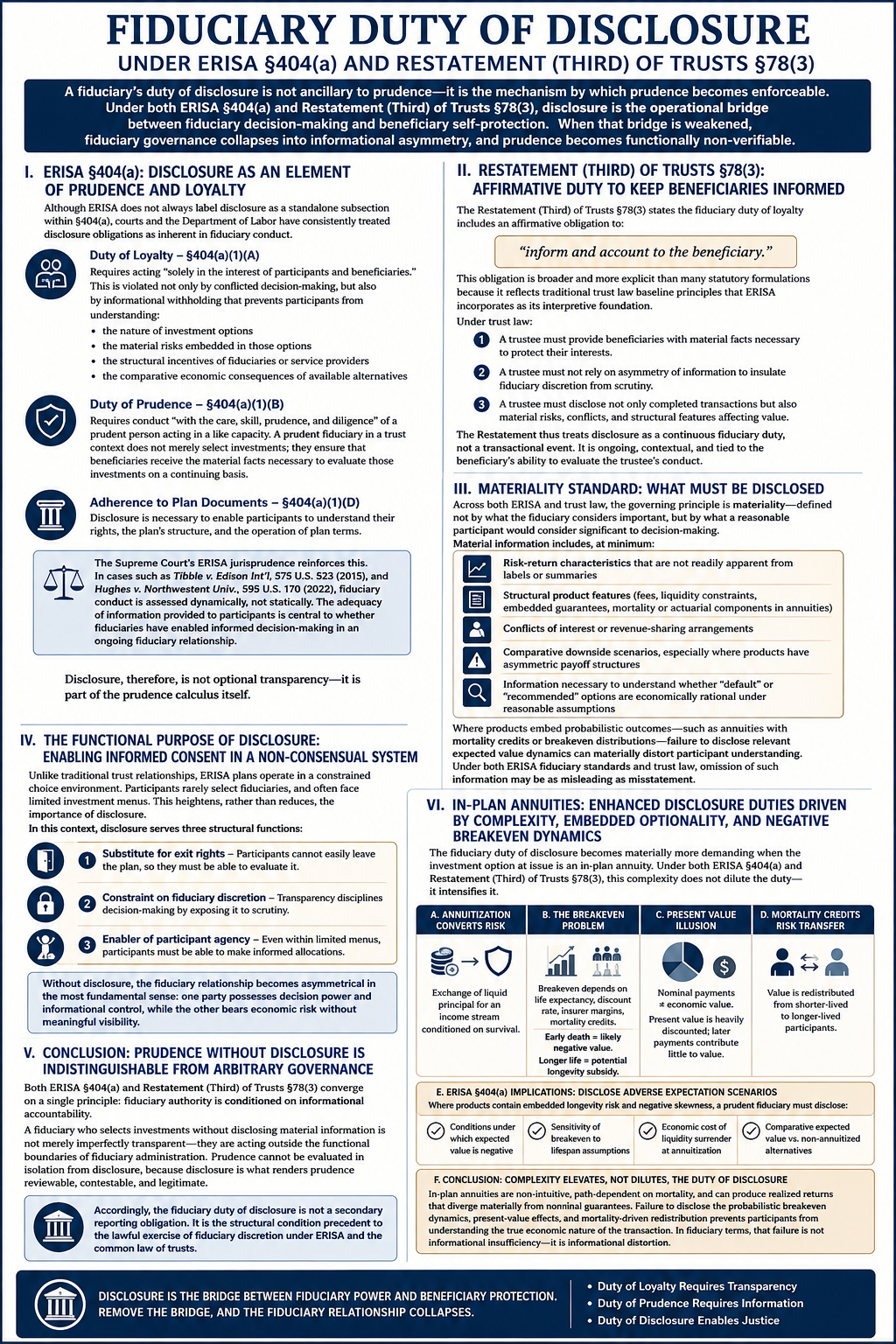
The second case is Gregg v. Transportation workers of America International.8 At issue was the plan’s reliance on two insurance salesmen in choosing annuity for the plan, in esssence whether reliance on advice provided by a commissioned salesperson can ever be deemed reliable due to the obvious conflict of interest issues.
In Gregg, the Sixth Circuit the court rejected the notion that fiduciaries may simply rely upon recommendations from individuals whose compensation and incentives are tied to the sale of the very products under consideration. The court emphasized that “one extremely important factor is whether the expert advisor truly offers independent and impartial advice.” The court further recognized that a broker compensated through commissions is not an objective analyst because such a person possesses a financial incentive to consummate transactions rather than provide disinterested fiduciary guidance. The Sixth Circuit accordingly held that reliance upon conflicted advisors could not automatically satisfy ERISA’s fiduciary obligations.9
These two decisions can provide quick reminders on common issues in ERISA cases. Clients have told me that the cases immediately come to mind often in plan investment committee meetings.
Notes
1. Donovan v. Cunningham, 716 F.2d 1455, 1467 (S.D.Tex. 1983).
2. Donovan v. Bierwirth, 680F.2d 263 (2d Cir. 1982.
3. Tibble v. Edison International, 135 S. Ct. 1823 (2015).
4. Dudenhoeffer, 573 U.S. 409 (2014)..
5. Hughes v. Northwestern University, 595 U.S. 170 (2022).
6. Brotherston v. Putnam Investments, LLC, 907 F.3d 17 (2018).
7. Ibid.
8. Gregg v. Transportation Workers of America Int’l, 343 F.3d. 833, 841.
9. Ibid.
© Copyright 2026 InvestSense, LLC. All rights reserved.
This article is for informational purposes only and is neither designed nor intended to provide legal, investment, or other professional advice since such advice always requires consideration of individual circumstances. If legal, investment, or other professional assistance is needed, the services of an attorney or other qulified professional advisor should be sought.









You must be logged in to post a comment.