James W. Watkins, III, J.D., CFP EmeritusTM, AWMA®
With all the recent SCOTUS decision in Cunningham v. Cornell University1, there has been a lot of discussion about Prohibited Transactions and Prohibited Transaction Exemptions (PTEs). That is understandable; however, it is important for plan sponsors not to overlook the traditional fiduciary duties of fiduciary prudence and loyalty.
As a fiduciary risk management counsel, I offer fiduciary audits and plan reviews. Unfortunately, I often find that plans are unknowingly exposed to unnecessary fiduciary liability due to legally insufficient fiduciary processes. The problems are typically due to a lack of understanding as to what fiduciary status requires and/or a lack of experience and/or knowledge about certain investments.
With our clients, we stress the importance of selecting cost-efficient investment options. To help them accomplish this goal, we teach them about the simplicity and benefits of cost-benefit analysis.
Companies around the world routinely use cost-benefit to evaluate proposed projects. However, my experience has been that the financial services industry and its agents typically do not use cost-benefit analysis in evaluating investment options. Why? Because, more often than not, cost-benefit analysis will reveal that actively managed mutual fund investments are not cost-efficient when compared to comparable passivley managed index funds.
For over twenty years, I served as a compliance professional for broker-dealers and insurance companies. As I got a better understanding of those businesses, I gained a greater understanding of their “tricks of the trade,” ” and how to properly deal with them.
Several years ago, I created a simple metric, the Active Management Value Ratio™ (AMVR). The AMVR is based on the research and concepts of investment icons such as Nobel laureate Dr. William F. Sharpe, Charles D. Ellis, and Burton G. Malkiel. /quote
The best way to measure a manager’s performanceis to compare his or her return with that of a comparable passive investment.2
So, the incremental fees for an actively managed fund relative to its incremental returns shoud always be compared to the fees for a comaprable index fund relative to its returns. When you do this, you’ll quickly see that the incremental fees for active management are really, really high – on average, over 100 of incremental returns.3
Past performance is not helpful in predicting future returns. The two variables that do the best job in pedicting future performance [of mutual funds] are expense ratios and turnover.4
So, the incremental fees for an actively managed mutual fund relative to its incremental returns should always be compared to the fees for a comparable index fund relative to its returns. When you do this, you’ll quickly see that the incremental fees for active management are really, really high – on average, over 100% of incremental returns.
The AMVR is essentially a cost-benefit analysis using incremental cost and incremental returns, or versions thereof, in performing the analysis. Shown below are sample slides showing the basic AMVR analysis process.
Using purely nominal numbers, FCNKX’s incremental benefit does exceed its incremental costs. But a good ERISA plaintiff’s attorney will argue that a more accurate analysis of fiduciary prudence is provided by using the incremental return numbers obtained by applying Ross Miller’s Active Expense Ratio (AER), which factors in the correlation of returns between two mutual funds. Miller explains the value of his AER metric as follows:
Mutual funds appear to provide investment servicws for relatively low fees because they bundle passive and active funds together in a way that understates the true cost of active management. In particular, funds engaging in ‘closet’ or ‘shadow’ indexing charge their investors for active maangement while providing them with little more than an indexed investment. Even the average mutual fund, which ostensibly provides only active management, will have 90% of the variance in its returns explained by its benchmark index.5
So, essentially, the higher the correlation between an actively managed fund and a comparable index fund, the less likely the value of active management, if any, being provided by the actively managed fund.
Using the AER, an argument can be made that FSPGX is the much better choice in terms of fulfilling a plan sponsor’s fiduciary duties. The fact that FSPGX and FCNKX are offered by the same mutual fund company, Fidelity, and belong to the fund category, large cap growth, makes that analysis even more compelling. At the very least, an argument should be made that a plan sponsor should inquire into the availability of FSPGX for the plan rather than Fidelity Contrafund fund, which ironically is one of the most common mutual funds found in 401(k) plans. When I review plans, one of the first things I look for is whether Fidelity Contrafund is offered within the plan. Humble Arithmetic, as John Bogle was fond of saying.
So, if Fidelity refuses to offer FSPGX to a plan, what should the plan sponsor’s response be? A simple fiduciary risk management principle we teach our clients is that a fiduciary can never “settle.” “Settling” is the antithesis of a fiduciary’s “best interest” duty under the fiduciary duty of loyalty.
A prudent plan sponsor looking for cost-efficient options for a plan should always do an AMVR analysis using a comparable Vanguard index fund. I know various courts and judges dismiss Vanguard funds, some claiming you cannot compare “apples and oranges.”
That is absurd, simply a ruse to protect the cost-inefficient actively managed mutual fund industry. In fact, one of the primary benefits of using cost-benefit analysis in fiduciary prudence analysis is that it allows fiduciaries to compare investments based purely on an objective basis, cost-efficiency. Furthermore, Section 100 of the Restatement (Third) of Trusts recognizess the validity of comparing actively managed funds with comparable index funds.6 Judge Kayatta cited Section 100 of the Restatement in his opinion in Brotherton v. Putnam Investments LLC.7 As for Vanguard index funds specifically, Judge Sidney Stein, the well-respected district court judge for the Southern District of New Yor,k aka the Wall Street federal Court, has recognized the validity of using Vanguard index funds as comparators in forensic analysis.8
In the AMVR analysis shown for FCNKX and VIGAX (Vanguard Large Cap Growth Index Fund), based purely on the nominal, or publicly reported, numbers, VIGAX, is the more prudent option due to anpositive incremental risk-adjusted return (0.07) that is also less than the incremental cost between the two funds (0.51). If we base the comparison on the AER correlation-adjusted costs, the prudence of the VIGAX is even clearer (3.26 v 0.07).
In both of the comparisons shown, the correlation of returns between the two funds was 97. Surprisingly, such a high correlation of returns is not unusual today, as claims of “closet index” funds is a much-debated issue, not only in the U.S., but internationally as well. Canada and Australia have been the leaders in studying the existence and impact of closet index funds.
The AMVR itself, both the calculation and interpretation process, are very simple. Just divide the incremental cost between the funds by the incremental return between the funds. Since cost-efficiency is the goal, an AMVR score greater than 1.00 indicates that the actively managed fund is cost-inefficient relative to the comparator index fund. Actively managed funds that do not provide a positive incremental return should be automatically disqualified from consideration, since they will automatically be cost-inefficient and imprudent.
One of the “secret” benefits of using the AMVR metric is that it automatically reveals the unrewarded premium that a plan participant would be paying. That premium is common used by plaintiff’s attorneys in ERISA actions in calculating damages in a trial. An AMVR score of 1.25 would indicate a premium of 25% per share. Multiply the shares in the plan by the premium to determine the damages due to the inclusion of a particular fund within a plan.
The good news is that a plan sponsor can limit any potential fiduciary liability in connection with mutual funds and similar investment, e.g., TDFs, by using the AMVR to evaluate competing investment options for a pension plan. I used the AMVR in a case to compare the index-based version of Fidelity’s TDFs with the actively managed versions of the same TDFs.
ERISA plaintiff’s attorneys are well aware of the AMVR. Hopefully, your plan will never be involved in fiduciary litigation. However, if so, do not be surprised to see the familiar AMVR slide format at trial.
A prudent plan sponsor looking for cost-efficient options for a plan should always do an AMVR analysis using a comparable Vanguard index fund. I know various courts and judges dismiss Vanguard funds, some claiming you cannot compare “apples and oranges.”
That is an absurd assertion and a ruse to protect the cost-efficient actively managed mutual fund industry. In fact, one of the primary benefits of using cost-benefit analysis in fiduciary prudence analysis is that it allows fiduciaries to compare different kinds of investments with each other based purely on cost-efficiency. Furthermore, Section 100 of the Restatement (Third) of Trusts authorizes the validity of comparing actively managed funds with comparable index funds.9 Judge Kayatta cited Section 100 of the Restatement in his opinion in Brotherton v. Putnam Investments LLC.
So to determine whether there was a loss, it is reasonable to compare the actual returns on that portfolio to the returns that would have been generated by a portfolio of benchmark funds or indexes comparable but for the fact that they do not claim to be able to pick winners and losers, or charge for doing so. Restatement (Third) of Trusts, § 100 cmt. b(1) (loss determinations can be based on returns of suitable index mutual funds or market indexes).10
As for Vanguard index funds specifically, Judge Sidney Stein, the well-respected district court judge for the Southern District of New York aka the Wall Street Court, has supported the use of Vanguard index funds.11
In the AMVR analysis shown for FCNKX and VIGAX (Vanguard Large Cap Growth Index Fund), based purely on the nominal, or publicly reported numbers, VIGAX, is the more prudent option due to an incremental risk-adjusted return (0.07) that is less than the incremental cost between the two funds (0.51). If we base the comparison on the AER correlation adjusted costs, the prudency of the VIGAX is even clearer (3.26 v 0.07).
In both of the comparisons shown, the correlation of returns between the two funds was 97. Surprisingly, such a high correlation of returns is not unusual today, as claims of “closet index funds” is a much-debated issue, not only in the U.S., but internationally as well. Canada and Australia have been the leaders in studying the existence and impact of closet index funds.
The AMVR itself, both the calculation and interpretation are very simple. Just divide the incremental cost between the funds by the incremental return between the funds. Since cost-efficiency is the goal, an AMVR score greater than 1.00 indicates that the actively managed fund is cost-inefficient relative to the comparator index fund. Actively managed funds that do not provide a positive incremental return should be automatically disqualified from consideration, since they will automatically be cost-inefficient.
One of the “secret” benefits of using the AMVR metric is that it automatically indicates the unrewarded premium that a plan participant would be paying. That premium is a plaintiff’s attorney would use in calculating damages in a trial. An AMVR score of 1.25 would indicate a premium of 25%, or 25 basis points on each share. Multiply the shares in the plan by the premium to determine the damage due to a particular fund.
The good news is that a plan sponsor can limit any potential fiduciary liability in connection with mutual funds and similar investments by using the AMVR to evaluate competing investment options for a pension plan. The AMVR can even be used to evaluate the prudence of individual elements of TDF funds.
ERISA plaintiff’s attorneys are well aware of the AMVR. Hopefully, your plan will never be involved in fiduciary litigation. However, if so,, do not be surprised to see the familiar AMVR slide format at trial.
Going Forward A basic understanding of the core principles set out in the Restatement (Third) of Trusts is an absolute necessity for prudent plan sponsors and other investment fiduciaries. In my opinion, three key comments in Section 90 of the Restatement, aka The Prudent Investor Rule, are shown in the box below.
We tell our clients that if they simply remember and apply these three concepts in their practices, they will greatly reduce the risk of unwanted fiduciary liability exposure. Time has proven that advice to be true.
When I think of fiduciary risk management, I think of a quote by the late General Norman Schwarzkopf. I always used this quote in my closing argument to the jury.
The truth of the matter is that you always know the right thing to do. The hard part is doing it.
Notes 1. Cunnigham v. Cornell University, Supreme Court Case No. 23-1007 (2024). 2. William F. Sharpe, “The Arithmetic of Active Investing,” available online t https://web.stanford.edu/~wfsharpe/art/active/active.htm. 3. Charles D. Ellis, “Letter to the Grandkids: 12 Essential Investing Guidelines,” https://www.forbes.com/sites/investor/2014/03/13/letter-to-the-grandkids-12-essential-investing-guidelines/#cd420613736c 4. Burton G. Malkiel, “A Random Walk Down Wall Street,” 11th Ed., (W.W. Norton & Co., 2016), 460. 5. Ross Miller, “Evaluating the True Cost of Active Management by Mutual Funds,” Journal of Investment Management, Vol. 5, No. 1, 29-49 (2007). https://papers.ssrn.com/sol3/papers.cfm?abstract_id=746926. 6. Restatement (Third) of Trusts, Section 100, American Law Institute. All rights reserved. 7. Brotherston v. Putnam Investments, LLC, 907 F.3d 17, 31, 39 (2018). (Brotherston) 8. Leber v. Citigroup 401k Plan Investment Committee, 2014 WL 4851816. 9. Restatement (Third) of Trusts, Section 100, American Law Institute. All rights reserved. 10. Brotherston, 31, 39 11. Leber v. Citigroup 401k Plan Investment Committee, 2014 WL 4851816.
This article is for informational purposes only and is neither designed nor intended to provide legal, investment, or other professional advice since such advice always requires consideration of individual circumstances. If legal, investment, or other professional assistance is needed, the services of an attorney or other qulified professional advisor should be sought.
James W. Watkins, III, J.D., CFP EmeritusTM, AWMA®
During a recent deposition I asked the plan sponsor if he understood the requirement under the fiduciary duties of prudence and loyalty. His answers were your basic ERISA 404(a) language. When he finished describing the duty of loyalty, I clearly surprised him when I asked, “Anything else?”
I have recently posted a number of posts about my expectation of the coming increase in fiduciary litigation involving RIAs and annuities based on their breach of their fiduciary duty of loyalty. When I inform plan sponsors, RIAs, and other investment fiduciaries that the duty of loyalty includes a duty to disclose all material facts that they knew or should have known.1 The same “should have known” language shown in ERISA 404(a).
“Of course, the thoroughness of a fiduciary’s investigation is measured not only by the actions it took in performing it, but by the facts that an adequate evaluation would have uncovered.2 (Scalia, J., concurring in part and dissenting in part)
[T]he determination of whether an investment was objectively prudent is made on the basis of what the trustee knew or should have known; and the latter necessarily involves consideration of what facts would have come to his attention if he had fully complied with his duty to investigate and evaluate.” (emphasis in original)).3
blind reliance on a broker whose livelihood was derived from the commissions he was able to garner — is the antithesis of such independent investigation. 4
If a plan sponsor RIA, or other investment fiduciary is not even aware of the duty of disclosure required under ERISA the duty of loyalty, as set out in section 78(3), it is reasonable to assume that the required investigation and evaluation, as well as the required disclosure of material facts, was not performed as well. Given the annuity industry’s known opposition to transparency and disclosure, that assumption is more reasonable since it was unlikely that the annuity issuer did or would provide material information such as applicable spreads and other costs. or the risks involved with a particaular type of annuity.
So, what constitutes “material information” that must be disclosed under the fiduciary duty of loyalty, as set out in Section 78(3)?
Information is ‘material’ if there is a substantial likelihood that, the disclosue of the omitted fact would have been viewed by the reasoanble investor as having significantly altered the ‘total mix’ of information made available.5
I am a big fan of Stanford University’s new AI platform, STORM (storm.genie,stanford.edu. I especially like the fact that STORM includes extensive footnotes, which helps in further researching, as well as a BrainSTORMing section, which provides focused answers from various experts on issues relevant to the original topic
I submitted a “material information” query to STORM. I cannot improve on the answer it provided: /quote
“Under ERISA, the term “material” refers to any information that could affect a participant’s decision-making regarding their investments. This inlcudes details about the investment options available , the associated risks an returns, and any fees that might be incurred. The requirement emphasizes that participants mu be able to understand the risk and benefits of each option, allowing them to make choicds that align with their financial goals and risk tolerance.6
The Department of Labor (DOL) has issued guidelines specifying the type of information that must be disclosed, which encompasses investment performance data, fee structures, and the nature of the risks associated with each investment option. Effective communication of the information is crucial for ensuring that participants can exercise informed control over their accounts and make prudent investment choices. 7
Fiduciaries must carefully navigate the complexities of compliance with the sufficient information requirement. Failure to adequately disclose material information can expose them to legal challenges from participants, as it undermines the intended protective mechanisms of ERISA.8
[Restatement Section 78(3) and ERISA Section (404(a) emphasize] the fiduciary duty of plan administrators to provide necessary disclosures oin a manner that allows participants to make informed investment decisions.“9
The annuity indusry has been engaged in a campaign to convince RIAs and plan sponsors to increase their use of annuities. My concern is that in the annuity industry’s marketing materials on so-called “advisory annuities,” they have tended to focus on the compensation issue, suggesting that fiduciaries can use “advisory annuities” to increase income while avoiding legal hassles, since advisory annuities do not pay a commission. Fiduciaries cannot receive commissions or other financial compensation from third parties, as it would create conflict of interest issues. However, the compensation is far from being the only liability issues investment fiduciaries have to consider in connection with annuities.
For example, most of the annuity industry annuity marketing material to RIAs that I have seen seems to suggest that RIAs can recommend annuities to their clients, even if the client does not understand annuities, and then turn around and offer to manage the annuity for them, using management fees to make up for the loss of commissions. In the retail securities industry, this is known as “double dipping” and is prohibited. While I understand the managing variable annuities concept, no annuity advocate has explained the concept of managing FIAs, given the structure of the product and the fact that the FIA issuer typically reserves the right to unilaterally change key terms within the FIA annually to protect the issuer’s best interests
In a famous study by annuity expert, Moshe Milevsky, Milevsky determined that variable annuities were charging five to ten times the industry’s median M&E risk fee of 115 basis points (1.15%) a year, a fee five to ten the most optimistic estimate of the economic benefit of the death benefit guarantee.This raises obvious fiduciary breach issues.10 In my opinion, inverse pricing is a blatant breach of an investment fiduciary’s fiduciary duties.
Insurance/annuity executive John D. Johns wrote an article in which he suggested it was time for change, as inverse pricing was counterintuitive.
Another issue is that the cost of these protection features is generally not based on the protection provided by the feature at any given time, but rather linked to the VA’s account value. This means the cost of the feature will increase along with the account value. So over time, as equities appreciate, these asset-based benefit charges may offer declining protection at an increasing cost. This inverse pricing phenomenon seems illogical, and arguably, benefit features structured in this fashion aren’t the most efficient way to provide desired protection to long-term VA holders. When measured in basis points, such fees may not seem to matter much. But over the long term, these charges may have a meaningful impact on an annuity’s performance.11
As mentioned earlier, my concern is that the annuity industry’s marketing materials to RIAs on advisory annuities that I have seen could be deemed misleading and could expose RIAs to fiduciary liability unless they consider the other potential fiduciary liability issues, e.g., cost of death benefit, inverse pricing, and cost inefficiency of the subaccount offered by a variable annuity. Trying to discuss these issues with annuity advocates has proven to be extremely difficult in most cases, with such irresponsible statements such as “you cannot be a fiduciary unless you offer annuities.” Tell me you know nothing about fiduciary law without telling me that you know nothing about fiduciary law.
An example of inverse pricing would be where the annuity contract limits the death benefit to the annuity owner’s actual capital contribution. So, if the variable annuity (VA) owner’s actual contribution was only $100,000, his death benefit would be limited to $100,000. With inverse pricing, the annuity issuer typically uses the accumulated value of the VA instead of the contract’s terms. As a result, if the VA has grown to $200,000, under inverse pricing, the annuity issuer charges an annual fee based on the $200.000 accumulated value instread of the actual amount under the terms of the annuity contract. Counterintuitive indeed. Pay more to get less.
My experience has been that annuity brokers do not disclose if inverse pricing will be used in connection with the VA or explain the risdks and equitable issues involved with inverse pricing. This would appear to be a clear fiduciary breach under Restatement Section 78(3).
As for cost-efficiency of a VA’s subaccounts, I have never seen a case where the plan sponsor, RIA, or other investment fiduciary says that each subaccount was compared to a comparable index fund to determine the cost-efficiency of the VA subaccounts. I believe a case can be made that such information would consitute “material information” under 78(3) and the fiduciary duty to perform an independent investigation and evaluation of each investment option, as well as offering cost-inefficient subaccounts is clearly not in the best interests of a plan participant or RIA client.
During my time as a compliance director, first as an RIA compliance director, then as a general securities compliance director, the brokers all wanted to be approved to exercise discretion so they could offer to manage annuities for a fee, providing for a steady sourve of annual income rather than look for new customer s each year.
FIAs Why Go There At All In a recent opinion involving the Retirement Security Rule , Chief Judge Barbara M.G. Lynn summed up the fiduciary issues with FIAs, stating that /quote
The DOL described the complexity of FIAs (fixed indexed annuities) in its Regulatory Impact Analysis (“RIA”). The RIA explained that FIAs generally provide “crediting for interest based on changes in a market index,” but noted there are hundreds of indexed annuity products, thousands of index annuity strategies, and that “the selection of the crediting index or indices is an important and often complex decision.” Further, there are several methods for determining changes in the index, with different methods resulting in varying rates of return. Rates of return are also affected by “participation rates, cap rates, and the rules regarding interest compounding.” Because “insurers generally reserve rights to change participation rates, interest caps, and fees,” FIAs can “effectively transfer investment risks from insurers to investors.” The DOL found that FIAs may offer guaranteed living benefits, but such benefits “may come at an extra cost and, because of their variability and complexity, may not be fully understood by the consumer.” The DOL also cited the SEC, which recently stated, “[y]ou can lose money buying an indexed annuity … even with a specified minimum value from the insurance company, it can take several years for an investment in an indexed annuity to break even.1 (emphasis added)12
Purchasing an annuity, or any investment for that matter, that allows the issuer to annually change the interest rate to be credited and/or other key terms of the investment unilaterally, to effectively shift all investment risk to an investor, makes absolutely no sense. Talk about being counterintuitive.
As Judge Lynn pointed out, FIAs allow the FIA issuer to shift the total risk of loss to the annuity owner.This, on top of the fact that it is unlikely that the annuity issuer has disclosed the spreads that will be used to further reduce the annuity owner’s realized return, is a fiduciary breach action waiting to happen. Any argument suggesting that FIAs are in the best interest of the FIA owner is simply disingenuous and an attempt to justify a fiduciary breach. This is clearly information that would qualify as “material information, as it would definitely impact an investor’s decision in deciding on whether to invest in an FIA.
When it comes to FIAs, the question is why go there at all. Neither ERISA nor any other law requires plans to offer annuities of any type. Academic studies claim plan participants want the income that annuities provide. From a fiduciary risk managment perspective, the plan sponsor’s response should be “so what. ” An investment fiduciary in under no obligation to expose themselves to unnecessary fiduciary risk. Furthermore, plan participants interested in annuities can always purchase annuities outside of the plan, without exposing the plan sponsor to fiduciary risk.
The most obvious and effective risk management strategy is to totally avoid risk whenever possible. Toward that goal, I teach my fiduciary risk management clients a simple two-question process.
(1) Does ERISA or any other law explicitly require you to offer the investment option? ERISA does not explicitly reuuie a plan to offer specific type of investment. Therfore, under current law, the answer to question will always be “no.”
(2) If the answer to question number (1) is “no,” could offering the investment in question possibly expose the plan to unnecessary fiduciary liability?
Since we already know that the answer to the first question is “no,” we can focus purely on the fiduciary risk management issues presented by the second question, what I refer to a the “why go there” issues. Academic studies often argue the interest in annuities from plan participants and the alleged benefits of increased retirement income. From a fiduciary risk mangement perspective, since there is no legal requirement that fiduciaries expose themselves to unnecessary fiduciary risk, a decison to do so would clearly be imprudent. What the academics conveniently refuse to to addess is that a plan participant can easily purchase an annuity outside of the plan, without exposing the plan to unnecessary risk exposure. Why do academics and annuity advocates fail to address the annuity options out of the plan? My theory is that they do not discuss the availability of annuities outside of a plan for the same reason that the annuity industry has targeteted in-plan annuties.
The annuity industry desperately wants greater access to the significant sums in 401(k) plans and other retirement accounts. However, the fact is that annuities, especially guaranteed lifetime income annuities, in their presenrt form, are the antithesis of both fiduciary prudence and fiduciary loyalty. Unless and until the annuity industry acknowledges and properly addesses the legitimate fiduciary liability issues with annuities, in their current form, investment fiduciaries should ignore annuities altogether, especially guaranteed lifetime income annuities.
As for FIAs, simple common sense indicates that FIAs are not a prudent fidiciary investment choice for a number of reasons. First, explain the prudence of investing in a product where the issuer reserves the right to unilaterally change the annuity interest rate and other key terms annually, to effectively shift the entire burden of risk from the insurer to the investor. This simply ensures that the annuity issuer can protect their best interest instead of the annuity owners, a clear breach of fiduciary duties. Secondly, as Judge Lynn pointed out, it allows the annuity issuer to shift all of the risk from the insurer to to the FIA owner. But I’m sure the annuity issuer disclosed all of those risk consideration when they made the required disclosures pursuant to their fiduciary duty of loyalty under 78(3).
An even more basic question is whether FIAs are an inherent breach of a plan’s fiduciary duty of prudence. There is ample evidence that suggests that the structure of FIAs prevents FIAs from being a prudent investment choice. William Reichenstein, a chaired finance professor at Baylor University, has done extensive research on the fiduciary issues associated with FIAs..His conclusion
Because of their design, managers of indexed annuities cannot add value through security selection, they buy Treasury securities and index options, but do not engage in in indovidual security selection….By design, the IA wil produce returns that trail benchmark portfolio by the average spread. 13
For the indexed annuities, the question is whether they offer competitive risk-adjusted returns. On average, their returns must trail those of the risk-appropriate benchmark portfolio of Treasurys and index funds[s} by their annual expense. Since by design, indexed annuities cannot add value through security selection, all indexed annuities must produce risk-adjusted returns that trail those avaialble on the risk-appropriate portfolio. Their structure ensures this outcome.14
Further support for this conclusion is provided by a Mass Mutual study when EIAs, nka FIAs, were first introduced. Mass Mutual’s findings –
“over a 30 year period ending December 2003. the equity-indexed annuity would have delivered just 5.8 percent a year, far below the 8.5 perent for the S&P 500 without dividends and 12.2 percent for the S&P 500 with dividends, reinvested. Indeed, annuity investors would have been better of in super-safe Treasury bills,which delivered 6.4 percent a year.15
When one considers the various costs and return restrictions imposed by FIAs, a common sentiment among objective observers seems to be expressed by an article entitled “Equity Indexed Annuities: Downside Protection, But at What Cost?”
Each EIA (equity-indexed annuity) has so many moving parts that are under the discretion of the issuing insurer that it is difficult to determine whether company A’s EIA strucure is better or worse than company B’s.16
As a plaintiff’s attorney, my concern is that such issues and risks will not be disclosed to plan participants, as required by the fiduciary duty of disclosure and loyalty. Disclosure and transparency are the annuity industry’s kryptonite, as it would expose the serious fiduciary issues such as arbitrary and excessive costs and the true impact of caps and other articial and self-serving restrictions on an investor’s end returns. Collectively, these issues are why I constantly remind my fiduciary clients to pause and ask themselves – “Why go there?”, which, in the case of annuities, especially guaranteed life income annuities, ultimately leads to a decision of “Don’t go there!”_
My advice on navigating the 78(3) disclosure requirements and the inherent breach of fiduciary duty of loyalty traps – Don’t even try. Without the spread information for an annuity, plan sponsors and other investment fiduciaries set themselves up for a per se fiduciary breach since they cannot properly perform the required independent investigation and evaluation or the disclosure of material information required by ERISA and 78(3). Better to just avoid annuities and FIAs altogether, since not legally required. To quote Jack Welch, “Don’t make the process harder than it is.” If something is neither required by ERISA or some other law or regulation – “Don’t go there!” As I tell my clients, Keep it simple and smart”
Update: After I published this post, I had numerous responses asking me where to find the Restatement, Third, Trusts and/or to publish the exact languauge from Section 78(3). The American Law Institute (ALI) is the publisher of the Restatement, which is protected by copyright law. I had submitted a request to publish the exact language and the ALI has graciously granted permission for me to do so. Section78 (3) states as follows: /quote
(3) Whether acting in a fiduciary or personal capacity, a trustee has a duty in dealing with a beneficiary to deal fairly and to communiacte to the beneficiary all material facts the trustee knows or should know in connection with the matter. (emphasis added)
Pretty powerful little provision in terms of fiduciary risk management. And yet, based on my experience, very few investment fiduciaries have ever read Sections 77, 78, 90 (aka The Prudent Investor Rule), or 100 of the Restatement. So, further support for following my three-prong annuity investigation/evaluation approach before considering or adding any annuity to a plan.
The courts have consistently stated that costs qualify as “material information.” As mentioned in the post, per the DOL and GAO, over a twenty year period, each additional 1 percent in fees, cost or anything thst reduces an investor’s end return, e.g., spreads, reduces an investor’s end return by approximately 17 percent. A common 2 percent spread would project to a 34 percent loss, more than one-third , of the value of the investor’s account. Still think it’s not important to make the annuity salesman provide written information on spreads and cumulative costs?
Plan sponsors, share this post with your plan’s investment commitee. As leading ERISA attorney, Fred Reish, likes to say, “forewarned is forearmed.”
Notes 1. Restatement Third, Trusts Section 78(3). 2. Fink v. Nat’l Bank and Trust, 772 F.2d 962 3. In re Unisys Sav. Plan Litigation, 74 F.3d 420, 436 (3d. Cir. 1996) 4. Liss v. Smith, 991 F. Supp. 278, 299 (S.D.N.Y. 1998). (Liss), In re Enron Corp. Securities, Derivatives, and ERISA Litigation, 284 F. Supp. 2d 511, 546 (N.D. Tex 2003) 2. Donovan v. Cunningham, 716 F.2d 1455, 1467 (5th Cir. 1983 5. Basic v. Levinson, 108 S. Ct. 978, 983 (1988) 6. STORM IA analysis (STORM) 8. STORM 9. STORM 10. Moshe Milevsky and Steven E. Posner, “The Titanic Option: Valuation of the Guaranteed Death Benefit in Variable Annuities and Mutual Fund,” Journal of Risk Management and Inssurancce, Vol. 68, No. 1, (2009), 91-126, 92. 11.John D. Johns,”The Case for Change,” Financial Planning, 158-168, 158 (September 2004) (Johns) 12. Chamber of Commerce of the United States, et. al. v Hugler, 231 F. Supp. 3d 152 (N.D. Tex. 2017) (Lynn decision), 187 13. Reichenstein, W. (2009), “Financial Analysis of Equity Indexed Annuities,” Financial Services Review, 18, 291-311, 303 (Reichenstein) 14. Reichenstein, 303 15. Jonathan Clements, “Big Insurers Avoid Equity-Indexed Annuities, Wall Street Journal, (as published in Pittsburgh Post Gazette), January 14, 2006. 16. Collins, P.J., Lam, H., & Stampfi, J. (2009) “Equity indexed annuities: Downside protection, But at What Cost? Journal of Financial Planning,” 22, 48-57.
James W. Watkins, III, J.D., CFP EmeritusTM, AWMA®
Lori Chavez-DeFemer has been approved as the new Secretary of Labor. With time still remaining on the 60-day period that the Fifth Circuit granted the DOL to decide on whether the DOL would appeal the stays granted by two Texas district courts. some decisions will need to be made in order to protect the future of the Retirement Security Rule (Rule).
Fortunately, I believe Head Judge of the Northern District of Texas, Judge Barbara Lynn, and Head Judge of the Fifth Circuit, Judge Carl E. Stewart, have seemingly made the DOL’s decision a no-brainer as a result of the judges’ decisions. Both Judge Lynn and Judge Stewart have come out in support of the Rule. While it is doubtful that the Fifth Circuit will similarly rule in the DOL’s favor, that is to expected since the financial services and annuity industries always run to the Fifth Circuit for protection against proposed laws holding their industries to a higher standard of care and greater investor protection.
However, at this point, I believe that the DOL has to look at the bigger picture, the potential for having the courts, specifically SCOTUS, decide the case. The fact that two well-respected federal judge have submitted excellent, well-reasoned opinions supporting the DOL’s process in creating and submitting the Rule cannot be overlooked in projecting the potential outcome before SCOTUS.
Judge Lynn’s detailed analysis clearly indicated she knew that the Fifth Circuit would not look favorably upon her decision. As a result, she did a masterful job of addressing the possible arguments that the Fifth Circuit would raise relative to the Chevron decision. While the Fifth Circuit continues to refuse to rule on the actual merits of her decision, opting to simply issue a stay of her decision, they essentially said she exceeded her authority and that her decision was “arbitrary and capricious,” essentially with no legal basis and/or support. I have provided a link to Judge Lynn’s order at the end of this post so the reader can decide for themselves who has the better argument, Judge Lynn or the Fifth Circuit.
Some of they key points raised by Judge Lynn in her opinion include
The DOL described the complexity of FIAs (fixed indexed annuities) in its Regulatory Impact Analysis (“RIA”). The RIA explained that FIAs generally provide “crediting for interest based on changes in a market index,” but noted there are hundreds of indexed annuity products, thousands of index annuity strategies, and that “the selection of the crediting index or indices is an important and often complex decision.” Further, there are several methods for determining changes in the index, with different methods resulting in varying rates of return. Rates of return are also affected by “participation rates, cap rates, and the rules regarding interest compounding.” Because “insurers generally reserve rights to change participation rates, interest caps, and fees,” FIAs can “effectively transfer investment risks from insurers to investors.” The DOL found that FIAs may offer guaranteed living benefits, but such benefits “may come at an extra cost and, because of their variability and complexity, may not be fully understood by the consumer.” The DOL also cited the SEC, which recently stated, “[y]ou can lose money buying an indexed annuity … even with a specified minimum value from the insurance company, it can take several years for an investment in an indexed annuity to break even.1 (emphasis added)
The DOL found the annuity market to be influenced by contingent commissions, which “align the insurance agent or broker’s incentive with the insurance company, not the consumer,” that existing protections do not “limit or mitigate potentially harmful adviser conflicts,” and that “notwithstanding existing [regulatory] protections, there is convincing evidence that advice conflicts are inflicting losses on IRA investors.” The DOL found the conflicts would cost investors “at least tens and probably hundreds of billions of dollars over the next 10 years … despite existing consumer protections,” and that “the material market changes in the marketplace since 1975 have rendered [prior regulation] obsolete and ineffective.”2
The extensive changes in the retirement plan landscape and the associated investment market in recent decades undermine the continued adequacy of the original approach in PTE 84–24. In the years since the exemption was originally granted in 1977, the growth of 401(k) plans and IRAs has increasingly placed responsibility for critical investment decisions on individual investors rather than professional plan asset managers. Moreover, at the same time as individual investors have increasingly become responsible for managing their own investments, the complexity of investment products and range of conflicted compensation structures have likewise increased. As a result, it is appropriate to revisit and revise the exemption to better reflect the realities of the current marketplace.3
Judeg Stewart left no doubt as to his opinion on both the propriety of the DOL’s proposal of the Rule and Judge Lynn decision. Judge Stewart apparently felt so strongly that he felt the need to call out his brethren for what he termed their “strained” decision..
Over the last forty years, the retirement-investment market has experienced a dramatic shift toward individually controlled retirement plans and accounts. Whereas retirement assets were previously held primarily in pension plans controlled by large employers and professional money managers, today, individual retirement accounts (“IRAs”) and participant-directed plans, such as 401(k)s, have supplemented pensions as the retirement vehicles of choice, resulting in individual investors having greater responsibility for their own retirement savings. This sea change within the retirement-investment market also created monetary incentives for investment advisers to offer conflicted advice, a potentiality the controlling regulatory framework was not enacted to address. In response to these changes, and pursuant to its statutory mandate to establish nationwide “standards . . . assuring the equitable character” and “financial soundness” of retirement-benefit plans, 29 U.S.C. § 1001, the Department of Labor (“DOL”) recalibrated and replaced its previous regulatory framework. To better regulate conflicted transactions as concerns IRAs and participant-directed retirement plans, the DOL promulgated a broader, more inclusive regulatory definition of investment-advice fiduciary under the Employee Retirement Income Security Act of 1974 (“ERISA”) and the Internal Revenue Code (“the Code”). Despite the relevant context of time and evolving marketplace events, Appellants and the panel majority skew valid agency action that demonstrates an expansive-but-permissible shift in DOL policy as falling outside the statutory bounds of regulatory authority set by Congress in ERISA and the Code. Notwithstanding their qualms with these regulatory changes and the effect the DOL’s exercise of its regulatory authority might have on certain sectors of the financial services industry, the DOL’s exercise was nonetheless lawful and consistent with the Congressional directive to “prescribe such regulations as [the DOL] finds necessary or appropriate to carry out [ERISA’s provisions].”4
In the decades following the passage of ERISA, the use of participant directed IRA plans has mushroomed as a vehicle for retirement savings. Additionally, as members of the baby-boom generation retire, their ERISA plan accounts will roll over into IRAs. Yet individual investors, according to DOL, lack the sophistication and understanding of the financial marketplace possessed by investment professionals who manage ERISA employersponsored plans. Further, individuals may be persuaded to engage in transactions not in their best interests because advisers like brokers and dealers and insurance professionals, who sell products to them, have “conflicts of interest.” DOL concluded that the regulation of those providing investment options and services to IRA holders is insufficient.5
The panel’s majority conclusion that the DOL exceeded its regulatory authority by implementing the regulatory package that included a new definition of investment-advice fiduciary and both modified and created new exemptions to prohibited transactions is based on an erroneous interpretation of the grant of authority given by Congress under ERISA and the Code.6
Despite the relevant context of time and evolving marketplace events, Appellants and the panel majority skew valid agency action that demonstrates an expansive-but-permissible shift in DOL policy as falling outside the statutory bounds of regulatory authority set by Congress in ERISA and the Code. Notwithstanding their qualms with these regulatory changes and the effect the DOL’s exercise of its regulatory authority might have on certain sectors of the financial services industry, the DOL’s exercise was nonetheless lawful and consistent with the Congressional directive to ‘prescribe suchregulations as [the DOL] finds necessary or appropriate to carry out [ERISA’sprovisions.7
For 41 years, the DOL employed a five-part test to determine whether a person is an investment-advice fiduciary under ERISA and the Code, and that test limited the reach of the statutes’ prohibited transaction rules to those who rendered advice “on a regular basis,” and to instances where such advice “serve[d] as a primary basis for investment decisions with respect to plan assets.” See 29 C.F.R. § 2510.3–21(c)(1) (2015). This regulation “was adopted prior to the existence of participant-directed 401(k) plans, the widespread use of IRAs, and the now commonplace rollover of plan assets” from Title I plans to IRAs, thus leaving out of ERISA’s regulatory reach many investment professionals, consultants, and advisers who play a critical role in guiding plans and IRA investments. Fiduciary Rule, 81 Fed. Reg. 20,946.8
In 1975, DOL promulgated a five-part conjunctive test for determining who is a fiduciary under the investment-advice subsection. Under that test, an investment-advice fiduciary is a person who (1) “renders advice…or makes recommendation[s] as to the advisability of investing in, purchasing, or selling securities or other property;” (2) “on a regular basis;” (3) “pursuant to a mutual agreement…between such person and the plan;” and the advice (4) “serve[s] as a primary basis for investment decisions with respect to plan assets;” and (5) is “individualized . . . based on the particular needs of the plan.”9
The rule challenged on appeal addresses these and other changes in the retirement investment advice market by, inter alia, abandoning the five-part test in favor of a definition of fiduciary that includes “recommendation[s] as to the advisability of acquiring . . . investment property that is rendered pursuant to [an] . . . understanding that the advice is based on the particular investment needs of the advice recipient.10
The DOL’s interpretation of “renders investment advice” is reasonably and thoroughly explained. The new interpretation fits comfortably with thepurpose of ERISA, which was enacted with “broadly protective purposes” and which “commodiously imposed fiduciary standards on persons whose actionsaffect the amount of benefits retirement plan participants will receive”. In light of changes in the retirementinvestment advice market since 1975, mentioned above, the DOL reasonably concluded that limiting fiduciary status to those who render investment advice to a plan or IRA “on a regular basis” risked leaving retirement investors inadequately protected. This is especially so given that “one-time transactions like rollovers will involve trillions of dollars over the next five years and can be among the most significant financial decisions investors will ever make.”11
Notwithstanding the DOL’s reasoned explanation for the new regulations, the panel majority maintains that the DOL acted unreasonably and arbitrarily when it promulgated the new fiduciary rule and, in a strained attempt to justify this conclusion, the panel majority disregards the requirement of showing judicial deference under Chevron by highlighting purported issues with other provisions of the regulation. Each of the panel majority’s positions fails.12(emphasis added)
In light of changes in the retirement investment advice market since 1975,…, the DOL reasonably concluded that limiting fiduciary status to those who render investment advice to a plan or an IRA “on a regualr basis” risked leaving retirement investors inadequately protected. This is especailly so given that “one-time transactions like rollovers will involve trillions of dollars over the next five years and can be among the most significant financial decisions investors will ever make.13
The panel majority’s conclusion that the DOL exceeded its regulatory authority by implementing the regulatory package that included a new definition of investment-advice fiduciary and both modified and created new exemptions to prohibited transactions is premised on an erroneous interpretation of the grant of authority given by Congress under ERISA and the Code. I would hold that the DOL acted well within its regulatory authority—as outlined by ERISA and the Code—in expanding the regulatory definition of investment-advice fiduciary to the limits contemplated by the statute, and would uphold the DOL’s implementation of the new rules.14
Congress was concerned to protect all retail inbvestment clients, and there is no evidence that Congress expected DOL to more restrictively regulate a trillion dollar portion of the market when it delegated the general question to the SEC (for broker-dealers and registered investment advisers) and conditionallly deferred to state insurance practices.15
Armed with these two excellent opinions from two highly respected federal judges, one could argue that a decision by the DOL not to pursue the appeals, as well as pursue this case all the way to SCOTUS, if necessary, would constitute a betrayal of both American workers and the spirit of ERISA.
Non-attorneys might consider that an extreme statement. But I believe that trial attorneys would back me up, given the strength of having two well-respected federal judges unconditionally supporting the propriety of and need for the DOL’s proposed Retirement Security Rule.
The DOL Knew that the Rule would face serious obstacles, including the fact that the financial services and annuity industries would run to seek the Fifth Circuit’s protection. But when Judge Lynn issued a spot on and masterful opinion upholding the Rule, the Fifth Circuit’s “strained ” opinion attempting to “dismiss” Judge Lynn by calling her opinion “arbitrary and capricious”, Judge Stewart seemingly felt compelled to call his brethern on Fifth Circuit out and set the record straight.
Both Judge Lynn and Judge Stewart displayed an incredible amount of courage for stepping forward and issuing opinions that they no doubt knew would draw criticism from the financial services and annuity industries. They should be commended for doing the right thing and trying to protect American workers and preserving the spirit of ERISA.
Whenever I see someone display such courage and conviction, I am reminded of three quotes that I pften used in my closing argument to challenge jurors:
Facts are stubborn things; and whatever may be our inclinations , or the distates of our passions, they cannot alter the state of facts and evidence. – John Adams
The truth is we always know the right thing to do. The hard part is doing it. – General Norman Schwartzkopf
Knowing the right thing to do, and not doing it, is the worst kind of cowardice. – Confucius
Hopefully, the DOL will decide to take advantage of the situation it has been dealt with Judge Lynn and Judge Stewart’s support. While I believe it may require the help of SCOTUS to resolve this case, I like the DOL’s chances before SCOTUS.
One final thought. ERISA attorney Bonnie Treichel, arguably offered the best observation on this whole case: “Arguably the most impacted perties then are the investors these individuals serve that aren’t provided service as an ERISA fiduciary16
For fellow legal nerds, Judge Lynn’s opinion and Judge Stewart’s dissenting opinion can be found at the following links:
James W. Watkins, III, J.D., CFP EmeritusTM, AWMA®
Listening to the recent oral arguments before SCOTUS in the Cunningham v. Cornell University case, I was both disappointed and encouraged by the questions and comments of some of the Justices. After all, the justices are supposedly among the best and the brightest attorneys in the legal profession.
And yet, I found some of the comments disingenuous and further evidence of what appears to be an ongoing financial services-courts complex, one that. IMHO, too often seems to disregard the reasons that ERISA was deemed necessary and protect employers and the financial services industry at the expense of plan participants. I could not help but notice that the lawyers and several justices referenced the asymmetry of important information between plan participants and plan sponsors.
Several justices cited the plans’ red herring of “expensive discovery” as a compelling factor in favor these 401k br3ach cases. Justice Kavanaugh is arguably the most knowledgeable of the current Supreme Court justices when it comes to ERISA. He cited the number of cases filed by Jerry Schlichter, suggesting the need to address the number of cases based on the alleged “expensive discovery” involved with such cases, without mentioning the relative merits of such cases.
Fortunately, Justice Jackson countered by suggesting that there were other viable options to address such concerns, notably limited and/or “controlled discovery” rather than unnecessarily denying employees the rights and protections guaranteed to them under ERISA, including the access to the courts to enforce such rights and protections. I maintain that allowing “controlled discovery,: including discovery of a plan’s advisory contract and the minutes from the plan’s meetings would be in furtherance with the overall purpose and goals of ERISA, without being onerous to a plan.
The main issue in Cunningham v. Cornell University has to do with what constitutes sufficient pleading in ERISA actions, the specificity required in the employees’ complaint. The Federal Rules of Civil Procedure (F.R.C.generally adopt a “notice pleading” standard that simply requires that a plaintiff provide sufficient information to let the defendant know to nature of the complaint, the alleged wrongdoing. This simple requirement acknowledges the fact that, in many cases, the defendants have greater knowledge of the relevant facts.
As the Solicitor General pointed out in the oral arguments, in ERISA actions, the plan sponsor is typically the only one who actually knows what the plan did and why they did it. And yet some courts continue to prematurely dismiss legitimate fiduciary breach actions based on the inability of the employees to plead the specifics of the plan’s actions, in effect, the employees’ inability to read the plan sponsor’s mind. This would appear to violate Rule 9 of the FRCP, which states that plaintiffs are not required to plead a defendant’s state of mind.
Interestingly, some jurists have stepped up and recognized the asymmetry issue in ERISA actions, most notably Sixth Circuit Chief Judge Sutton. In his TriHealth decision, Judge Sutton offered this observation
But at the pleading stage, it is too early to make these judgment calls. ‘In the absence of further development of the facts, we have no basis for crediting one set of reasonable inferences over the other. Because either assessment is plausible, the Rules of Civil Procedure entitle [the three employees] to pursue [their imprudence] claim (at least with respect to this theory) to the next stage.1
This wait-and-see approach also makes sense given that discovery holds the promise of sharpening this process-based inquiry. Maybe TriHealth ‘investigated its alternatives and made a considered decision to offer retail shares rather than institutional shares’ because ‘the excess cost of the retail shares paid for the recordkeeping fees under [TriHealth’s] revenue-sharing model….’ Or maybe these considerations never entered the decision-making process. In the absence of discovery or some other explanation that would make an inference of imprudence implausible, we cannot dismiss the case on this ground. Nor is this an area in which the runaway costs of discovery necessarily cloud the picture. An attentive district court judge ought to be able to keep discovery within reasonable bounds given that the inquiry is narrow and ought to be readily answerable.2
As Judge Sutton referenced, the court has a number of options available to control the costs of discovery. Judge Sutton was presumably talking about options such as limited and/or “controlled” discovery, where a judge can limit discovery to only such facts and documents relative to the case at hand. Presumably, the costs of such discovery could involve nothing more than copying costs, with perhaps some follow-up discovery and a few depositions. In some cases, follow-up requests for admissions and/or production may provide the needed discovery information.
One interesting aspect of the Cornell case is the fact that it comes from the Second Circuit. The Second Circuit is the Circuit that addressed a burden of proof issue in Sacerdote v. New York University,3 correctly citing the Restatement and ruling that the burden of proof on causation properly belongs with the plan sponsor, but adding that
If a plaintiff succeeds in showing that “no prudent fiduciary” would have taken the challenged action, they have conclusively established loss causation, and there is no burden left to “shift” to the fiduciary defendant.4
I believe the Second Circuit is spot on. However, with Cunningham, the issue is what is required from the employees/plaintiffs to prove the breach and loss. I believe the Solicitor General’s amicus brief correctly presented the question and the solution.
When a plaintiff brings suit against a [plan sponsor]for breach of trust, the plaintiff generally bears the burden of proof . The general rule, however, is moderated in order to take account of the [plan sponsor’s]duties of disclosure …as well as the [plan sponsor’s] (often, unique access to information about the [plan] and its activities, and also to encourage the plan sponsor’s compliance with applicable fiduciary duties.5
Courts should generally not depart from the usual practice under [the Federal Rules of Civil Procedure](F.R.C.P) on the basis of perceived policy concerns. In any event, a district court has various tools to screen out implausible claims. To survive a motion to dismiss under F.R.CP. 12(b)(6), a compliant must plead “enough facts to state a claim for relief that is plausible on its face. (citing Bell Atl. Corp v. Twombly, 550 U.S. 544, 570 (2007); Ashcroft v. Iqbal, 556 U.S. 662, 678 (2009)…[A]n inference pressed by the plaintiff is not plausible if the facts he points to are precisely the result one would expect from lawful conduct in which the defendant is known to have engaged.6
As a practical matter, moreover, it is not clear what additional facts petitioners could have alleged that would have satisfied the court of appeals, without the benefit of discovery….[P]articipants would likely require discovery into additional facts in the fiduciaries’ possession-such as the terms of of the contract, the range of contracted services, and performance metrics that justify the fees charged-to ascertain the quality and full extent of the services provided.7
As Justice Jackson pointed out, there are cost-efficient methods of controlling the costs associated with ERISA litigation. I would argue that the Court should follow its own advice in Tibble
We have often noted that an ERISA fiduciary’s duty is ‘derived from the common law of trusts.’ In determining the contours of an ERISA fiduciary’s duty, courts often must look to the law of trusts.(citations omitted) 8
In the Cunningham case, perhaps the Court should look to Section100, comment f, of the Restatement (Third) of Trusts and accordingly shift the burden of proof on causation to plan sponsors, especially given the fact that several justices’ acknowledged the asymmetrical possession of relevant info in these cases.
Requiring employee/ plaintiffs to plead greater specificity, without allowing the discovery necessary to allow them to do so would make a mockery of ERISA’s goals and purposes and unnecessarily and inequitably deny employees their much needed access to the courts to protect their rights and guarantees under ERISA, which are needed given the current number and complexity of investment options offered within most plans.
[T]he Supreme Court has made clear that whatever the overall balance the common law might have struck between the protection and beneficiaries, ERISA’s adoption reflected ‘Congress'[s] desire to offer employees enhanced protection for their benefits….In other words, Congress sought to offer beneficiaries, not fiduciaries, more protection that they had at common law, albeit while still paying heed to the counterproductive effects of complexity and litigation risk.9
The fiduciary is in the best position to provide information about how it would have made investment decisions in light of the objectives of a particular plan and the characteristics of plan participants. Indeed, this Court recognized in Schaffer that ii is appropriate in some circumstances to shift the burden to establish ‘facts particularly within the knowledge’ of one party.10
Notes 1. Forman v. TriHealth, Inc., 40 F.4th 443, 450. (TriHealth) 2. TriHealth, 450. 3. Sacerdote v. New York University, 9 F.4th 95. (Sacerdote) 4. Sacerdote, 113 5. Solicitor General’s Amicus Brief in Brotherston v. Putnam Investments, LLC, https://www.justice.gov/usdoj-media/osg/media/1035476/dl?inline. (Brotherston amicus), 8 6. Solicitor General amicus brief, Cunningham v. Cornell University, https://www.supremecourt.gov/DocketPDF/23/23-1007/333121/20241202200914652_23-1007tsacUnitedStates.pdf.(Cunningham amicus), 29. 8.Tibble v. Edison International, Inc, 135 S. Ct. 1823, 1828 (2015) (Tibble) 9. Brotherston amicus, 37. 10. Brotherston amicus, 11.
This article is for informational purposes only and is neither designed nor intended to provide legal, investment, or other professional advice since such advice always requires consideration of individual circumstances. If legal, investment, or other professional assistance is needed, the services of an attorney or other professional advisor should be sought.
James W. Watkins, III, J.D., CFP EmeritusTM, AWMA®
Looking at the ERISA litigation landscape for 2025, I think there are three clear-cut cases that may shape the future of ERISA litigation and ERISA itself: the ongoing litigation in the Fifth Circuit over the DOL’s Retirement Security Rule (Rule)1, the Sixth Circuit’s Parker-Hannifin case (Hannifin)2, and the Cunningham v. Cornell University (Cornell)3 case, which is scheduled for oral arguments before SCOTUS on January 22, 2025. I believe SCOTUS’ decision in the Cornell case will likely impact the ultimate disposition of both of the other two cases.
I have already posted my opinion on the 5th Circuit’s actions in connection with the Retirement Security Rule. I believe District Court Judge Barbara Lynn’s decision upholding and her supporting rationale was spot on. The dissenting opinion filed by Fifth Circuit Chief Judge Stewart in connection with the Court’s decision to stay the effectiveness of the Rule was equally on point.4
There has been no movement in the case since the stay was issued in July, effectively leaving plan participants vulnerable to the annuity industry’s abusive marketing tactics that necessitated the creation of the Rule in the first place. As Judge Lynn pointed out in her decision5upholding the Rule, FIAs involve investor/consumer interest issues that clearly work to the benefit of the FIA issuer at the expense of the annuity owner.
[I]nsurers generally reserve the right to change participation rates, interest caps, and fees, FIAs can effectively transfer investment risks from insurers to investors….You can lose money buying indexed annuities….even with a specified minimum value from the insurance company, it can take several years for an investment in an indexed annuity to breakeven.6
Such uncertainty also effectively prevents plan sponsors, from complying with ERISA’s requirement that they conduct independent and objective fiduciary prudence investigations and evaluations on each investment offered within a plan.
As for the Parker-Hannifin case, there are several ERISA related issues involved in the case, including pleading issues, including who has the burden of proof on the issue of causation of damages. The importance of the case and its issues is reflected in the number of amicus briefs that have already been filed, most notably the amicus brief of the U.S. Solicitor General.
As a fiduciary risk management counsel, one of my services is to help plan sponsors understand the importance of developing a sound, legally compliant fiduciary process for a plan to follow in selecting and monitoring a plan’s investment options. To make the technical complexities of ERISA and fiduciary compliance simpler to understand I created what I call the Fiduciary Prudence CircleTM (Circle). In my practice, I recommend that my clients use the Circle as the foundation for developing a sound fiduciary prudence process that will withstand judicial scrutiny.
Tibble v. Edison International7 is a cornerstone decision in developing a prudent fiduciary process. Courts often cite Tibble for the fact that the Supreme Court (SCOTUS) officially recognized the Restatement of Trusts (Restatement) as a legitimate resource in resolving questions about fiduciary prudence. The Restatement of Trusts is essentially a codification of the common law of trusts. As SCOTUS noted
We have often noted that an ERISA fiduciary’s duty is ‘derived from the common law of trusts.’ In determining the contours of an ERISA fiduciary’s duty, courts often must look to the law of trusts.(citations omitted)8
So, the obvious question would appear to be – “What standards does the Restatement establish with regards to fiduciary Prudence?”
I believe that that three comments in Section 90, aka the Prudent Investor Rule, merit special attention for plan sponsors and other investment fiduciaries – comments b, f, and h(2).
Comments b and f focus on cost-efficiency. In 2015, the DOL issued Interpretive Bulletin 15-019(IB 15-01). IB 15-01 reinstated earlier language from Interpretive Bulletin 94-14, specifically the following:
Consistent with fiduciaries’ obligations to choose economically superior investments….[P]lan fiduciaries should consider factors that potentially influence risk and return.5 (emphasis added)10
[B]ecause every investment necessarily causes a plan to forgo other investment opportunities, an investment will not be prudent if it would provide a plan with a lower expected rate of return than available alternative investments with commensurate degrees of risk or is riskier than alternative available investments with commensurate rates of return.11
Sure sounds a lot like comment f from Section 90 of the Restatement. Sure sounds like further support for the use of cost-benefit analysis in evaluating the fiduciary prudence of the decisions of plan sponsors and other investment fiduciaries. Sure sounds like further support for the Active Management Value Ratio metric, which measures the cost-efficiency of an actively managed mutual fund relative to a comparable index fund.
Comment h(2)12focuses on the concept of commensurate return, or return relative to the additional risk and cost incurred by an investor. This is further support for simple cost-benefit analysis as part of any fiduciary prudence process. Cost-benefit analysis is a common practice in the business world in evaluating the viability of a project. However, the financial services industry and the annuity industry have essentially rejected the use of cost-benefit analysis. I would suggest that there is a good reason for such rejection.
That reason may become even more significant if SCOTUS rules that plan sponsors carry the burden of proof on the issue of causation, which I believe is exactly how SCOTUS will rule in Cunningham v. Cornell, based on not only the Solicitor General’s most recent amicus brief to the court, but also on the amicus brief that the Solicitor General filed in connection with the Brotherston case.13 I belleve that earlier amicus brief, combined with the First Circuit ‘s Brotherston decision and the Solicitor General’s amicus brief provided an outstanding analysis of why the plan sponsor, both logically and by necessity, must be the party responsible for carrying the burden of proof on the issue of causation.
Both the First Circuit and the Solicitor General referenced Section 100 of the Restatement in their arguments. Section 100, comment (b) endorses the use of index funds as comparators in assessing the prudence of actively managed funds in plans, while Section 100 comment (f) addresses the allocation of the burden of proof.
When a plaintiff brings suit against a [plan sponsor]for breach of trust, the plaintiff generally bears the burden of proof . The general rule, however, is moderated in order to take account of the [plan sponsor’s]duties of disclosure …as well as the [plan sponsor’s] (often, unique access to information about the [plan] and its activities, and also to encourage the plan sponsor’s compliance with applicable fiduciary duties.15
That is what is so puzzling about the reluctance of some courts to follow the Restatement and shift the burden of proof to the party with the necessary information once the plaintiff has met its duty to plausibly plead its claims and establish a resulting loss from such fiduciary breaches. Since SCOTUS has already legitimized the Restatement as a resource in cases involving fiduciary cases, it would seem justifiable that the Court will reference Section f in ruling that the burden of proof as to causation once the plaintiff plausibly pleads a breach of fiduciary duty and provides evidence of the resulting loss. Common sense and common law.
In Brotherston, the First Circuit recognized the importance of Section 100 by stating that
[T]he Restatement specifically identifies as an appropriate comparator for loss calculation purpose ‘return rates of one or more …suitable index mutual funds or market indexes (with such adjustments as may be appropriate.16 (citing Section 100, comment b(1)
ERISA itself is not so specific. Rather it states that a breaching fiduciary shall be liable to the plan for ‘any losses to the plan resulting from each such breach. Certainly the text is broad enough to accommodate the total return recognized in the Restatement. Behind the text, too, stands Congress’ clear intent ‘to provide the courts with broad remedies for redressing the interests of participants and beneficiaries when they have been adversely affected by breaches of fiduciary duty.17
[T]he Supreme Court has made clear that whatever the overall balance the common law might have struck between the protection and beneficiaries, ERISA’s adoption reflected ‘Congress'[s] desire to offer employees enhanced protection for their benefits….In other words, Congress sought to offer beneficiaries, not fiduciaries, more protection that they had at common law, albeit while still paying heed to the counterproductive effects of complexity and litigation risk.18
The Solicitor General also filed an amicus brief in connection with SCOTUS’ consideration on whether to grant certiorari and hear Putnam LLC’s appeal of the First Circuit’s Brotherston decision. While SCOTUS ultimately decided not to review the First Circuit’s, due largely to the fact that it was an interlocutory appeal, as the trial was technically still ongoing, the Solicitor General cited Section 100, comment f, on the burden of proof issue, stating that
Under trust law, ‘when a beneficiary has succeeded in proving that the trustee has committed a breach of trust and that a related loss has occurred, the burden of proof shifts to the [fiduciary] to prove that the loss would have occurred in the absence of the breach.19
I would, and have, argued, that the concept of incorporating the simple arithmetic of cost-benefit analysis, in the form of the Active Management Value Ratio metric, accomplishes the stated goal while complying with any counterproductive effects other than establishing a fiduciary’s breach of duty. Furthermore, cost-benefit analysis and, in the case of annuities, breakeven analysis, factoring in both present value and mortality risk, will more often than not prevent a plan sponsor from carrying their burden of proof on the issue of causation, assuming the plan participants carry their preliminary burden of both breach and resulting loss.
The Supreme Court has time and again adopted ordinary trust law principles to construe ERISA in the absence of explicit textual direction.20
The First Circuit also noted many of the same issues and concerns addressed in the Solicitor General’s amicus brief, including “Congress’ indicated desire to ‘offer employees enhanced protection of their benefits,” and “Congress’ intent to offer [plan participants], not plan sponsors, more protection than they had a common law.
The Supreme Court has time and again adopted ordinary trust law principles to construe ERISA in the absence of explicit textual direction.21
The Solicitor General filed an excellent amicus brief with the SCOTUS, also referencing Section 100, stating that
[A] beneficiary has the burden of showing only ” a prima facie case,’ at which point ‘the burden of contradicting it or showing a defense will shift to the [plan sponsor.’22
Applying trust law’s burden shifting framework to ERISA fiduciary -breach claims also furthers ERISA’s purposes. In trust law, burden shifting rests on the view that ‘as between innocent [plan participants] and a defaulting [plan sponsor], the latter should bear the risk of uncertainty as to the consequences of its breach of duty.23
ERISA reflects congressional intent to provide more protections than trust law. Applying trust law’s burden shifting framework, which can serve to deter ERISA fiduciaries from engaging in wrongful conduct, thus advances ERISA’s protective purposes. By contrast, declining to apply trust-law’s burden-shifting framework could create significant barriers to recovery for conceded fiduciary breaches.24
The fiduciary is in the best position to provide information about how it would have made investment decisions in light of the objectives of a particular plan and the characteristics of plan participants. Indeed, this Court recognized in Schaffer that ii is appropriate in some circumstances to shift the burden to establish ‘facts particularly within the knowledge’ of one party.25
[T]he ‘common sense concern’ underscoring a burden-shifting regime is that ‘it makes little sense to have the plaintiff hazard a guess as to what the [plan sponsor would have done had it not breached its duty.26
The First Circuit’s Brotherston opinion set out many of the same concerns ands rationales as the Solicitor General’s amicus brief.
This from the Solicitor General’s 2024 amicus brief:
Courts should generally not depart from the usual practice under [the Federal Rules of Civil Procedure](F.R.C.P) on the basis of perceived policy concerns. In any event, a district court has various tools to screen out implausible claims. To survive a motion to dismiss under F.R.CP. 12(b)(6), a compliant must plead “enough facts to state a claim for relief that is plausible on its face. (citing Bell Atl. Corp v. Twombly, 550 U.S. 544, 570 (2007); Ashcroft v. Iqbal, 556 U.S. 662, 678 (2009)(emphasis added)27…[A]n inference pressed by the plaintiff is not plausible if the facts he points to are precisely the result one would expect from lawful conduct in which the defendant is known to have engaged.27
The Federal Rules of Civil Procedure establish the rules of pleading in the federal (and generally all) courts. Under F.R.C.P. 8,28 plaintiffs are generally held to “notice pleading, simply providing enough information to apprise the defendant of the nature of the plaintiff’s claims. However F.R.C.P Rule 9, “Pleading Special Matters,” Subsection (b), “Fraud or Mistake, Conditions of the Mind,” states that “Malice, intent knowledge and other conditions of a person’s mind may be alleged generally.29 I maintain that since plan participants are generally not aware of the deliberative process used by a plan’s investment committee, courts demanding specific allegations as to an investment committee’s processes, if any, are trying to force plan participants to do more than they are required to do under the F.R.C.P,
The Solicitor General addressed such concerns as well:
[P]etitioners’s factual allegations sufficed to plausibly allege that the challenged transactions for recordkeeping services were not obviously reasonable.30
As a practical matter, moreover, it is not clear what additional facts petitioners could have alleged that would have satisfied the court of appeals, without the benefit of discovery….[P]articipants would likely require discovery into additional facts in the fiduciaries’ possession-such as the terms of of the contract, the range of contracted services, and performance metrics that justify the fees charged-to ascertain the quality and full extent of the services provided.31
Any yet, how many times have we seen cases prematurely dismissed citing plan participants’ failure to provide such information, involving the mental processes of the plan sponsor and/or plan investment committee, while denying plan participants with the opportunity to have of the necessary discovery referenced by the Solicitor General.
The Solicitor General concluded her amicus brief with a simple sentence – “A plaintiff’s claims should not be prematurely dismissed due to the absence of facts that it cannot obtain.”32 Yet the injustice continues to happen every day, an injustice that effectively denies over half of America’s employees the rights and protections guaranteed to them under ERISA.
It should be noted that an increasing number of courts have addressed the fact that some courts are attempting to force upon plan participants an inequitable and impossible burden, the burden of proof with regard to causation, without allowing the participants the discovery necessary to carry such burden. Two well known jurists which have recently addressed the burden of proof as to causation and resulting inequitable premature dismissal of meritorious claims are Sixth Circuit Chief Judge Sutton and District Court Judge Sidney Stein of the Southern District of New York, more commonly known as Wall Street’s federal court.
Judge Sutton addressed the issue in his opinion in Forman v. TriHealth33, stating as follows
But at the pleading stage, it is too early to make these judgment calls. ‘In the absence of further development of the facts, we have no basis for crediting one set of reasonable inferences over the other. Because either assessment is plausible, the Rules of Civil Procedure entitle [the three employees] to pursue [their imprudence] claim (at least with respect to this theory) to the next stage….34
This wait-and-see approach also makes sense given that discovery holds the promise of sharpening this process-based inquiry. Maybe TriHealth ‘investigated its alternatives and made a considered decision to offer retail shares rather than institutional shares’ because ‘the excess cost of the retail shares paid for the recordkeeping fees under [TriHealth’s] revenue-sharing model….’ Or maybe these considerations never entered the decision-making process. In the absence of discovery or some other explanation that would make an inference of imprudence implausible, we cannot dismiss the case on this ground. Nor is this an area in which the runaway costs of discovery necessarily cloud the picture. An attentive district court judge ought to be able to keep discovery within reasonable bounds given that the inquiry is narrow and ought to be readily answerable35
As Judge Sutton referenced, the court has a number of options available to control the costs of discovery. Judge Sutton was presumably talking about options such as “controlled” discovery, where a judge can limit discovery to only such facts and and documents relative to the case at hand. Presumably, the costs of such discovery could involve nothing more than copying costs, with perhaps some follow-up discovery and a few depositions. In some cases, follow-up requests for admisssions may provide the needed discovery information.
Judge Stein has been very consistent in refusing to dismiss plan participant claims at the pleading stage, preferring to allow participants’ claims to be decided on the merits rather than legal technicalities, especially when no discovery has been permitted. 36
One could argue that the Second Circuit has done the best job of summarizing and resolving the burden of proof regarding causation with the following observation in its Sacerdote opinion
If a plaintiff succeeds in showing that “no prudent fiduciary” would have taken the challenged action, they have conclusively established loss causation, and there is no burden left to “shift” to the fiduciary defendant.37
Makes perfect sense to me. The AMVR analysis below supports the Sacerdote’s argument. The fact that the actively managed fund significantly underperforms a comparable index fund, and is paying an incremental fee for the opportunity to do so is not consistent with prudent investing and establishes that the actively managed was not/is not a prudent choice for any retirement plan, especially when the compounding of both the loss due to both annual underperformance (-2.88) and the incremental fee (0.20). Plan sponsors should remember the studies of both the General Accountability Office and the DOL, studies that concluded that each additional one percent and costs reduces an investor’s end return by approximately 17 percent over a twenty year period. As John Bogle used to say, “Costs Matter.”
Costs matter even more when the correlation of returns between an actively managed mutual funds and a comparable passively managed/index fund, as shown in the middle column. The correlation of returns between the two funds shown was extremely high, 98. As a result, the effective incremental cost rose significantly, to 1.95 making the fiduciary imprudence of the active. combine with the 2.88 underperformance number the effective combined cost would be 4.83. Multiply that figure by 17 to calculate the projected cost using the DOL and GAO numbers. The Second Circuit’s Sacerdote quote is one all courts and investment fiduciaries should remember.
Retirement Security Rule Litigation One could legitimately summarize the ongoing Retirement Security Rule (Rule) litigation38 in the Fifth Circuit with the acronym SNAFU. While both Judge Lynn in the district court and Judge Stewart in the Fifth Circuit39 recognized the need and appropriateness of the DOL’s proposal of the Rule, the Fifth Circuit’s decision to stay the Rule and, arguably, willful blindness in recognizing the fundamental issues with annuity products being recommended to retirees and the unwillingness to simply decide the case on its merits is frustrating, as it has delayed the ability to seek certiorari so that SCOTUS can decide this crucial issue and stop the abusive marketing strategies being perpetuated on retirees. The forensic breakeven analysis shown below is a perfect example of the motivating rationale behind the DOl’s proposal.
The following image represents a breakeven analysis for a 65 year-old woman annuitizing her $50,000 annuity at age 65, with the annuity paying 6 percent a year, and a life expectancy at age 65 of 21 years. Factoring in present value alone (to factor in the time value money), the breakeven point would fall somewhere between age 91 and 92. Given the annuity owner’s life expectancy of w21 years, the breakeven analysis would indicate that the annuity owner would not break even on her investment. Since most annuities have a reverter clause in their contract, this would indicate that the annuity issuer would eventually receive a windfall of the balance remaining in the annuity at the annuity owner’s death, assuming that the annuitant and the annuity owner are one and the same, as is often the case.
However, a properly prepared annuity breakeven analysis factors in both present value and mortality risk, the risk that the annuity owner will not live to collect the annual payments. Including mortality risk into the analysis indicates that the annuity owner would never break even. Even worse, the chart shows just how short the annuity owner would be from breaking even factoring in mortality, increasing the windfall that the annuity issuer would receive. This is a perfect example of why a well-known saying in the annuity industry is “annuities are sold, not bought.” Unfortunately, most plan sponsors, plan participants, and even annuity agents, do not know to properly prepare and analyze an annuity breakeven analysis. As a result, plan sponsors and plan participants fall victim the the “guaranteed income for life” ruse without address the “at what cost” part of the valuation equation.
In the case of the Rule, the DOL specifically mentioned the abuse and costs of fixed index annuities. As district court Judge Barbara Lynn noted in her opinion uphold the Rule, FIA issuers typically reserve the right to unilaterally change key terms of an FIA annually, including the interest rate to be paid. Why would any investor invest in a product clearly structured to put the annuity issuer’s best interests ahead of the annuity owner’s best interests. FIAs also have the same windfall issues as previously discussed. FIAs represent the worst aspects of annuities, and serve as a clear example of investors purchasing investments that are not in their best interests because they fall for the “guaranteed income for life” spiel without considering the costs of the product, both monetary costs as well as costs, such as loss of assets available for estate planning. This is why annuities are referred to as “estate planning saboteurs” among estate planning attorneys.
I believe that SCOTUS will uphold the Rule if the DOL can ever persuade the Fifth Circuit to make a ruling that the DOL can use to convince SCOTUS to grant certiorari and hear the case. The fear now is that the incoming administration being more pro-business and less concerned about investors, the new DOL will not pursue the case and being willing to allow investors to continue to be mislead and financially harmed by the annuity industry. A decision by SCOTUS upholding the Rule would presumably have a tremendous impact on the future of ERISA litigation, as the annuity industry pushes for greater involvement in ERISA retirement plans.
This article is for informational purposes only and is neither designed nor intended to provide legal, investment, or other professional advice since such advice always requires consideration of individual circumstances. If legal, investment, or other professional assistance is needed, the services of an attorney or other professional advisor should be sought.
James W. Watkins, III, J.D., CFP EmeritusTM, AWMA®
From a legal perspective, the lifetime income annuities being pitched for 401(k) and other types of retirement raise legitimate issues re potential fiduciary breach concerns. As a result, the question is why plan sponsors even consider such investments, as there is nothing in ERISA or any other law requiring that a plan offer such investment products within a plan. A recent LIMRA article stated that plan sponsors often state that they feel a need to provide employees with a source for retirement income.
From a purely fiduciary risk management perspective, this argument is legally incorrect. First, there is no requirement that employers address such needs. Employers can best provide for their employees’ retirement needs by ensuring that the investment options within a retirement plan are legally prudent, cost-efficient, and provide employees with the opportunity for a commensurate return on their investment. Employees that desire an annuity can purchase one outside the plan, without exposing the plan sponsor to potential fiduciary liability exposure.
The following article, created by Stanford University’s new AI platform, STORM, addresses a number of legal reasons as to why annuities are the antithesis of fiduciary prudence. One of the best way that both plan sponsors and plan participants can protect themselves from legally imprudent annuities is to insist that the annuity salesperson provide them with a properly prepared breakeven analysis, an analysis that factors in both present value, which considers the time value of money, and mortality risk, the risk that the annuity owner will be alive to receive the guaranteed stream of income.fetime Income
Plaintiff’s attorneys who handle cases involving serious injuries and resulting damages often have to prepare breakeven analyses in order to verify that settlement offers are as represented. Failure to verify such settlement offers can result in legal malpractice actions. Shown below is a sample breakeven analysis on a $50,000, with the annuity owner retiring and annuitizing the annuity at age 65.
This sample analysis shown above is an excellent example of why annuities are the antithesis of fiduciary prudence, and prudent plan sponsors avoid offering guaranteed lifetime income annuities at all. Why go there at all?
Based purely on present value, the analysis projects that the annuity owner would breakeven, i.e., recover their initial investment sometime between age 91 and 92 years of age. At age 65, the annuity owner has an expected life expectancy of 21 years, or age 86. The odds of a 65 year old living to age 91 or 92 is only 30 percent. Keep in mind these numbers do not even include the fact that factoring in mortality risk, even if the annuity owner reaches age 100, the annuity owner will have recovered less than half of their original investment ($41, 320.07).
So, from a fiduciary prudence standpoint, who receives the surplus remaining in the annuity? That depends on the terms of the contract. However, many annuities include a “reverter” clause, often providing that any such surplus reverts back to the annuity issuer. Under equity law, a situation where a third party benefits at the annuity owner’s expense constitutes a “windfall” for the annuity issuer at the annuity owner’s expense. “Equity abhors a windfall.”
Such situations violate a plan sponsor’s fiduciary duty of loyalty, to always act in the best interest of the plan’s participants and their beneficiaries. Therefore, a simple breakeven analysis may actually establish that a plan sponsor “knew or should have known” that the annuity was imprudent from the beginning, resulting in a breach of the plan sponsor’s fiduciary duties of prudence and loyalty.
Another example of annuities being the antithesis of fiduciary involves a plan sponsor’s fiduciary duty of disclosure. Section 404(c) of ERISA requires that a plan sponsor provide plan participants with “sufficient information to make an informed decision. However, the annuity industry is notorious for resisting disclosure and transparency, especially with regard to costs such as “spreads.” Without such material information, there is no way that plan participants can make an informed decision, resulting in yet another fiduciary breach. In fact, a popular form of annuity, indexed annuities, often reserve the right to change material terms of the annuity annually, making it impossible for a plan sponsor to comply with their legal duty to independently investigate and evaluate the prudence of such investments, a fact that federal judge Barbara Lynn noted in connection with the current litigation involving the DOL’s proposed Retirement Security Rule.
Copyright InvestSense, LLC 2024. All rights reserved.
This article is for informational purposes only, and is neither designed nor intended to provide legal, investment, or other professional advice since such advice always requires consideration of individual circumstances. If legal, investment, or other professional assistance is needed, the services of an attorney or other professional advisor should be sought.
James W. Watkins, III, J.D., CFP EmeritusTM, AWMA®
Does the recent Sixth Circuit decision in Johnson v. Parker-Hannifin Corp.1 (Parker-Hannifin) indicate a posssible 2025 trend in fiduciary litigation in favor of plan participants? Parker-Hannifin revisits the issue of pleading plausibility and the question of which party has the burden of proof in ERISA litigation. Combined with SCOTUS’ recent decision to hear the case of Cunningham v. Cornell2 (Cornell}, and the liklihood that the Court will examine the burden of proof issue in deciding the Cornell case, 2025 could be a landmark year in fiduciary litigation, especially in terms of greater protection for plan particiapants as a result of standards promoting greater consistency in the legal system’s interpretation and enforcement of ERISA.
In reviewing the Parker-Hannifin decision, specifically the dissenting opinion filed by one of the three Sixth Circuit judges, I believe the majority opinion arguably carries even greater weight in supporting an emerging trend favoring more equitable treatment for plan participants, if handled properly by the plaintiffs’ bar. The basic issue in Parker-Hannifin was the typical pleading issues with regard to an alleged breach of fiduciary duty due to the original selection and a failure to properly monitor and remove funds that proved to be imprudent.
The Sixth Circuit’s majority decision stresses the fact that in ERISA actions alleging a breach of fiduciary prudence, the focus is on propriety of the process employed by the plan sponsor in both selectiong and monitoring the investment, not the ultimate performance of the investment itself.
The duty of prudence is a process-driven obligation.3 When we enforce the duty of prudence, we focus on the fiduciary’s “real-time decision-making process, not on whether any one investment performed well in hindsight.”4 . For an imprudent-retention claim, we ask whether the fiduciary, at the time it chose to retain an investment, “employed the appropriate methods to investigate the merits of the investment.” 5
The ultimate question is whether the fiduciary engaged in a reasoned decision-making process when it decided to retain the investment.(“This statutory duty of prudence establishes ‘an objective standard’ that focuses on ‘the process by which’ decisions are made, ‘rather than the results of those decisions.’”6
This is because “[n]o matter how clever or diligent, ERISA plaintiffs generally lack the inside information necessary to make out their claims in detail unless and until discovery commences. . . . If plaintiffs cannot state a claim without pleading facts which tend systemically to be in the sole possession of defendants, the remedial scheme of the statute will fail, and the crucial rights secured by ERISA will suffer.” “Plausibility requires the plaintiff to plead sufficient facts and law to allow ‘the court to draw the reasonable inference that the defendant is liable for the misconduct alleged.. Because imprudence “is plausible, the Rules of Civil Procedure entitle” the plaintiffs “to pursue [their imprudence] claim . . . to the next stage.”7
This is exactly the same argument that both the Second Circuit’s Brotherston decision and the Solicitor General’s amicus brief made in connection with the Brotherston case..
This also the same argument that the Sixth Circuit made in the earlier TriHealth decision, with Chief Judge Sutton addressing the inequitability of dismissing ERISA actions without allowing some level of discovery:
Various court and judges, most notably Federal Judge Sidney H. Stein of the Southern District of New York, aka the federal court for Wall Street, have made the point that that at the pleading stage, it is too early to make these judgment calls. no basis for crediting one set of reasonable inferences over the other. Therefore, when either assessment is plausible, the Rules of Civil Procedure entitle [the three employees] to pursue [their imprudence] claim (at least with respect to this theory) to the next stage..discovery.
But at the pleading stage, it is too early to make these judgment calls. ‘In the absence of further development of the facts, we have no basis for crediting one set of reasonable inferences over the other. Because either assessment is plausible, the Rules of Civil Procedure entitle [the three employees] to pursue [their imprudence] claim (at least with respect to this theory) to the next stage….’5
This wait-and-see approach also makes sense given that discovery holds the promise of sharpening this process-based inquiry. Maybe TriHealth ‘investigated its alternatives and made a considered decision to offer retail shares rather than institutional shares’ because ‘the excess cost of the retail shares paid for the recordkeeping fees under [TriHealth’s] revenue-sharing model….’ Or maybe these considerations never entered the decision-making process. In the absence of discovery or some other explanation that would make an inference of imprudence implausible, we cannot dismiss the case on this ground. Nor is this an area in which the runaway costs of discovery necessarily cloud the picture. An attentive district court judge ought to be able to keep discovery within reasonable bounds given that the inquiry is narrow and ought to be readily answerable.6
To quote the famous Strother Martin, from the movie “Cool Hand Luke,” it seems that what we have here is a failure to communicate.” Isay that because the dissenting opinion in Parker-Hannifin makes the following statements
That distinct question starts with the pleading rules in the ERISA context. But we must also account for Congress’s desire to encourage the formation of these plans. See Conkright, 559 U.S. at 517. And courts would undercut that goal if they oversaw ERISA cases in a way that generated high “litigation expenses” even for merit.7
Plan administrators in this circuit should be warned: if their plans are big enough and if they have not obtained the least-expensive shares, they should prepare for “expensive” discovery no matter the reasons for selecting the share classes that they did. That outcome upends Congress’s “careful” equilibrium between protecting beneficiaries and minimizing litigation costs.8
The majority decision effectively rebuts the dissent opinion’s allegations by pointing out that :
The dissent would apply an inappropriately exacting standard, requiring that Johnson “plausibly establish” that Parker-Hannifin imprudently failed to obtain lower fees. See Dissenting Op. at 41. But Johnson need only plausibly allege facts supporting such an inference and need not establish anything at this stage.9
The dissent’s warning about “expensive” discovery is the typical “red herring” that the financial service industry throws out there to oppose any suggestion of equitable discovery. In this case, Judge Sutton already discounted that ruse in his TriHealth opinion. A court could control costs by simply requiring “controlled” discovery, where all discovery requests must be approved by the court.
Another option would be “limited” discovery. In ERISA actions, the discovery would be limited to materials used by the plan’s investment committee in selecting the investment options within a plan. This type of discovery request would typically involve documentation such as minutes from investment committee meeting and other documentaiton providing information as to the prudent process used by the plan in selecting and/or monitoring the plan’s investing options. Assuming that any such documentation exists at all, the costs incurred in providing such discovery would be the costs of copying same.
Based upon my experience, I submit the real reason that the plans oppose any type or amount of discovery is to conceal the fact that (1) the investment committee never developed a prudent process for managing the plan, but rather blindly accepted the recommendtions of the plan adviser or other conflicted, and (2) the fact that the plan never conducted the independent investigation and evaluation required under ERISA, but blindly accepted the recpommendations of others.
The courts have consistently held that the failure of a plan to conduct the required investigations and evaluations is a per se violation of their fiduciary duties under ERISA. GREGG and Liss “black letter law” quote. That would explain plans’ and the financial services’s vehement and consistent objection ro any suggestion of any amount of meaningful discovery.
The recognition by the Sixth Circuit of the inequiteable pleading requirements without allowing some amount of discovery is an example of theneeded fundamental fairness to ensure that ERISA cases are decided on the merits in furtherance of ERISA’s stated goals and guarantees, not on legal technicalities.
SCOTUS recently agreed to hear the Cunningham v. Cornell case, which also involves sufficiency of pleading and burden of proof issues. Hopefully, SCOTUS will seize the opportuitiy to provide much uniform guidance on these issues to ensure that that courts’ interpretations and enforcement of ERISA are more consistent and, thus, fundamentally fairer toward employees and the rights and protections guaranteed to them under ERISA.
Notes 1. Johnson v. Parker-Hannifin, No. 24-3014 (6th Cir.) 2024, at 8. (Parker-Hannifin) 2. Cunningham v. Cornell. 3. Parker-Hannifin, at 8. 4. Parker-Hannifin at 8. 5. Forman v. TriHealth, Inc. 40 F.4th, 443, 450 (6th Cir. 2022). (TriHealth) 6. TriHealth, 450. 7. Parker-Hannifin, at 33. 8. Parker-Hannifin, at 46. 9. Parker-Hannifin, at 21.
Copyright InvestSense, LLC 2024. All rights reserved.
This article is for informational purposes only, and is neither designed nor intended to provide legal, investment, or other professional advice since such advice always requires consideration of individual circumstances. If legal, investment, or other professional assistance is needed, the services of an attorney or other professional advisor should be sought.
James W. Watkins, III, J.D., CFP EmeritusTM, AWMA®
Fiduciary Duty to Coduct Independent Investigation and Evaluation The courts have consistently held that plans have a fiduciary duty to conduct an independent and objective investigation and evaluation of the each investment included in a plan.
It is by now black-letter ERISA law that ‘the most basic of ERISA’s investment fiduciary duties [is] the duty to conduct an independent investigation into the merits of a particular investment.’ The failure to make any independent investigation and evaluation of a potential plan investment’ has repeatedly been held to constitute a breach of fiduciary obligations.1
A fiduciary’s independent investigation of the merits of a particular investment is at the heart of the prudent person standard.2 The determination of whether an investment was objectively imprudent is made on the basis of what the trustee knew or should have known; and the latter necessarily involves consideration of what facts would have come to his attention if he had fully complied with his duty to investigate and evaluate.3 (emphasis added)
Further complicating the situation is that there is ample evidence that plan sponsors often blindly rely on their plan adviser’s recommendations rather than perform their legally required investigations, even though the courts have consistently ruled that such blind reliance is a breach of a plan sponsor’s fiduciary duties, especially when stockbrokers and commissioned salespeople are involved. The courts have taken the position that such compensation issues create an inherent conflict of interest, and that that conflict may prevent an expert from providing the independent and impartial advice needed to ensure that the plan participants best interests are being served.
Blind reliance on a broker whole livelihood was derived from the commissions he was able to garner is the antithesis [of] a fiduciary’s duty to conduct an] independent investigation”4
[A] broker [is] not an impartial analyst. [A] broker [has an incentive to close deals], not to investigate which of several policies might serve the [plan] best. A [broker]…must consider both what plan it can convince the [plan] to accept and the size of the potential commission associated with each alternative.5
In conducting their investigations and evaluations, plan sponsors considering offering indexed annuities within their plan should especially note the “knows or should know” language within ERISA. I can, and have, argued that that language, combined with the language “solely in the interests of the participants and beneficiaries; for the exclusive purpose of providing benefits to participants and their beneficiaries,” and the “sufficient information to make an informed decision” requirement under ERISA 404(c), are the potential Achilles’ heel of plan sponsors in future fiduciary litigation involving annuities.
In conducting their investigation and evaluation and making their final decisions, plan sponsors should consider the following quote from an executive with Northwestern Mutual with regard to indexed annuities:
These products are so complicated that I think it’s a stretch to believe that the agents, much less the clients, understand what they’ve got….The commissions are extreme. The surrender periods are too long. The complexity is way too high.6
MassMutual Financial Group shared similar concerns, so much so that it sent the results of a thirty-year study to its agents comparing the performance of an annuity based on the S&P 500 Index to an actual investment in the index itself. The study factored in the dividends an investor would have received as part of an actual investment in the index. The study also factored in the fact that indexed annuities do not receive the benefit of dividends paid by the annuity’s underlying index. The study assumed that the annuity had a 9.4 percent annual cap on returns.
The study found that over the relevant thirty years:
(1) Investors in the actual S&P 500 Index, with dividends reinvested, would have received an annual return of 12.2 percent. (2) Investors in the S&P 500 Index, without dividends, would have received an annual return of 8.5 percent. (3) Investors in the indexed annuity would have received an annual return of 5.8 percent.7
On a side note, the study also concluded that investors investing in simple Treasury bills would have actually fared better than those investing in the annuity, earning an annual return of 6.4 over the same thirty year period.
Caveat plan sponsors!
Fiduciary Duty to Disclose Material Information
[A] fiduciary is obligated to investigate all decisions that will affect the pension plan, and must act in the best interests of the beneficiaries.8”
The duty of loyalty requires a fiduciary to disclose any material information that could adversely affect a participant’s interests.”9
Information is material “if there is a substantial likelihood that it would mislead a reasonable employee in the process of making an adequately informed decision regarding benefits to which she might be entitled.”10
As the Restatement (Second) of Trusts states:
[The trustee] is under a duty to communicate to the beneficiary material facts affecting the interest of the beneficiary which he knows the beneficiary does not know and which the beneficiary needs to know for his protection in dealing with a third person.11
[The trustee] is under a duty to communicate to the beneficiary material facts affecting the interest of the beneficiary which he knows the beneficiary does not know and which the beneficiary needs to know for his protection in dealing with a third person.12
The duty of loyalty requires a fiduciary to disclose any material information that could adversely affect a participant’s interests. The duty to disclose material information is the core of a fiduciary’s responsibility, animating the common law of trusts long before the enactment of ERISA.13
Under ERISA, the term “material information” refers to any information that could affect a participant’s decision-making regarding their investments. This includes details about the investment options available and the risks and benefits of each option. allowing then to make choices that align with their financial goals and risk tolerance. 14
Sell the Sizzle, Not the Steak Based on my experience as a compliance director and fiduciary risk management consultant, the overwhelming majority of brokers and plan sponsors have no understanding of the methodology required to properly assess the prudence of annuities. More often than not, plan sponsors hear the mantra “guaranteed income for life” and they believe any annuity is prudent.
The mantra is an example of a common sales technique taught to brokers and agents – “Sell the sizzle, not the steak.” Talk up the allege benefits – guaranteed retirement income – and avoid discussing the negative, potential liability aspects of the product. We are seeing a perfect example of that now, as annuity advocates are playing up the benefits of extra income to plan sponsors without addressing the legitimate liability issues, that annuities present for investment fiduciaries, e.g., failure to provide commensurate return, required surrender of both the annuity contract and the accumulated value within the annuity without any corresponding guarantee of receiving a commensurate return, excessive fees. The late Peter Katt, a fee-only insurance adviser, taught me that with regards to insurance products always ask – “At what cost?”
Prior to entering the financial services as a compliance officer, I was a plaintiff’s personal injury attorney. In cases involving potentially significant injuries and monetary damage award, the defendant and their liability carrier will suggest a structured settlement. Structured settlements typically involve a small amoujnt of upfront cash, with the majority of the damages paid in the form of an annuity.
A plaintiff’s attorney has to ensure that the plaintiff actually receives the amount of money represented in the proposed settlement. After a long period of misrepresentations and other abusive practices by the annuity industry, the courts now require that the annuity carrier’s actual out of pocket expenses equal the amount of the proposed settlement.
For instance, annity issuers would often propose a settlement, but then purchase an annity at a substantially lower cost, often through a subsidiary. For example, if a plaintiff’s attorney convinces their client to accept a proposed settlement of one million dollars, only to find out that the liability carrier was able to purchase an annuity for only $250,000, the plaintiff’s atttorney will likely face a malpractice claim.
Therefore, it is absolutely essential that a plaintiff attorney either hire an expert or learn how to perform a forensic analysis of an annuity. I make the same recommendation to my fiducriary risk management clients. I also walk them through the proper process for evaluating annuities, a forensic actuarial breakeven analysis.
A common mistake in performing such an analysis is basing the analysis purely on present value (PV) calculations. PV calculations are important because they factor in the time value of money, that fact that payments to be made in the future are worth less than the same amount today. A sample breakeven analysis involving a $50,000 annuity on a man retiring at age 65 is shown below.
The breakeven analysis is valuable in indicating that based purely on PV calculations, the annuity owner would only have a 30 percent chance to breakeven on an investment in the asmple annuity, i.e., recover his intial capital investment, somewhere around age 92. So, just as in Las Vegas, the odds heqavily favor the “house,” the annuity issuer. As a result, one could legititmately argue that such information constitutes “material information” that a sponsor “should know” and consider in deciding on whether to offer the annity within a plan, since an objective analysis suggests that the odds were heavily against the annuity owner ever breaking even on his investment.
If the annuity provides that any balance remaining in the annuity reverts back to the annuity issuer.at the death of the annuity owner, this may result in a breach of the plan sponsor’s duty of loyalty, since the annuity issuer would thereby receive a windfall at the annuity owner expense. Section 5 of the Uniform Prudent Investor Act states that a fiduciary cannot make decisions that benefit the fiduciary or a third party at the beneficiary’s expense.15
In such situations, it can be argued that the plan sponsor violated their fiduciary duty of loyalty since the odds were in favor of the sannuity issuer realizing a benefit at the annuity owner’s expense, which the plan sponsor knew or should have known by reading the annuity prior to including the annuity within the plan sponsor’s plan. In legal terms, the harm was foreseeable, so fiduciary liability on the plan sponsor is both equitable and an appropriate remedy for the avoidable harm caused.
A prudent plan sponsor cannot fall for the “guaranteed income for life” spiel. As the late Peter Katt, a fee-only insurance adviser, always warned, when assessing insurance products, always include the question – “at what cost?” In this case, factoring in reasonable and objective input data, e.g., retiremeent at age, the odds were against the annuity owner ever breaking even at the time the plan sponsor made their decision, which is the appropriate standard for determining fiduciary prudence.
However, a prudent forensic fiduciary analysis of our sample annuity provides even more support for arguing that the plan spomsor’s decision to offer the annuity within the plan was imprudent. A proper forensic analysis of an annuity factors in mortality rate, the potential that the annuity owner will even receive a commensurate return, i.e., full return of the principal amount originally invested.
Factoring in mortality rate has a dramatic impact on the possibilities of the annuity owner breaking even. In our example, even if the annuity owner lives to be 100 years old, the annuity owner would be approximately $59,000 short of achieving a commensurate return, of beraking even. Mark Twain expressed the sentiment of many investors when he said “I am not so much concernd about the return ON my mooney as I am the return OF my money.”
My experience has been that most people do not work all their lives for the purpose of subsidizing the annuity industry. When an annuity owner annuitizes an annuity, the annuity owner loses ownership and control of both the annuity contract and the balance within the annity. Upon annuitization, the annuity issuer assumes ownership and controasl of both the annuity and the balance within the annuity, subject to the contractual provisions, namely the obligation to make the required payments as set out in the annuity contract.
Factoring in the applicable mortality rate significantly reduces the probability of both the fiduciary prudence of including annuities in pension plans, as well as the likelihood that an annuity owner will not receive a commensurate return. Evaluating the fiduciary prudence of including an annuity within a 401(k) plan or other type of defined contribution plan, based solely on PV, is legally imprudent.
While evaluating the prudence of an annuity purely on the basis of present value calculations is a fiduciary liability trap, present value can be useful to both plan participants and plan sponsors. If an annuity owner decides to sell their annuity, as many do, in most cases the buyer’s offer will be based on the annuity’s present value, not the original price the annuity owner paid. As the sample forensic breakeven analysis shows, the annuity owner can expect to suffer a significant loss from the owner’s intial investment.
Another use of present value is a well-known 30 second Excel “hack” using Microsoft Excel’s Present Value formula (shown under Formulas > Financial) to alert fiduciaries to potential “red flags” of fiduciary imprudence. Using our sample annuity analysis and Excel’s Present Value (PV) function, the input data would be “Rate” (0.06), “Nperiods” (I usually start at 25 and create additional iterations until the PV is equal to or greater than the annuity owner’s initial investment), and “Pmt” to owner, here based on an annual payment of -$3,000 ($50,000 times 6%).
The PV appears underneath the last column. in this case, after 25 years, the PV of the annuity would only be approximately $43,494, well below the original principal contributed. Using this Excel hack, the annuity owner would have to live well past 100 in order to receive a commensurate return on their original investment. Given the odds against anyone living to that age, and the fact that the odds against receiving a commensurate return would be even greater once the mortality risk factor is added, a plan sponsor would be hard pressed to justify the inclusion of the sample annuity in a plan, especially since ERISA does not explicitly require that a plan offer annuities and plan participants could always purchase annuities outside of a plan.
Plan Sponsors and the Art of Cross-Examination The fact that plan sponsors can easily evaluate annuities using a simple PV table and a mortality risk table supports the argument that this is information that a plan sponsor “knew or should have known” as a result of a properly conducted investigation and evaluation, “material information” that a plan sponsor would need to know in order to make an “prudent “decision, as required under ERISA Section 404(c)16
People often ask me to recommend books to teach them how to properly analyze and evaluate annuities. The two books I recommend are Paul Lesti’s “Structured Settlements,” and “Structuring Settlements” by James R. Eck and Jeffrey L. Ungerer. Both are excellent in describing and explaining structured settlements. I prefer the Eck and Ungerer book because of the simple step-by-step worksheets they provide. I use these same worksheets to teach my fiduciary clients. Both books are usually found in law school libraries.
Plan sponsors often ask me what they can do to protect both themselves and their employees. There are no alternatives to having a properly prepared forensic breakeven fiduciary prudence analysis performed, one that factors in both present value and mortality risk. As I tell my fiduciary risk management clients, the most effective risk management strategy is to avoid risk altogether, whenever possible. The InvestSense “KISS – Keep It Simple & Smart” “approach” is shown below.
We provide our clients with a few simple rules regarding the consideration of annuities in their plans:
Don’t consider annuities at all since they are not required to be offered in plans, so total avoidance is the “best practice” for plan sponsors and other investment fiduciaries. What plan participants do or do not want is irrelevant. ERISA only requires that a plan sponsor offer at leaast three well diversified and legally prudent investment options.
To document a prudent process was used in evaluating a annuity for inclusion within a plan, plan sponsors should always insist on a written beakeven analysis factoring in both PV and mortality risk, in case you need exhibits in future litigation.
Plan investment committees should learn how to personally perform a forensic actuarial analysis in order not to be “duped” by the annuity industry’s “sell the sizzle, not the steak” marketing ruse and to demonstrate that a prudent process was followed.
Avoid the guaranted income mantra and consider other viable guaranteed income alternatives, e.g.,bonds, CD’s, and dividends, which can be used to produce a slifetime stream of income without requiring an investor to surrender the asset and effectively subsidize the annuity industry. I have never met a plan participant whose goal was to work and save for the purpose of subsidizing the insurance and annuity industry.
Going Forward In addition to serving as a fiduciary risk management consultant, I also provide estate planning and wealth preservation advice. Annuities are essentially bets, with the annuity issuer betting that the annuity owner dos not live long enough to totally recover their original investment. As the sample analysis shows, the odds usually heavily favor the annuity issuer, resulting in a windfall for the annuity issuer.
Bayesian theory states that the probability of making a correct decision improves with each additional piece of relevant information. Using the sample forensic analysis provided herein and viewing the annity as a bet, we know the following information:
The odds are always heavily in favor of the annuity issuer, not the plan particiapnt, with arguably little chance of the annuity owner receiving a commensuarte return on their original investment.
Annuities are known for assessing excessive fees, further reducing the profitability of annuities.
In order to receive the alleged benefit, a guaranteed stream of income for life, an annuity owner must deplete available estate assets, potentially destroying any estate planning strategies for those wishing to provide for heirs.
Annuties are complex and confusing. Annuities are also for their lack of transparency/disclosure.
In “Thinking in Bets: Making Smaerter Decisions When You Don’t Have All the Facts,”16 Annie Duke suggests that decisions are often evaluated in terms of ultimate results. Duke argues that the prudence of decisions should be evaluated based upon the information avaialble and used at the time the decision is made, which is consistent with the standard used under ERISA. Even at the outset, the odds are heavily in favor of the annuity issuer, not the plan participant, benefiting from the annuity. Such a situation would violate the plan sponsor’s duties of prudence and loyalty. The duty of loyalty requires a plan sponsor to acr solely in the best interest of the plan participants and their beneficiaries.
The annuity industry’s basic pitch is typically along the lines of
How would you like to earn guaranteed retirement income for life. An annuity will guarantee that you will never run out of money. In order to receive this guaranteed stream of income, you will, however, be required to surrender ownership and control of both the annuity contract and the balancce remaining within the annuity, with no guarantee that you will ever receive a commensurate return on your original investment.
I am Scotch-Irish, so the deal offered above would be counterintuitive given the popular Scottish proverb
Get what you can, and keep what you have, that’s the way to get rich.
So, annuities are counterintuitive for us Scots, and should be so for plan sponsors and plan particiapnts/ due to the surrender of an estate asset without a guarantee of a commensurate return. Among estate planning attorney, annuities are also counterintiutive investments. Among estate planning attorneys, annuities are typically referred to as “estate planning saboteurs” since the success of estate plans generally depends on having sufficient assets in the estate to carry out the decedent’s last wishes. Annuities reduce available estate assets, with no guarantee of a commensurate return to replace such estate assets. Annuties are associated with excessive fees, further reducing estate assets.
ERISA provides that in selecting a plan’s investment options and in otherwise managing a plan,
a fiduciary shall discharge his duties …with the care, skill, prudence, and diligence under the circumstances then prevailing that a prudent man acting in a like capacity and familiar with such matters would use in the conduct of an enterprise of a like character and with like aims.17
The obvious issue is that a prudent man does not voluntarily surrendeer a substantial asset without an expectation of receiving a commensurate return. Annuities do not provide that assurance, at least not without charging yet another excessive fee via a “return of principal” rider, which in itself would violates the fiduciary duty to avoid unnecessary fees. In such situations, prudent people would insist on a commensurate return.
Bottom line – ERISA does not require that a plan offer annuities and annuies, which by their structure, inherently expose plan sponsors to unnecessary liability risk. Since plan participants are free to purchase annuities outside of a plan, the question plan sponsors should always ask before offering any annuity within a 401(k) plan or any other type of defined contribution plan is – “Why go there” The answer – “Don’t go there!”
Annuities are the antithesis of a plan spsonsor’s ERISA fiduciary duties of prudence and loyalty. Many annuity advocates react strongly when I make that statement. When I present the type of objective information contained herein, plan sponsors generally realize the truth in my position.
Annuities are essentially bets…bad bets!
I have previously stated my position with regard to annuities in ERISA plans:
To the extent that an annuity requires the annuity owner to surrender ownership of the annuity contract and conrol of the accumulated value of the annuity to receive the alleged benefit promised by the annuity, with no guarantee of the annuity owner even breaking even/receiving a commensurate return, and the terms of the annuity contract written in such a way as to essentially ensure that the annuity issuer and/or other third parties will reap a windfall at the annuity owners expense, such an annuity is a breach of an investment fiduciary’s duties of loyalty and prudence.
As for all the annuity industry studies and papers referencing what plaintiff’s want as part of plans, just remember this advice I always provide to my fiduciary risk management clients:
A plan sponsor’s fiduciary legal reality is defined by ERISA and the Restatement of Trusts, not by what plan participants supposedly want or what plan advisers and/or consultants may recommend.
Notes 1. Liss v. Smith, 991 F. Supp. 278, 299 (S.D.N.Y. 1998). (Liss), In re Enron Corp. Securities, Derivatives, and ERISA Litigation, 284 F. Supp. 2d 511, 546 (N.D. Tex 2003) 2. Donovan v. Cunningham, 716 F.2d 1455, 1467 (5th Cir. 1983); Donovan v. Bierwirth, 538 F.Supp. 463, 470 (E.D.N.Y.1981). 3. 29 U.S.C.A. Section 1104(c) 4. Liss 5. Gregg v. Transportation Workers of Am. Intern, 343 F.3d 833, 841-842 (6th Cir. 2003). (Gregg) 6. “Why Big Insurers Are Staying Away From This Year’s Hot Investment Product,” Wall Street Journal, D-12, December 14, 2005. (Staying Away) 7. Staying Away 8. Braden v. Wal-Mart Stores, Inc., 590 F. Supp. 2d 1159, 1167 (W.D. Mo. 2008) (Braden) 9. Braden, 1167-68 10. Braden, 1167-68 (W.D. Mo. 2008) 11. Eddy v. Colonial Life Ins. Co. of America, 919 F.2d 747, 750 (D.C. Cir. 1990) (Eddy), In re Enron Corp. Securities, Derivatives, and ERISA Litigation, 284 F. Supp. 2d 511, 546. 556 (N.D. Tex 2003). 12. Eddy, 750 13. Shea v. Esensten, 107 F.3d 625, 628; Eddy v. Colonial Life Ins. Co. of America, 919 F.2d 747, 750 (D.C. Cir.1990). 14. In re Dynergy ERISA Litigation, 309 F. Supp. 2d 861, 884-85 (S.D. Tex 2004), Restatement (Second of Trusts, Section 173, cmt d, (1959) American Law Institute. All rights reserved. 15. Uniform Prudent Investor Act, Section 5. 16. Annie Duke, “Thinking in Bets: Making Smart Decisions When you Don’t have all the Information,” Penguin Publishing Group (2019) 17. 29 U.S.C.A. Section 1104(a).
Copyright InvestSense, LLC 2024. All rights reserved.
This article is for informational purposes only, and is neither designed nor intended to provide legal, investment, or other professional advice since such advice always requires consideration of individual circumstances. If legal, investment, or other professional assistance is needed, the services of an attorney or other professional advisor should be sought.
James W. Watkins, III, J.D., CFP EmeritusTM, AWMA®
A common question I am receiving is “What are the fiduciary liability issues with in-plan annuities?”
A reccent LIMRA study found that plan sponsors are citing a desire to provide retirement income as the primary reason for some plan sponsors showing interest in retirement income inestment options.
Now, as the fiduciary prudence grinch, my initial response is always going to be “Is the specific investmeent and/or expressly required by ERISA?” If the answer is “no,” then my response will always be “Why go there?” Despite the fact that some annuity advocates say my position is cruel, the fact is that plan participants can always purchase an annuity outside of a retirement plan, thereby allowing a plan sponsor to avoid unnecessary fiduciary liability exposure. As my colleague, Nevin Adams, recently posted, simply framing the question in terms of the desirability of guaranteed retirement income is a canard, especially when fiduciary liability is involved.
I believe that the we are on the cusp of seeing plan sponsor fiduciary liability in connection with in-plan annuities develop into a significant fiduciary litigation issue. Judge Barbara Lynn addressed similar issues in her 2018 decision upholding the DOL’s Fiduciary Rule.1 (which the 5th Circuit overruled and then vacated the DOL’s Fiducairy Rule). My belief in the future growth of litigation involving in-plan annuities is even stronger given the fact that I recently participated in a program discussing a probable blueprint for successfully litigating in-plan annuity issues. I am also receiving an increaing number of inquiries from ERISA plaintiff attorneys on the same topic.
As a former plaintiff’s attorney, I am familiar with the insurance industry’s history of advocating for structured settlements whenever a case involves significant injuries and potentially significant damage awards. A structured settlement typically involves an upfront payment, with most of the damages being covered by an annuity.
From a plaintiff atttorney’s viewpoint, the challenge is to insure that any settlement offer results in a fair result, one that provides the plaintiff with a commensurate return for their injuries and related losses. For example, if the insurance company offers a settlement of $1,000, 000 dollars, with a requirement that the settlement involve a structured settlement, the plaintiff’s attorney must verify (1) that the cost of the annuity to the insurance company will actually be $1,000,000, and (2) that the annuity itself is in the client’s best interest, i.e., provide the client with commensurate return. Since attorneys owe their clients the fiduciary duties of loyalty and prudence, failure to verify the two referenced items can result in an attorney being sued for malpractice.
This is exacrly what happened for several years when insurance companies misled plaintiff attorneys and the court as to their costs in purchasing annuities for use in structured setlements. The insurance companies would misquote their costs, while actually purchasing the annuity from an affiliated insurance company, at a much lower cost.
As a result, prudent plaintiff attorneys either learned how to perform breakeven analyses of annuities or hired actuaries to provide and/or confirm, such analyses. While the actual process is relatively easy, my experience has been that very few plan sponsors perform such analyses in connection with deciding whether to offer in-plan annuities within their plan. As a result, I believe we are going to see an uptick in such litigation.
The graphic shown above is a forensic breakeven analysis on a $50,000 fixed annuity with an interest rate of 6 percent. The scenario assumes a plan participant retiring at age 65 and immediately annuitizing his annuity interest. To simplify the analysis, the example does not factor in annual charges/fees. However, plan sponsors and other investment fiducairies should always factor in the impact of such charges/fees, keeping in mind the GAO and DOL studies that found that each 1 percent in fees/charges reduces an investot’s end-return by approximately 17 percent over a twenty year period.2 Plan sponsors should also be alert to the fact that annuity advocates like to engage in semantics to try not to address the topic of costs/fees and other strategies that the annuity industry employs to avoid transparency of costs/fees and the impact of same on an investor’s end-return.
A properly prepared forensic breakeven analysis of an annuity should always factor in both present value and mortality risk. Present value is important not only in terms of factoring in the impact of inflation and the impact of the time value of money, but also because many annuity owners eventually sell their annuity because it is not providing them with the level of additional income needed. The party purchasing an annuity will typically base their offer on the present value of the annuity, not the original purchase price, as well as the present value of the annuity factoring in the mortality risk factor. in the example shown, note the significant difference in the present value calculations and the resulting commensurate return and fiduciary prudence issues.
As the chart shows, based purely on the subject annuity’s calculated present value, this annuity owner would not breakeven until sometime between age 91 and 92. If you factor mortality risk, the annuity owner would have to live well beyond age 100 just to breakeven on their original investment, raising significant commensurate return and potential fiduciary breach issues. The calculated breakeven point in relation to an investor’s life expectancy is a critical consideration on the issue of the prudence of the decision to include any in-plan annuity in the plan at all. If the annuity contained a reverter clause in favor of the iannuity issuer, that would potentially present fiduciary issues in terms of the fiduciary duty of loyalty since the annuity issuer could potentially receive a windfall at the expense of the annuity owner.
So, from a potential litigation standpoint, the basic issue would be whether “guaranteed retirement income” justifies the fact that the plan sponsor chose to offer an annuity which was structured in such a way as to make it unlikely that the plan participant would ever break even on the investment. Even worse in terms of fiduciary loyalty and prudence, an argument could be made that as a result of the plan sponsor’s choice of the annuity, the product’s design increased the likelihood that a third part (the annuity issuer) would eventually benefit at the expense of the plan participant, which would violate the plan sponsor’s duty to act solely in the best interest of the plan’s participants.
Keep in mind that under ERISA, potential plan sponsor fiduciary breaches are evaluated in terms of what the plan sponsor “knew or should have known” as a result of their legally required independent investigation and evaluation of all plan investment options.3 In this case, while a plan sponsor can legitimately argue that no one can predict when a plan participant will die, an legitimate argument can be made that that uncertainty works against a plan sponsor including an in-plan annuity option with a plan, especially when the annuity owner would need to live well beyond the expected life expectancy at that time just to break even, with a resulting windfall in favor the annuity issuer, resulting in potential fiduciary breach of loyalty issues.
People often criticize me for my “Why go there” position. It’s never a sign of indifference. Rather, it’s based on a recognition of and an avoidance of potential fiduciary risk. In this case, that question is very appropriate, especially given the fact that a plan participant wanting to purchase a similar annuity could easily do so outside the plan. Aside from the potential commissions generated by such an annuity, why would a plan adviser ever recommend the purchase of such an in-plan annuity and the potential liability issues?
I see situations like this all the time. The plan sponsor acts out of a desire to help employees, but the plan sponsor does not understand the annuity product and ends up actually hurting their workers financially.
Plan sponsors often ask me what they can do to protect both themselves and their employees. There are no shortcuts to having a properly prepared forensic breakeven fiducairy prudence analysis performed, one that factors in both present value and mortality risk. As I tell my fiduciary risk management clients, the most effective risk management strategy is to avoid risk altogether, whenever possible. The InvestSense “KISS – Keep It Simple & Smart” “approach” is shown below.
Going Forward While “guaranteed retirement income” is tempting, plan sponsors should also ask – “At what cost?” Under both ERISA and the fiduciary standards set out in Section 90 of the Restatement (Third) of Trusts, two key fiduciary prudence questions regarding a plan’s investments are cost-efficiency and commensurate return for the additional costs and risiks assumed by an investor. Additional fiduciary risk management questions plan sponsors should consider include, but are not limited to:
(1) Will in-plan annuity investors be required to surrender control of the annuity and the accumulated value within the annuity as a condition of receiving the “guaranteed retirement income? If so, what assurances are given to the investors with regard to receiving commensurate return on such forfeitures? Are there additional costs involved in receiving a commensurate return? What are the realistic odds of an investor in the plan’s in-plan annuitities actually breaking even?
(2) Does the plan’s in-plan annuity include a reverter clause? If so, to whom does the balance in an annity revert in the event a plan participant does not break even on their investment iin the annuity?
(3) Prior to deciding to include an in-plan annuity within the plan, did the plan sponsor perform a forensic breakeven analysis involving several likely sceanrios to determine the likelihood of investors in the annuity breaking even on their investment?
Notes 1. Chamber of Commerce of the U.S. v. Hugler, 231 F. Supp. 3d 152 (N.D. Tex. 2017) 2. Pension and Welfare Benefits Administration, “Study of 401(k) Plan Fees and Expenses,” (DOL Study) http://www.DepartmentofLabor.gov/ebsa/pdf; “Private Pensions: Changes needed to Provide 401(k) Plan Participants and the Department of Labor Better Information on Fees,” (GAO Study). 3. Fink v. National Savs.& Trust Co., 772 F.2d 951, 957 (D.C. Cir. 1985)
Congress passed ERISA in 1974 as a “comprehensive statute designed to promote the interests of employees and their beneficiaries in employer benefit plans.”1
The past fifty years has seen significant changes in the market and in the number and types of investment products. These changes have resulted in the Department of Labor (DOL) proposing several changes to better protect employees and their beneficiaries in furtherance of ERISA’s stated goal and purposes.
Over the last forty years, the retirement-investment market has experienced a dramatic shift toward individually controlled retirement plans and accounts. Whereas retirement assets were previously held primarily in pension plans controlled by large employers and professional money managers, today, individual retirement accounts (“IRAs”) and participant-directed plans, such as 401(k)s, have supplemented pensions as the retirement vehicles of choice, resulting in individual investors having greater responsibility for their own retirement savings. This sea change within the retirement-investment market also created monetary incentives for investment advisers to offer conflicted advice, a potentiality the controlling regulatory framework was not enacted to address. In response to these changes, and pursuant to its statutory mandate to establish nationwide “standards . . . assuring the equitable character” and “financial soundness” of retirement-benefit plans, 29 U.S.C. § 1001, the Department of Labor (“DOL”) recalibrated and replaced its previous regulatory framework. To better regulate conflicted transactions as concerns IRAs and participant-directed retirement plans, the DOL promulgated a broader, more inclusive regulatory definition of investment-advice fiduciary under the Employee Retirement Income Security Act of 1974 (“ERISA”) and the Internal Revenue Code (“the Code”). Despite the relevant context of time and evolving marketplace events, Appellants and the panel majority skew valid agency action that demonstrates an expansive-but-permissible shift in DOL policy as falling outside the statutory bounds of regulatory authority set by Congress in ERISA and the Code. Notwithstanding their qualms with these regulatory changes and the effect the DOL’s exercise of its regulatory authority might have on certain sectors of the financial services industry, the DOL’s exercise was nonetheless lawful and consistent with the Congressional directive to “prescribe such regulations as [the DOL] finds necessary or appropriate to carry out [ERISA’s provisions].”2
In the decades following the passage of ERISA, the use of participant directed IRA plans has mushroomed as a vehicle for retirement savings. Additionally, as members of the baby-boom generation retire, their ERISA plan accounts will roll over into IRAs. Yet individual investors, according to DOL, lack the sophistication and understanding of the financial marketplace possessed by investment professionals who manage ERISA employersponsored plans. Further, individuals may be persuaded to engage in transactions not in their best interests because advisers like brokers and dealers and insurance professionals, who sell products to them, have “conflicts of interest.” DOL concluded that the regulation of those providing investment options and services to IRA holders is insufficient.3
The DOL recently introduced the Retirement Security Rule (Rule). In proposing the Rule, the DOL specifically questioned the inequitability and imprudence of recommendations of fixed indexed annuities (FIAs) and variable annuities (VAs) in connection with rollovers from qualified plans to individual retirements accounts (IRAs).
I recently addressed these same issues in a recent blog post discussing fiduciary law principles and annuities in general. Annuities are essentially bets, with the annuity issuer betting that the annuity owner will not receive a commensurate return on their original investment, typically resulting in a windfall for the annuity issuer at the annuity owner’s expense. If the annuity investment was made in the context of a fiduciary relationship, such a potential reversion would seemingly constitute a breach of the fiduciary’s duty of loyalty, the duty to act solely in the best interests of the a plan participant and their beneficiaries.
The “best interest” concern with regard to FIAs can be illustrated with one typical scenario, FIAs often combine a “spread” with a cap limiting the amount of return that an FIA can actually realize in one year. Although FIAs and the annuity industry in general rarely discount specifics such as the sperad they assess in connection with FIAs, combinations alleging a spread of 2 percent combined with a cap of 10 percent are common.
While the annuity industry would allege such a combination as a 2 percent spread and a cap of 10 percent. However, as the graphic shows, the actual impact on a FIA owner would be a 20 percent reduction in realized return. (Note: A basis point equals 1/100th of one percent (0.01). 100 basis points equals 1 1 percent.
This is the very type of abuse that led to the DOL’s Rule proposal, due to the complexity of FIAs and the confusing methodologies used in calculating the amount of interest credited to the FIA owner. This becomes even more problematic given the number of studies concluding that the majority of the public is functionally illiterate.
Against that backdrop and the confusion about the ongoing litigation inolving the DOL’s Rule, I constantly get asked for my opinion on the the 5th Circuit’s decision staying the Rule, including an explanation of the cases and how long it will be before these cases and their issues are resolved and plan participants aer fully protected under ERISA.
Naturally, no one can predict when the cases will be resolved and the stay lifted. However, I have found that providing plan sponsors and plan participants with an understandable summary of the decisions to date has been somewhat helpful to them, as they can evaluate the arguments being made and determine where the equities lie..
While everyone seemingly focused on the court’s decision to stay the Rule, then Chief Judge of the Fifth Circuit dissented from the decision to stay the Rule, stating that
The panel’s majority conclusion that the DOL exceeded its regulatory authority by implementing the regulatory package that included a new definition of investment-advice fiduciary and both modified and created new exemptions to prohibited transactions is based on an erroneous interpretation of the grant of authority given by Congress under ERISA and the Code.4
Judge Stewart’s dissent incorporated both his own opinions, as well as those of district court Chief Judge Barbara G.M. Lynn. The fact that Judge Stewart referenced Judge Lynn’s earlier well-reasoned decision upholding the DOL’s Fiduciary Rule is interesting and may prove insightful as the litigation on the Rule winds its way throught the legal system. as Judge Lynn’s opinion addresses and rationalizes some of the key issues involved in the current litigation involving the Rule.
Judge Stewart initially noted the changes in both the market and investment products available since ERISA’s enactment
Over the last forty years, the retirement-investment market has experienced a dramatic shift toward individually controlled retirement plans and accounts. Whereas retirement assets were previously held primarily in pension plans controlled by large employers and professional money managers, today, individual retirement accounts (“IRAs”) and participant-directed plans, such as 401(k)s, have supplemented pensions as the retirement vehicles of choice, resulting in individual investors having greater responsibility for their own retirement savings. This sea change within the retirement-investment market also created monetary incentives for investment advisers to offer conflicted advice, a potentiality the controlling regulatory framework was not enacted to address.5
Judge Stewart then explained that the DOL proposed the Rule to address supposed gaps resulting from such changes over time in order to better protect plan participants, in furtherance of ERIAS’s stated goals.
Despite the relevant context of time and evolving marketplace events, Appellants and the panel majority skew valid agency action that demonstrates an expansive-but-permissible shift in DOL policy as falling outside the statutory bounds of regulatory authority set by Congress in ERISA and the Code. Notwithstanding their qualms with these regulatory changes and the effect the DOL’s exercise of its regulatory authority might have on certain sectors of the financial services industry, the DOL’s exercise was nonetheless lawful and consistent with the Congressional directive to ‘prescribe suchregulations as [the DOL] finds necessary or appropriate to carry out [ERISA’sprovisions].6
One of the main points of contention argued by the majority in deciding to stay the enforcement of the Rule was the proposed changes in the original five-part fiduciary test adopted by the DOL. However, as Judge Stewart points out
For 41 years, the DOL employed a five-part test to determine whether a person is an investment-advice fiduciary under ERISA and the Code, and that test limited the reach of the statutes’ prohibited transaction rules to those who rendered advice “on a regular basis,” and to instances where such advice “serve[d] as a primary basis for investment decisions with respect to plan assets.” See 29 C.F.R. § 2510.3–21(c)(1) (2015). This regulation “was adopted prior to the existence of participant-directed 401(k) plans, the widespread use of IRAs, and the now commonplace rollover of plan assets” from Title I plans to IRAs, thus leaving out of ERISA’s regulatory reach many investment professionals, consultants, and advisers who play a critical role in guiding plans and IRA investments. Fiduciary Rule, 81 Fed. Reg. 20,946.7
ERISA expressly authorizes the DOL to adopt regulations defining ‘technical and trade terms used’ in the statute. 29 U.S.C. 1135 8 @51
In 1975, DOL promulgated a five-part conjunctive test for determining who is a fiduciary under the investment-advice subsection. Under that test, an investment-advice fiduciary is a person who (1) “renders advice…or makes recommendation[s] as to the advisability of investing in, purchasing, or selling securities or other property;” (2) “on a regular basis;” (3) “pursuant to a mutual agreement…between such person and the plan;” and the advice (4) “serve[s] as a primary basis for investment decisions with respect to plan assets;” and (5) is “individualized . . . based on the particular needs of the plan.”9 29 C.F.R. § 2510.3-21(c)(1) (2015).
The rule challenged on appeal addresses these and other changes in the retirement investment advice market by, inter alia, abandoning the five-part test in favor of a definition of fiduciary that includes “recommendation[s] as to the advisability of acquiring . . . investment property that is rendered pursuant to [an] . . . understanding that the advice is based on the particular investment needs of the advice recipient.10
The DOL’s interpretation of “renders investment advice” is reasonably and thoroughly explained. The new interpretation fits comfortably with thepurpose of ERISA, which was enacted with “broadly protective purposes” and which “commodiously imposed fiduciary standards on persons whose actionsaffect the amount of benefits retirement plan participants will receive”. In light of changes in the retirementinvestment advice market since 1975, mentioned above, the DOL reasonably concluded that limiting fiduciary status to those who render investment advice to a plan or IRA “on a regular basis” risked leaving retirement investors inadequately protected. This is especially so given that “one-time transactions like rollovers will involve trillions of dollars over the next five years and can be among the most significant financial decisions investors will ever make.”11@59
Consistent with this broad authority, the DOL granted exemptions for otherwise prohibited transactions in the newregulatory package, but conditioned those exemptions on, among other things,a requirement that the fiduciary take on the same duties of “prudence” and “loyalty” that bind Title I fiduciaries.12 @60
Further, before making the relevant amendments to theexemptions, the DOL comprehensively assessed existing securities regulation for variable annuities, state insurance regulation of all annuities, and consulted with numerous government and industry officials, including the SEC, the Department of the Treasury, and the Consumer Financial Protection Bureau, among others. The DOL found the protections prior to the current rulemaking insufficient to protect investors and acted within its prerogative tomodify the regulatory regime as it deemed necessary.13
In response to the annuity industry’s false claims that the Rule prohibits advisers, agents and broker-dealers from receiving commissions, Judge Stewart refutes such claims by pointing out that
As an initial matter, the DOL’s final rules do not prohibit commissions for broker-dealers. The rules only modify already-existing exemptions from prohibited transactions. As hasbeen the case, if a person or entity qualifies for an exemption, the applicant can still receive commissions and other forms of third party compensation.14 @55
The real reason the insurance/annuity industry adamantly opposes the Rule and any other regulation that iattempts to impose a duty of loyalty or prudence on them is that they fully realize that, as currently structures, their annuities are not in the “best interest” of customers. As a result, they cannot currently pass any true fiduciary standard. I addressed these industry wide “best interest”/fiduciary imprudence issues in a recent post.
The immediate action involves the question of whether the Fifth Circuit met the conditions set out in the Administrative Procedures Act (APA) required for staying the DOL’s Rule, namely that the movant shows (1) a substantial likelihood of success on the merits; (2) a substantial threat of irreparable harm; (3) that the balance of hardships weighs in the movants’s favor; and (4) that issuance of a preliminary injunction will not disservice the public interest.
As to the last requirement regarding disservice of the public interest, a leading ERISA attorney has already suggested that that is exactly what will happen due the Fifth Circuit’s staying the efffectiveness of the Rule., with her observation that “[a]rguably the most impacted parties then are the investors these individuals serve that aren’t provided service as an ERISA fiduciary.”15
In summarizing the current issues involving the majority decision to stay the effectiveness of the Rule, Judge Stewart stated that
Here, in contrast, the DOL has acted within its delegated authority to regulate financial service providers in the retirement investment industry—which it has done since ERISA was enacted—and has utilized its broad exemption authority to create conditional exemptions on new investment-advice fiduciaries. That the DOL has extended its regulatory reach to cover more investment-advice fiduciaries and to impose additional conditions on conflicted transactions neither requires nor lends to the panel majority’s conclusion that it has acted contrary to Congress’s directive.16
As mentioned earlier, Judge Stewart cites district court Chief Judge Lynn’s previous detailed and well-reasoned opinion upholding the Rule. . As to coverage under the Rule and commissions, Judge Lynn stated that :
Plaintiffs argue the Fiduciary Rule exceeds the coverage of ERISA because it imposes fiduciary status on those who earn a commission merely for selling a product, regardless of whether advice is given. Actually, the Fiduciary Rule plainly does not make one a fiduciary for selling a product without a recommendation. The rule states:
[I]n the absence of a recommendation, nothing in the final rule would make a person an investment advice fiduciary merely by reason of selling a security or investment property to an interested buyer. For example, if a retirement investor asked a broker to purchase a mutual fund share or other security, the broker would not become a fiduciary investment adviser merely because the broker purchased the mutual fund share for the investor or executed the securities transaction. Such ‘purchase and sales’ transactions do not include any investment advice component. Because Plaintiffs’ contention is directly contradicted by the plain language of the Fiduciary Rule, the Court rejects it. 17
As to the Rule replacing the original industry five-step fiduciary test’s “regular basis” requirement argument
Plaintiffs argue the first and third prongs of ERISA’s definition of fiduciary require a “meaningful, substantial, and ongoing relationship to the plan,” and that advice must be “provided on a regular basis and through an established relationship,” as had been required by the five-part test. Nothing in ERISA suggests “investment advice” was intended only to apply to advice provided on a regular basis, and the plain language of the first and third prongs do not indicate that an ongoing relationship is required. To the contrary, all three prongs are broad and written disjunctively; a person is a fiduciary if he satisfies any of the three prongs.18
Plaintiffs also claim that the first and third prongs of ERISA’s definition of a fiduciary involve a direct connection to the essentials of plan operation and that management and administration of a plan are central functions; as a result, they argue the second prong must be read consistently with the other two subsections, and a meaningful and substantial role of the fiduciary, that is ongoing, is required. It is true that the first prong addresses management and the third prong addresses administration, but that does not lead to the conclusion advocated by Plaintiffs. The second prong does not require a “meaningful, substantial, and ongoing relationship” with the recipient of the investment advice, nor must such advice be given on a regular basis for the adviser to qualify as a fiduciary. That is not required by the statute, and Plaintiffs’ attempt to read that into the language of the second prong is unpersuasive.19
Plaintiffs argue that because Congress has repeatedly amended ERISA since 1975, without ever amending the five-part test, that test has de facto been incorporated into ERISA by way of ratification. Generally, congressional inaction “deserves little weight in the interpretive process … [and] lacks persuasive significance because several equally tenable inferences may be drawn from such inaction. At the same time, if Congress “frequently amended or reenacted the relevant provisions without change … [Congress] at least understood the interpretation as statutorily permissible.20
The DOL has defined what it means to render investment advice since 1975, and decided its new interpretation is more suitable given the text and purpose of ERISA, along with new marketplace realities. Congress has neither ratified the five-part test nor has it excluded other interpretations not precluded by the statute.21
Plaintiffs argue the DOL’s interpretation of what it means to render investment advice is entitled to no deference, because ERISA requires regular contact between an investor and a financial professional to trigger a fiduciary duty. If anything, however, the five-part test is the more difficult interpretation to reconcile with who is a fiduciary under ERISA. The broad and disjunctive language of ERISA’s three prong fiduciary definition suggests that significant one-time transactions, such as rollovers, would be subject to a fiduciary duty. Under the five-part test, however, such a transaction would not trigger a fiduciary duty. This outcome is seemingly at odds with the statute’s text and its broad remedial purpose, especially given today’s market realities and the proliferation of participant-directed 401(k) plans, investments in IRAs, and rollovers of plan assets to IRAs. An interpretation covering such transactions better comports with the text, history, and purposes of ERISA.22
ERISA was enacted to serve broad protective and remedial purposes; as the Supreme Court explained, “Congress commodiously imposed fiduciary standards on persons whose actions affect the amount of benefits retirement plan participants will receive.”23
On the issue of whether the Rule is consistent with Congress’ intent in enacting ERISA
“remedial statutes are to be construed liberally,24
the DOL may “prescribe such regulations as [it] finds necessary or appropriate to carry out the provisions of [ERISA],” and to “define [the] accounting, technical and trade terms used in [ERISA].”Plaintiffs argue the Fiduciary Rule contradicts congressional intent because it in effect rejects the “disclosure regime established by Congress under the securities laws.” However, ERISA was enacted on the premise that the then-existing disclosure requirements did not adequately protect retirement investors, and that more stringent standards of conduct were necessary.25
Although ERISA includes disclosure requirements, it also imposes “standards of conduct, responsibility, and obligation[s]” for fiduciaries. The DOL’s new rules comport with Congress’ expressed intent in enacting ERISA. As a result of as the rulemaking process, the DOL rejected a disclosure-only regime, finding that disclosure was ineffective to mitigate the problems ERISA sought to remedy.26
The DOL may change existing policy “as long as [it] provide[s] a reasoned explanation for the change … and show[s] there are good reasons for the new policy.27
Here, the DOL concluded that the five-part test significantly narrowed the breadth of the statutory definition of a fiduciary under ERISA, allowing advisers “to play a central role in shaping plan and IRA investments, without ensuring the accountability that Congress intended for persons having such influence and responsibility.” In reversing that approach, the DOL found the Fiduciary Rule more closely reflected the scope of ERISA’s text and purposes. This reasoning, and the rest of what the DOL produced in the administrative record, satisfy the requirement that the agency explain the change.28
As to the fiduciary “best interest” issues with FIAs and VAs, Judge Lynn observed that:
The DOL explained how FIA sales can generate conflicts of interest, and that with increased sales of FIAs there have been additional complaints that the products were sold to customers who did not need them. The DOL noted a perceived relationship between increased sales of FIAs and unusually high commissions, which are typically higher than for fixed rate annuities. The DOL also noted that FINRA and the SEC concluded that FIAs are riskier than fixed rate annuities, citing FINRA’s conclusion that FIAs “are anything but easy to understand” and “give you more risk (but more potential return) than [a fixed rate annuity].29
The DOL found FIAs “are as complex as variable annuities, if not more complex,” that “[s]imilar to variable annuities, the returns of [FIAs] can vary widely, which results in a risk to investors,” and that “[u]nbiased and sound advice is important to all investors but it is even more crucial in guarding the best interests of investors in [FIAs] and variable annuities.” FIA sales are also “rapidly gaining market share compared to variable annuity sales.” The DOL determined that “[b]oth categories of annuities, variable and [FIAs], are susceptible to abuse, and Retirement Investors would equally benefit in both cases from the protections of [BICE].” The DOL also determined that placing FIAs and variable annuities in BICE would “create a level playing field” and “avoid[ ] creating a regulatory incentive to preferentially recommend indexed annuities.”30
The standard for determining whether the DOL’s decision to move FIAs from PTE 84–24 to BICE was arbitrary and capricious is “whether the agency examined the pertinent evidence, considered the relevant factors, and articulated a reasonable explanation for how it reached its decision.” The administrative record shows the DOL met this standard.31
The DOL described the complexity of FIAs in its Regulatory Impact Analysis (“RIA”). The RIA explained that FIAs generally provide “crediting for interest based on changes in a market index,” but noted there are hundreds of indexed annuity products, thousands of index annuity strategies, and that “the selection of the crediting index or indices is an important and often complex decision.” Further, there are several methods for determining changes in the index, with different methods resulting in varying rates of return. Rates of return are also affected by “participation rates, cap rates, and the rules regarding interest compounding.” Because “insurers generally reserve rights to change participation rates, interest caps, and fees,” FIAs can “effectively transfer investment risks from insurers to investors.” The DOL found that FIAs may offer guaranteed living benefits, but such benefits “may come at an extra cost and, because of their variability and complexity, may not be fully understood by the consumer.” The DOL also cited the SEC, which recently stated, “[y]ou can lose money buying an indexed annuity … even with a specified minimum value from the insurance company, it can take several years for an investment in an indexed annuity to break even.”32
The DOL comprehensively assessed existing securities regulation for variable annuities, state insurance regulation of all annuities, academic research, government and industry statistics on the IRA marketplace, and consulted with numerous government and industry officials, including the National Association of Insurance Commissioners (“NAIC”), SEC, FINRA, the Department of the Treasury, the Consumer Financial Protection Bureau, the Council of Economic Advisers, and the National Economic Council. The DOL found the protections prior to the current rulemaking insufficient to protect investors.33
The DOL found the annuity market to be influenced by contingent commissions, which “align the insurance agent or broker’s incentive with the insurance company, not the consumer,” that existing protections do not “limit or mitigate potentially harmful adviser conflicts,” and that “notwithstanding existing [regulatory] protections, there is convincing evidence that advice conflicts are inflicting losses on IRA investors.” The DOL found the conflicts would cost investors “at least tens and probably hundreds of billions of dollars over the next 10 years … despite existing consumer protections,” and that “the material market changes in the marketplace since 1975 have rendered [prior regulation] obsolete and ineffective.”34
In particular, today’s marketplace [commissions] … give[ ] … advisers a strong reason, conscious or unconscious, to favor investments that provide them greater compensation rather than those that may be most appropriate for the participants … an ERISA plan investor who rolls her retirement savings into an IRA could lose 6 to 12 and possibly as much as 23 percent of the value of her savings over 30 years of retirement by accepting advice from a conflicted financial adviser.”35
The DOL also found that state insurance laws and their enforcement vary significantly because only thirty-five states have adopted the NAIC model regulation, producing inconsistent protections and confusion for consumers. The U.S. Department of the Treasury noted that the absence of a national standard is problematic because there are unprecedented numbers of retirement investors, and financial professionals are selling increasingly complex products, therefore more uniform regulation is necessary to protect investors.36
The DOL determined the new rules would work with and complement state insurance regulations.37
Judge Lynn summarized the current environment and the need and appropriateness of the Rule by stating that
The extensive changes in the retirement plan landscape and the associated investment market in recent decades undermine the continued adequacy of the original approach in PTE 84–24. In the years since the exemption was originally granted in 1977, the growth of 401(k) plans and IRAs has increasingly placed responsibility for critical investment decisions on individual investors rather than professional plan asset managers. Moreover, at the same time as individual investors have increasingly become responsible for managing their own investments, the complexity of investment products and range of conflicted compensation structures have likewise increased. As a result, it is appropriate to revisit and revise the exemption to better reflect the realities of the current marketplace.38
So, going back and evaluating whether the Court sastisfied the APA’s requirement with regard to their decision to stay the Rule, one could justifiably argue that the Fifth Circuit seemingly just announced that the industry would prevail, arguably on a bootstrapped argument based largely on the court’s unquestioned acceptance of the annuity industry’s unproven allegations, with no indication that the court even considered the DOL’s statement that FIAs cause an annual loss of $17 billion anually.
Furthermore, unlike with Judge Lynn’s opinion, the Fifth Circuit’s opinion provides there no evidence that the Fifth Circuit factored in the inherent structural problems of FIAs and VAs, including the fact the fact that FIAs typically retain the right to unilaterally change the various terms that affect a FIA owner’s realized return. In short, no discussion of the the process that the Fifth Circuit used to balance the interest and determine that movant’s interest were more important. the conspicuous lack of any such numerical injuries in connection with particpants wonders how meaningful and balanced the consideration of such matters was, especially given the ease with which the annuity industry can impose conditions and restrictions that result in reducing a FIA investor’s realized return by 20 percent or more per year.
And yet, the Fifth Circuit’s decision to stay the Rule and prevent implementation of the Rule condones such financially harmful inequitable practices. In analyzing the Fifth Circuit’s decision to stay the effectiveness of the Rule, I have offered the analogy of a hit-and-run driver. The Fifth Circuit’s arguments willfully ignore the potential and permanent harm inflicted by just one imprudent “hit-and-run” annuity transaction.
The Court seemingly based it’s conclusion that the annuity advocates would prevail on the merits based on (1) numerous large alleged damages that the annuity industry would sustain as a result of the rule, and (2) the Court’s allegation that the Rule was otherwise inconsistent with ERISA. As for the alleged damages, the annuity advocates suggested that the alleged costs could threaten the existence of the annuity industry. 39 (5th @10). Specific projected losses included more than half a billion dollars in compliance costs, another $2.5 billion in costs over the next decade. The Court quickly responded that even the DOL’s projected costs was sufficient to establish irreparable injury.
Interestingly, the Court never mentioned the fact that the DOL referenced annual losses of $17 billion annually due to fixed indexed annuities (FIAs), or the fact that the annuity advocates numbers were purely speculative since they involved future projections.
I would caution the Court against unquestioningly accepting the annuity advocate’s damages estimates. I would remind the Court of the annuity industry’s intentional misleading of the courts in connection with the industry’s efforts to convince courts to require annuities and structured settlements in cases involving significant damages, with the industry promoting a “squandering plaintiff” ruse. In support of their campaign, they claimed to have studies showing that 95 percent of plaintiffs receiving lump sum settlements dissipated the settlement proceeds within five years.
Jeremy Babener, a well-known and respected settlement expert, exposed the “squandering plaintiff” ruse in a legal article, finding that
Although widely cited to justify the tax favored treatment of structured settlements, the statistical data relied upon [in arguing the “squandering plaintiff] is an oft-repeated urban myth of unsubstantiated origin. The statistical data does not, in fact exist….[From] a policy standpoint, the fundamental im0portance of the subsidy demands more than anecdotal evidence. A policy that impacts millions of [people] is deserving of a substantial empirical foundation.40
Babener also noted that when one industry general counsel was questioned about evidence behind the “squandering plaintiff” argument, the attorney admitted that he believed that much of the dissipating claimant argument was “imagined.”41
Fortunately, the courts eventually saw through the “squandering plaintiff” ruse. As a result, the courts now generally require the annuity industry to supply documentation to the court indicating what the actual costs the insurer will incur in purchasing a proposed annuity. The injured plaintiff generally also has the option to request the court to establish a so-called “qualified settlement fund (QSF), which allows the plaintiff to receive settlement funds and look for a fair annuity. without being subject to immediate taxation on such settlement funds.
As a plaintiff’s attorney, the damage caused by the annuity industry in promoting the “squandering plaintiff” ruse is indelibly lodged in my mind, as it effectively resulted in the annuity industry “victimizing the victims,” the annuity industry’s unethical acts and conscious disregard for people who had suffered life changing injuries and could least afford the harm resulting from the ruse perpetrated by the annuity industry. Hopefully, as this case progresses throught the legal system, future courts will consider the “hit-and-run” analogy and protect plan participants in reviewing the applicable evidence and by upholding the Rule in connection with every single transaction covered under the Rule.
Two quotes that seem relevant in connection with the Retirement Security Rule litigation are:
Facts are stubborn things; and whatever may be our wishes, our inclinations, or the dictates of our passions, they cannot alter the state of facts and evidence. – President John Adams
The truth is, we always know the right thing to do. The hard part is doing it. – General Norman Schwartzko
Going back to the 2 percent spread on a FIA capped at an annual return of 10 return, resulting in a 20 percent in the FIA owner’s realized return, this is exactly the type of inequitable “hit-and-run” conduct that the Fifth Circuit’s decision to stay the Rule effectively condones. One can only assume that the Fifth Circuit did not understand the math involved, as its hard to beleive that any court would knowingly approve of such inequitable results and the resulting financial harm created on retirees.
Both Chief Judge Stewart and Chief Judge seemingly felt the same way in arguing that the DOL Rule was a permissible and necessary exercise of power by the DOL. Once again, as Chief Judge Stewart acknowledged the impact of change over time and the need for regulations to change proactively and appropriately in order to protect plan participants:
Despite the relevant context of time and evolving marketplace events, Appellants and the panel majority skew valid agency action that demonstrates an expansive-but-permissible shift in DOL policy as falling outside the statutory bounds of regulatory authority set by Congress in ERISA and the Code. Notwithstanding their qualms with these regulatory changes and the effect the DOL’s exercise of its regulatory authority might have on certain sectors of the financial services industry, the DOL’s exercise was nonetheless lawful and consistent with the Congressional directive to “prescribe such regulations as [the DOL] finds necessary or appropriate to carry out [ERISA’s provisions].” 42
Chief Judge Lynn’s expressed similar sentiments
the DOL may “prescribe such regulations as [it] finds necessary or appropriate to carry out the provisions of [ERISA],” and to “define [the] accounting, technical and trade terms used in [ERISA].”43
ERISA was enacted on the premise that the then-existing disclosure requirements did not adequately protect retirement investors, and that more stringent standards of conduct were necessary. Although ERISA includes disclosure requirements, it also imposes “standards of conduct, responsibility, and obligation[s]” for fiduciaries. The DOL’s new rules comport with Congress’ expressed intent in enacting ERISA. As a result of as the rulemaking process, the DOL rejected a disclosure-only regime, finding that disclosure was ineffective to mitigate the problems ERISA sought to remedy.44
Chamber of Commerce of the U.S. v. Hugler, 231 F. Supp. 3d 152, 175 (N.D. Tex. 2017)
The DOL enacted the Rule because it justifiably found that there was no meaningful oversight of FIAs, resulting in an annual loss of approximately $17 billion a year, with no sign that the state insurance commissioners and/or the NAIC were going to do anything to address the problem to protect plan participants. History definitely supports the DOL’s conclusions, given the laissez faire approach to compliance and enforcement of most state insurance commissioners.
Judge Lynn provided a detailed and excellent analysis of this issue
The DOL described the complexity of FIAs in its Regulatory Impact Analysis (“RIA”). The RIA explained that FIAs generally provide “crediting for interest based on changes in a market index,” but noted there are hundreds of indexed annuity products, thousands of index annuity strategies, and that “the selection of the crediting index or indices is an important and often complex decision.” Further, there are several methods for determining changes in the index, with different methods resulting in varying rates of return. Rates of return are also affected by “participation rates, cap rates, and the rules regarding interest compounding.” Because “insurers generally reserve rights to change participation rates, interest caps, and fees,” FIAs can “effectively transfer investment risks from insurers to investors.” The DOL found that FIAs may offer guaranteed living benefits, but such benefits “may come at an extra cost and, because of their variability and complexity, may not be fully understood by the consumer.” The DOL also cited the SEC, which recently stated, “[y]ou can lose money buying an indexed annuity … even with a specified minimum value from the insurance company, it can take several years for an investment in an indexed annuity to break even.45
The evidence clearly shows that the Fifth Circuit’s allegations that the the DOL acted “arbitrarily and capriciously” simply have no merit. The DOL explained how FIA sales can generate conflicts of interest, and that with increased sales of FIAs there have been additional complaints that the products were sold to customers who did not need them. The DOL noted a perceived relationship between increased sales of FIAs and unusually high commissions, which are typically higher than for fixed rate annuities. The DOL also noted that FINRA and the SEC concluded that FIAs are riskier than fixed rate annuities, citing FINRA’s conclusion that FIAs “are anything but easy to understand” and “give you more risk (but more potential return) than [a fixed rate annuity].”46
The DOL found the annuity market to be influenced by contingent commissions, which “align the insurance agent or broker’s incentive with the insurance company, not the consumer,” that existing protections do not “limit or mitigate potentially harmful adviser conflicts,” and that “notwithstanding existing [regulatory] protections, there is convincing evidence that advice conflicts are inflicting losses on IRA investors.” The DOL found the conflicts would cost investors “at least tens and probably hundreds of billions of dollars over the next 10 years … despite existing consumer protections,” and that “the material market changes in the marketplace since 1975 have rendered [prior regulation] obsolete and ineffective.”47
[T]oday’s marketplace [commissions] … give[ ] … advisers a strong reason, conscious or unconscious, to favor investments that provide them greater compensation rather than those that may be most appropriate for the participants … an ERISA plan investor who rolls her retirement savings into an IRA could lose 6 to 12 and possibly as much as 23 percent of the value of her savings over 30 years of retirement by accepting advice from a conflicted financial adviser.”48
The DOL also found that state insurance laws and their enforcement vary significantly because only thirty-five states have adopted the NAIC model regulation, producing inconsistent protections and confusion for consumers. The U.S. Department of the Treasury noted that the absence of a national standard is problematic because there are unprecedented numbers of retirement investors, and financial professionals are selling increasingly complex products, therefore more uniform regulation is necessary to protect investors.49
Judge Lynn then noted that with all these considerations in mind, the DOL properly explained their reasoning:
The extensive changes in the retirement plan landscape and the associated investment market in recent decades undermine the continued adequacy of the original approach in PTE 84–24. In the years since the exemption was originally granted in 1977, the growth of 401(k) plans and IRAs has increasingly placed responsibility for critical investment decisions on individual investors rather than professional plan asset managers. Moreover, at the same time as individual investors have increasingly become responsible for managing their own investments, the complexity of investment products and range of conflicted compensation structures have likewise increased. As a result, it is appropriate to revisit and revise the exemption to better reflect the realities of the current marketplace. 50
Chamber of Commerce of the U.S. v. Hugler, 231 F. Supp. 3d 152, 190-91
cChamber of Commerce of the U.S. v. Hugler, 231 F. Supp. 3d 152, 190-91 (N.D. Tex. 2017)
While not going into such valuable detail, Chief Judge Stewart expressed a similar rationale for upholding the Rule
Notwithstanding the DOL’s reasoned explanation for the new regulations, the panel majority maintains that the DOL acted unreasonably and arbitrarily when it promulgated the new fiduciary rule and, in a strained attempt to justify this conclusion, the panel majority disregards the requirement of showing judicial deference under Chevron by highlighting purported issues with other provisions of the regulation. Each of the panel majority’s positions fails for reasons more fully explained below.51
In light of changes in the retirement investment advice market since 1975,…, the DOL reasonably concluded that limiting fiduciary status to those who render investment advice to a plan or an IRA “on a regualr basis” risked leaving retirement investors inadequately protected. This is especailly so given that “one-time transactions like rollovers will involve trillions of dollars over the next five years and can be among the most significant financial decisions investors will ever make.52
The panel majority’s conclusion that the DOL exceeded its regulatory authority by implementing the regulatory package that included a new definition of investment-advice fiduciary and both modified and created new exemptions to prohibited transactions is premised on an erroneous interpretation of the grant of authority given by Congress under ERISA and the Code. I would hold that the DOL acted well within its regulatory authority—as outlined by ERISA and the Code—in expanding the regulatory definition of investment-advice fiduciary to the limits contemplated by the statute, and would uphold the DOL’s implementation of the new rules.54
When people ask me explain the case as simply as possible, my answer is that the annuity industry knows that it can never satisfy a true fiduciary standard that requires the industry to put the public’s “best interest” first, as its products and services are designed to maximize their profit to the detriment of plan participants and other investors. The annuity industry is well aware of these issues, thus the constant oppositon to a true fiduciary standard.
I do wonder if embracing the fiduciary standard and making some changes in annuity products might not acually open more, and profitable, markets for the annuity industry and increase profits. Some of my colleagues within the annuity industry have expressed similar thoughts.
Going forward , two of my favorite quotes come to mind, one from John Adams, the other from the late Genreral Norman Schartzkopf:
Facts are stubborn things; and whatever may be our wishes, our inclinations, or the dictates of our passions, they cannot alter the state of facts and evidence. – John Adams
The truth is, we always know the right thing to do. The hard part is doing it. – General Norman Schwartzkopf
Stay tuned!
PostScript Late Friday it was announced that the DOJ would appeal both of the district court decisions vacating the Rule. There also reports that the parties were talking, hopefully about a resolution to the litigation. Hopefully, these reports are true. As well-known ERISA attorney, Bonnie Treichel, recently observed.
Arguably the most impacted parties then are the investors these individuals serve that aren’t provided service as an ERISA fiduciary.55


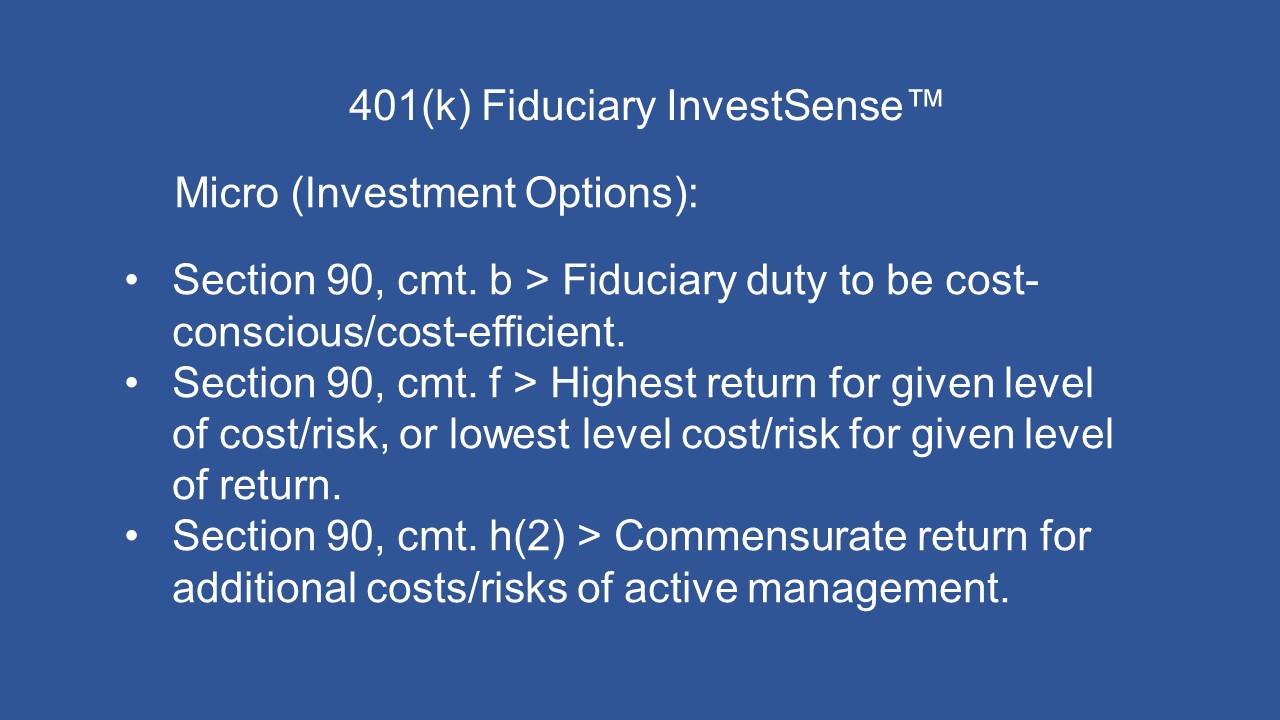





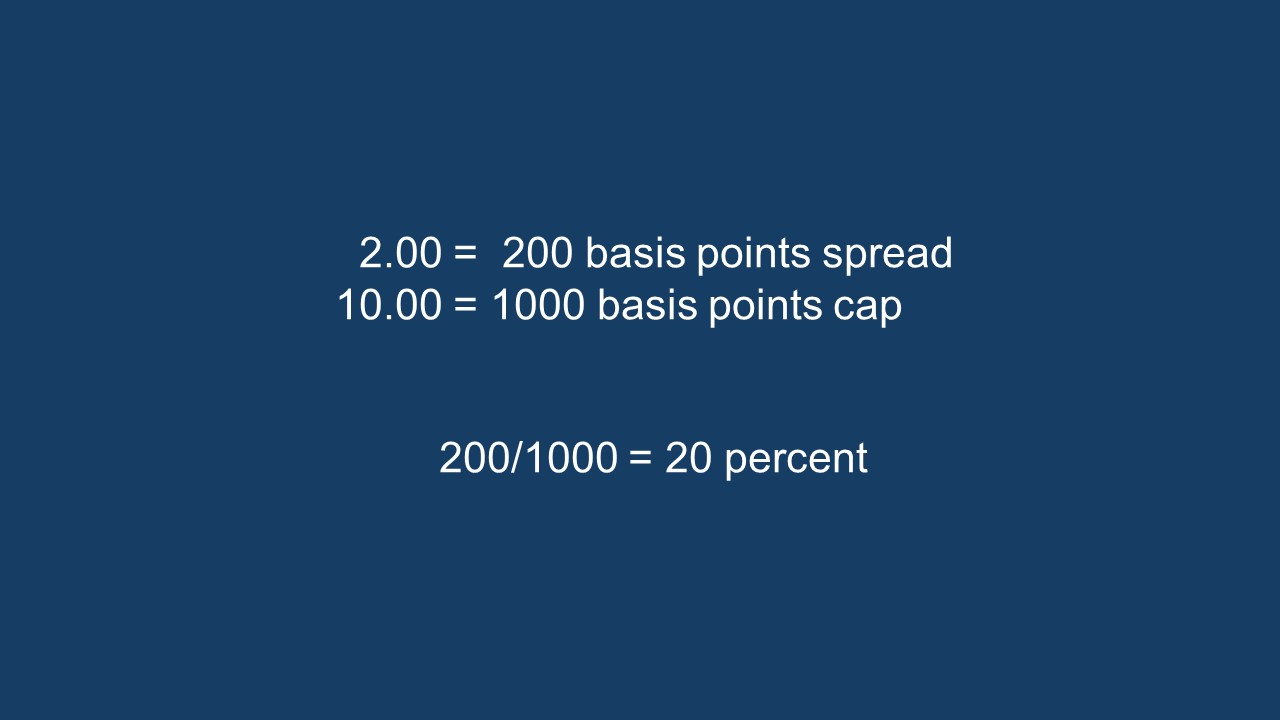

 The Prudent Investment Fiduciary Rules
You must be logged in to post a comment.